
蛋白质组学方法鉴定视网膜疾病中的房水生物标志物。
Proteomics approach identifies aqueous humor biomarkers in retinal diseases.
作者信息
Huang Kevin, Schofield Cheryl, Nguy Trung, Dere Randall, Wolowski Vincent, Siebourg-Polster Juliane, Dieckmann Andreas, Garweg Justus G, Chang Michael, Honigberg Lee, Hackney Jason, Indjeian Vahan B
机构信息
Computational Sciences, gRED, Genentech, South San Francisco, CA, USA.
Translational Medicine, gRED, Genentech, South San Francisco, CA, USA.
出版信息
Commun Med (Lond). 2025 Apr 24;5(1):134. doi: 10.1038/s43856-025-00862-2.
BACKGROUND
Geographic atrophy (GA) secondary to age-related macular degeneration (AMD) is one of the main causes of blindness in the elderly population, but the molecular pathophysiology is difficult to study due to limited access to retinal tissue. We investigated aqueous humor (AH) as an accessible surrogate for studying retinal pathophysiology.
METHODS
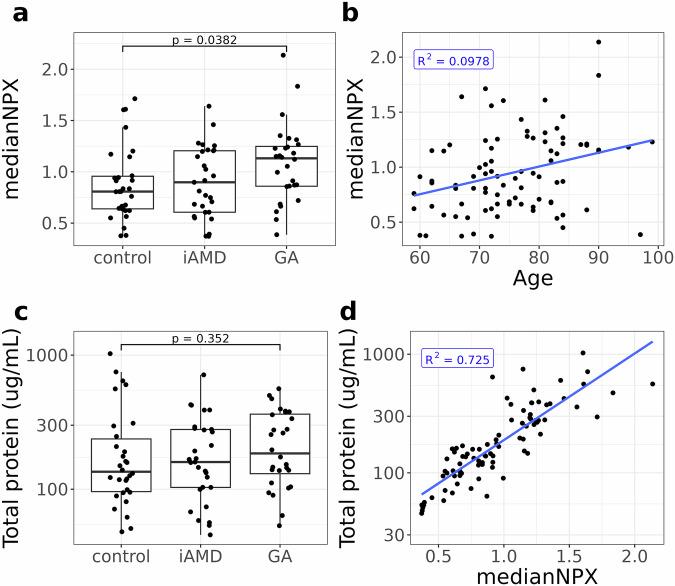
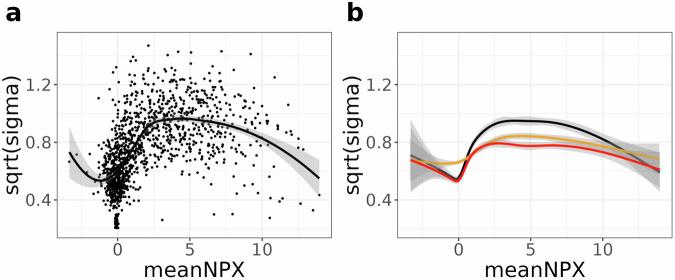
We applied affinity-based Olink proteomics on AH samples obtained from 30 non-AMD control, 30 intermediate AMD (iAMD) and 28 GA subjects to identify AH biomarkers associated with GA. Quantile normalization was applied to the Olink data, followed by differential abundance analysis using the limma R package. To contextualize our findings, we cross-referenced the identified proteins to gene expression datasets and AH proteomics data from diabetic retinopathy (DR) subjects.
RESULTS
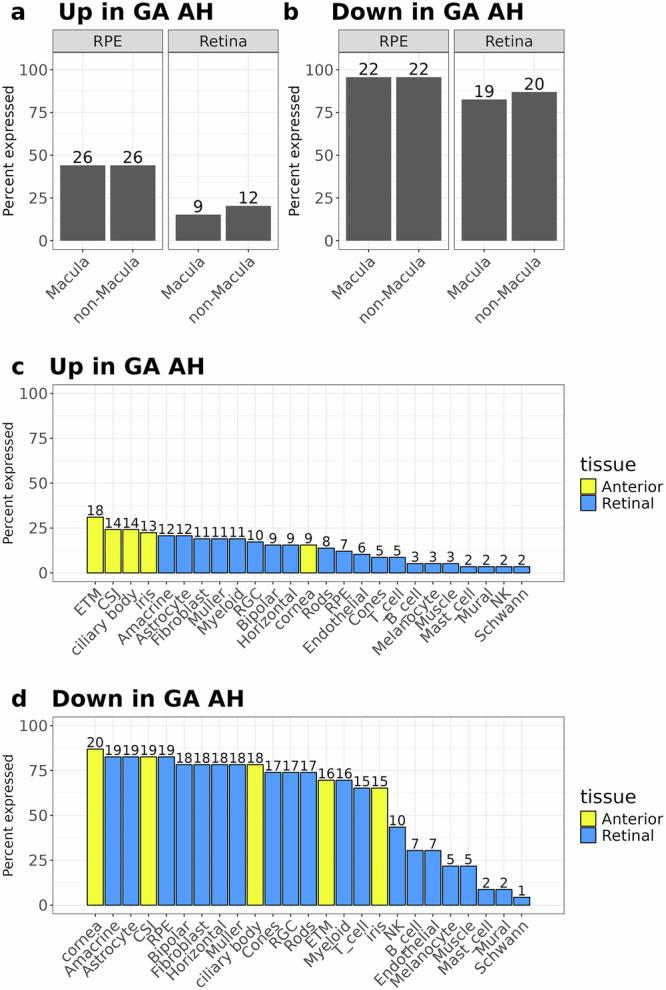
Our differential abundance analysis reveals 82 significantly altered proteins in GA compared to non-AMD control. Cross-referencing with gene expression datasets indicates a majority of them are robustly expressed in the retina, particularly in retinal pigment epithelium cells. Comparison with AH proteomics data from DR subjects reveals both unique and shared biomarkers between GA and DR. Integrating these findings, we identify SMOC2 and IL-6 as top candidate GA biomarkers, warranting further investigation.
CONCLUSIONS
Our integrative analysis demonstrates a robust framework for AH biomarker discovery and identifies SMOC2 and IL-6 as promising biomarkers for GA. Our findings underscore the potential of AH proteomic profiling to advance our understanding of the underlying pathophysiology of retinal diseases.
背景
年龄相关性黄斑变性(AMD)继发的地图样萎缩(GA)是老年人群失明的主要原因之一,但由于获取视网膜组织的途径有限,其分子病理生理学难以研究。我们研究了房水(AH)作为研究视网膜病理生理学的一种可获取的替代物。
方法
我们对从30名非AMD对照、30名中期AMD(iAMD)和28名GA受试者获得的AH样本应用基于亲和力的Olink蛋白质组学,以鉴定与GA相关的AH生物标志物。对Olink数据应用分位数归一化,然后使用limma R包进行差异丰度分析。为了将我们的发现置于背景中,我们将鉴定出的蛋白质与基因表达数据集以及糖尿病视网膜病变(DR)受试者的AH蛋白质组学数据进行交叉参考。
结果
我们的差异丰度分析显示,与非AMD对照相比,GA中有82种蛋白质发生了显著变化。与基因表达数据集的交叉参考表明,其中大多数在视网膜中大量表达,特别是在视网膜色素上皮细胞中。与DR受试者的AH蛋白质组学数据比较揭示了GA和DR之间独特的和共有的生物标志物。综合这些发现,我们确定SMOC2和IL-6为GA的顶级候选生物标志物,值得进一步研究。
结论
我们的综合分析展示了一个强大的AH生物标志物发现框架,并确定SMOC2和IL-6为GA的有前景的生物标志物。我们的发现强调了AH蛋白质组学分析在推进我们对视网膜疾病潜在病理生理学理解方面的潜力。





 Zotero 插件