
烟酰胺单核苷酸(NMN)通过激活Sirt1信号通路逆转D-半乳糖诱导的小鼠神经退行性变并增强肠道屏障功能。
NMN reverses D-galactose-induced neurodegeneration and enhances the intestinal barrier of mice by activating the Sirt1 pathway.
作者信息
Lin Yuxian, Wang Yajing, Yang Xinxin, Ding Ziwei, Hu Mingye, Huang Xianfeng, Zhang Qichun, Yu Yingcong
机构信息
The Third Clinical Institute Affiliated to Wenzhou Medical University, Wenzhou, Zhejiang, China.
School of Pharmacy, Yantai University, Yantai, Shandong, China.
出版信息
Front Pharmacol. 2025 Apr 10;16:1545585. doi: 10.3389/fphar.2025.1545585. eCollection 2025.
BACKGROUND
Age-related decline in nicotinamide adenine dinucleotide (NAD+)-a central regulator of cellular metabolism, DNA repair, and immune homeostasis-is strongly associated with physiological dysfunction. Nicotinamide mononucleotide (NMN), a potent NAD+ precursor, shows promise in counteracting aging-related pathologies, particularly neurodegenerative decline.
METHODS
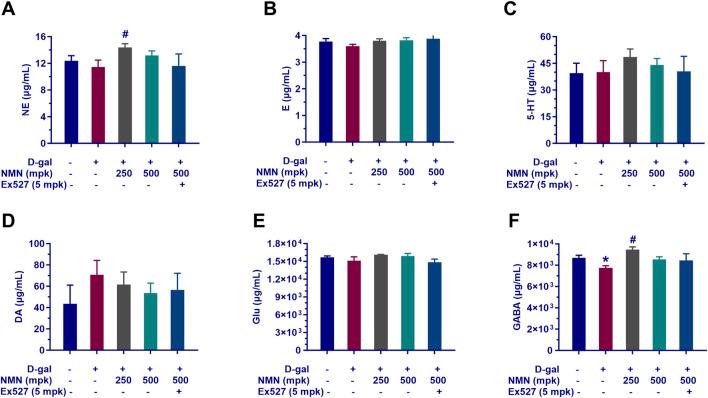
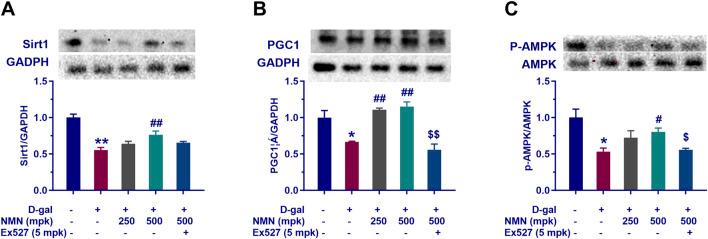
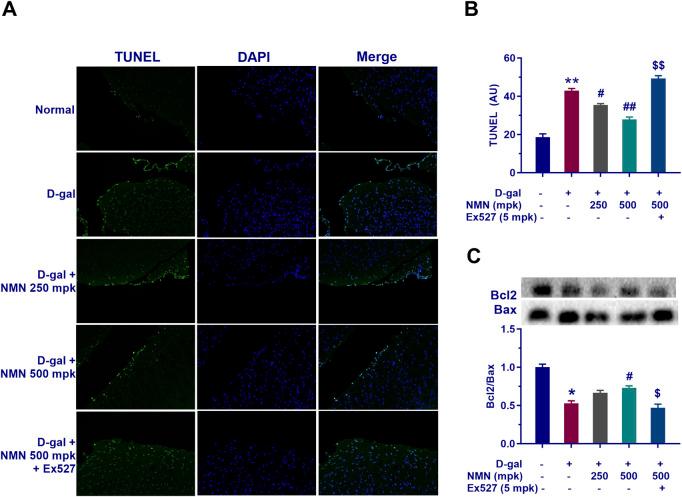
An aging model was established in mice through 8-week D-galactose (D-gal) exposure, followed by NMN oral supplementation. Behavioral outcomes (open field test, Morris water maze) were analyzed alongside oxidative stress markers (SOD, CAT, AGEs), inflammatory cytokines (TNF-α, IL-1β, IL-6, IL-10), and neurotransmitters (LC-MS/MS). Apoptotic activity (TUNEL, p16/p21), mitochondrial regulators (Sirt1, p-AMPK, PGC-1α), and intestinal barrier integrity (HE/AB-PAS staining) were evaluated. Sirt1 dependency was confirmed using inhibitor Ex527.
RESULTS
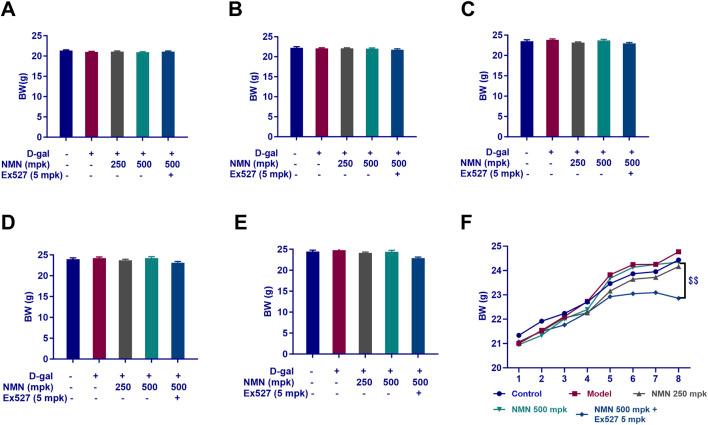
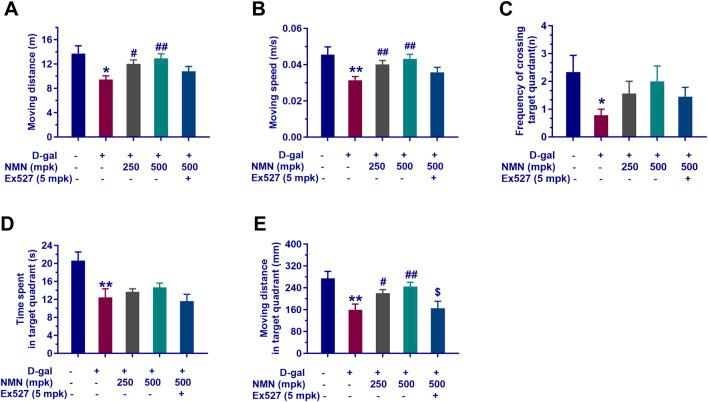
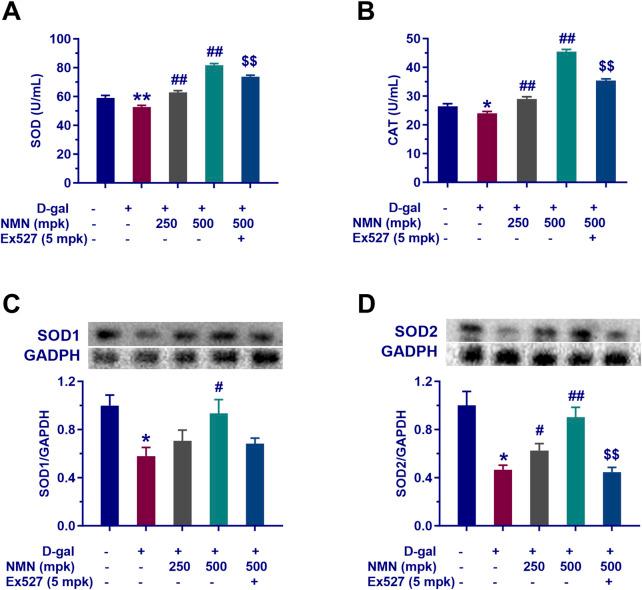
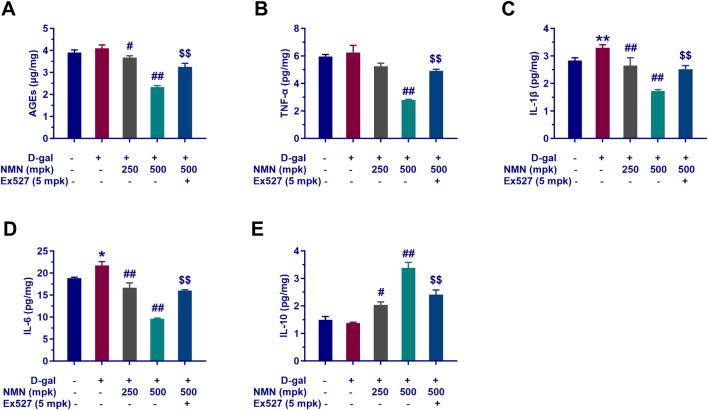
NMN restored locomotor activity and spatial memory in D-gal mice without altering body weight. Mechanistically, NMN synergistically attenuated oxidative stress and systemic inflammation, elevating antioxidant enzymes (SOD, CAT) and IL-10 while suppressing pro-inflammatory cytokines (TNF-α, IL-6) and AGEs. Cortical/hippocampal analyses revealed reduced apoptosis (TUNEL cells) and senescence markers (p16, p21), with enhanced mitochondrial function via Sirt1/AMPK/PGC-1α activation (Sirt1, p-AMPK). NMN concurrently preserved intestinal mucosal architecture, mitigating D-gal-induced barrier disruption. Crucially, all benefits were abolished by Sirt1 inhibition, confirming pathway specificity.
CONCLUSION
Our findings establish NMN as a multifaceted therapeutic agent that preserves neurocognitive function and intestinal homeostasis in aging models by orchestrating antioxidative, anti-inflammatory, and antiapoptotic responses through Sirt1/AMPK/PGC-1α activation. This work provides translational insights into NAD+-boosting strategies for age-related disorders.
背景
烟酰胺腺嘌呤二核苷酸(NAD+)——细胞代谢、DNA修复及免疫稳态的核心调节因子——与年龄相关的下降与生理功能障碍密切相关。烟酰胺单核苷酸(NMN),一种有效的NAD+前体,在对抗衰老相关病症,尤其是神经退行性衰退方面显示出前景。
方法
通过8周的D-半乳糖(D-gal)暴露在小鼠中建立衰老模型,随后进行NMN口服补充。行为结果(旷场试验、莫里斯水迷宫)与氧化应激标志物(超氧化物歧化酶、过氧化氢酶、晚期糖基化终产物)、炎性细胞因子(肿瘤坏死因子-α、白细胞介素-1β、白细胞介素-6、白细胞介素-10)及神经递质(液相色谱-串联质谱法)一同进行分析。评估凋亡活性(TUNEL、p16/p21)、线粒体调节因子(沉默调节蛋白1、磷酸化腺苷酸活化蛋白激酶、过氧化物酶体增殖物激活受体γ共激活因子1α)及肠道屏障完整性(苏木精-伊红染色/阿尔辛蓝-过碘酸雪夫染色)。使用抑制剂Ex527确认沉默调节蛋白1的依赖性。
结果
NMN恢复了D-gal小鼠的运动活性和空间记忆,且未改变体重。从机制上来说,NMN协同减轻氧化应激和全身炎症,提高抗氧化酶(超氧化物歧化酶、过氧化氢酶)和白细胞介素-10水平,同时抑制促炎性细胞因子(肿瘤坏死因子-α、白细胞介素-6)和晚期糖基化终产物。皮质/海马分析显示凋亡(TUNEL细胞)和衰老标志物(p16、p21)减少,通过沉默调节蛋白1/腺苷酸活化蛋白激酶/过氧化物酶体增殖物激活受体γ共激活因子1α激活(沉默调节蛋白1、磷酸化腺苷酸活化蛋白激酶)增强线粒体功能。NMN同时维持肠道黏膜结构,减轻D-gal诱导的屏障破坏。至关重要的是,沉默调节蛋白1抑制消除了所有益处,证实了途径特异性。
结论
我们的研究结果表明NMN是一种多方面的治疗剂,通过激活沉默调节蛋白1/腺苷酸活化蛋白激酶/过氧化物酶体增殖物激活受体γ共激活因子1α来协调抗氧化、抗炎和抗凋亡反应,从而在衰老模型中维持神经认知功能和肠道稳态。这项工作为与年龄相关疾病的NAD+增强策略提供了转化见解。



 Zotero 插件