
癌症风险评估中定量构效关系模型的统计探索:以农药活性物质及其代谢产物为例
A Statistical Exploration of QSAR Models in Cancer Risk Assessment: A Case Study on Pesticide-Active Substances and Metabolites.
作者信息
Greco Serena, Bossa Cecilia, Battistelli Chiara Laura, Giuliani Alessandro
机构信息
Environment and Health Department, Istituto Superiore di Sanità, 00161 Rome, Italy.
出版信息
Toxics. 2025 Apr 11;13(4):299. doi: 10.3390/toxics13040299.
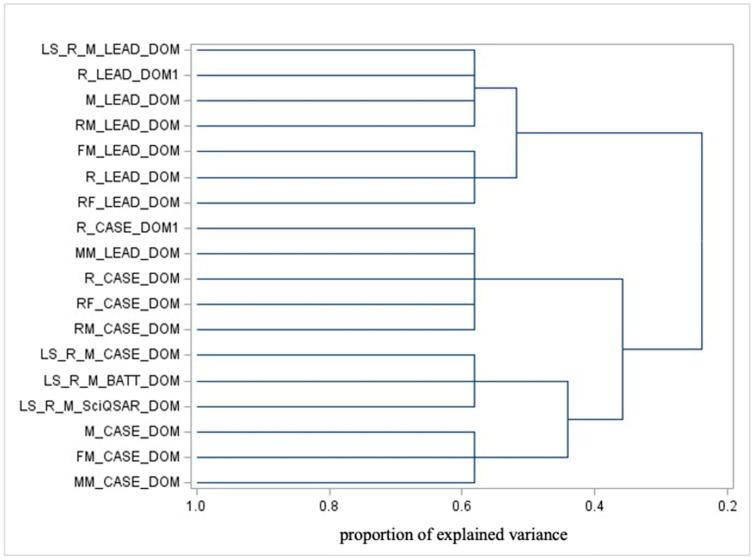
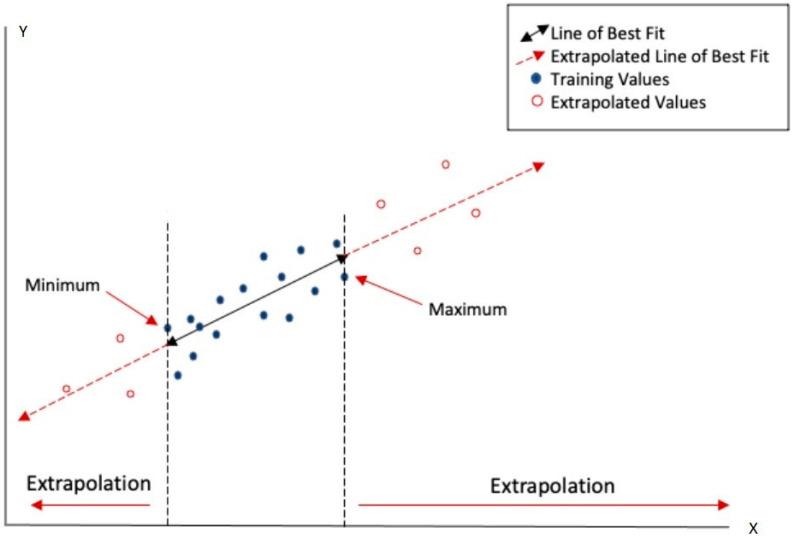
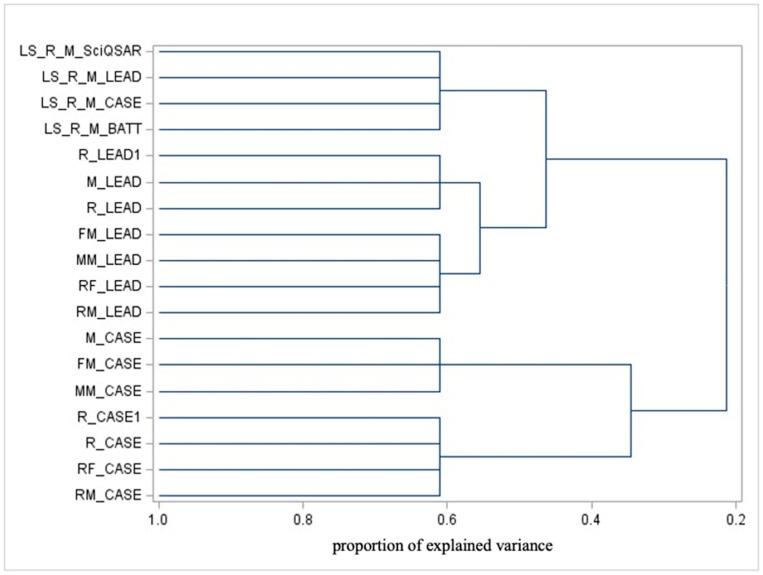
Data generated using new approach methodologies (NAMs), including in silico, in vitro, and in chemico approaches, are increasingly important for the hazard identification of chemicals. Among NAMs, (quantitative) structure-activity relationship (Q)SAR models occupy a peculiar position by allowing (in principle) a toxicity estimate on the sole basis of chemical structural information, leveraging upon toxicity profiles of already tested chemicals (a training set). Consequently, the metrics adopted for the estimation of both the congruence of the test chemicals with the training set and the risk categorization are of paramount importance. This paper comprises a small-scale, mainly methodological study to investigate these aspects and assess the general coherence between the results from different (Q)SAR models applied to the assessment of the carcinogenicity of pesticide-active substances and metabolites. The results of the present study underline the significant potential of using (Q)SAR models, together with limitations, such as inconsistencies in results across models and the intrinsic constraints of their applicability domain. The critical role of a priori strategies adopted in defining the applicability domain of the models is highlighted, emphasizing the need for user-transparent definitions. This is a crucial step for a sensible integration of the information coming from different NAMs.
使用新方法学(NAMs)生成的数据,包括计算机模拟、体外和化学内方法,对于化学品的危害识别越来越重要。在NAMs中,(定量)构效关系(Q)SAR模型占据特殊地位,因为(原则上)它仅根据化学结构信息,利用已测试化学品(训练集)的毒性概况就能进行毒性估计。因此,用于估计测试化学品与训练集的一致性以及风险分类的指标至关重要。本文包含一项小规模的、主要是方法学的研究,以调查这些方面,并评估应用于农药活性物质和代谢物致癌性评估的不同(Q)SAR模型结果之间的总体一致性。本研究结果强调了使用(Q)SAR模型的巨大潜力,同时也指出了其局限性,如不同模型结果的不一致性及其适用范围的内在限制。突出了在定义模型适用范围时采用的先验策略的关键作用,强调了用户透明定义的必要性。这是合理整合来自不同NAMs信息的关键一步。
 Zotero 插件