
线粒体质量控制:糖尿病肾病治疗的一个有前景的靶点。
Control of Mitochondrial Quality: A Promising Target for Diabetic Kidney Disease Treatment.
作者信息
Li Qi, Shang Jin, Inagi Reiko
机构信息
Division of Chronic Kidney Disease Pathophysiology, Graduate School of Medicine, the University of Tokyo, Tokyo, Japan.
The First Affiliated Hospital of Zhengzhou University, Zhengzhou, Henan, China.
出版信息
Kidney Int Rep. 2024 Dec 31;10(4):994-1010. doi: 10.1016/j.ekir.2024.12.029. eCollection 2025 Apr.
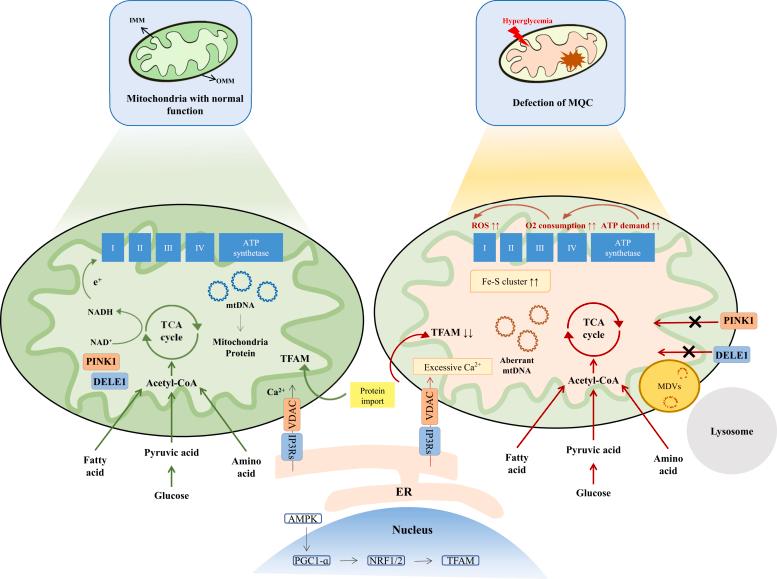
Diabetic kidney disease (DKD) is the leading cause of end-stage renal disease (ESRD), affecting over 40% of patients with diabetes. DKD progression involves fibrosis and damage to glomerular and tubulointerstitial regions, with mitochondrial dysfunction playing a critical role. Impaired mitochondria lead to reduced adenosine triphosphate (ATP) production, damaged mitochondria accumulation, and increased reactive oxygen species (ROS), contributing to renal deterioration. Maintaining mitochondrial quality control (MQC) is essential for preventing cell death, tissue injury, and kidney failure. Recent clinical trials show that enhancing MQC can alleviate DKD. However, current treatments cannot halt kidney function decline, underscoring the need for new therapeutic strategies. Mitochondrial-targeted drugs show potential; however, challenges remain because of adverse effects and unclear mechanisms. Future research should aim to comprehensively explore therapeutic potential of MQC in DKD. This review highlights the significance of MQC in DKD treatment, emphasizing the need to maintain mitochondrial quality for developing new therapies.
糖尿病肾病(DKD)是终末期肾病(ESRD)的主要病因,影响超过40%的糖尿病患者。DKD的进展涉及纤维化以及肾小球和肾小管间质区域的损伤,线粒体功能障碍在其中起关键作用。线粒体受损会导致三磷酸腺苷(ATP)生成减少、受损线粒体积累以及活性氧(ROS)增加,从而促使肾脏恶化。维持线粒体质量控制(MQC)对于预防细胞死亡、组织损伤和肾衰竭至关重要。近期临床试验表明,增强MQC可缓解DKD。然而,目前的治疗方法无法阻止肾功能下降,这凸显了新治疗策略的必要性。线粒体靶向药物显示出潜力;然而,由于不良反应和机制不明,挑战依然存在。未来的研究应旨在全面探索MQC在DKD中的治疗潜力。本综述强调了MQC在DKD治疗中的重要性,强调了为开发新疗法而维持线粒体质量的必要性。


 Zotero 插件