
铁死亡、铜死亡、自噬和焦亡在男性不育中的相互作用:分子交叉点与治疗机遇
Interplay of Ferroptosis, Cuproptosis, Autophagy and Pyroptosis in Male Infertility: Molecular Crossroads and Therapeutic Opportunities.
作者信息
Cai Difan, Li Junda, Peng Zekang, Fu Rong, Chen Chuyang, Liu Feihong, Li Yiwang, Su Yanjing, Li Chunyun, Chen Wei
机构信息
Health Science Center, Hunan Normal University, Changsha 410013, China.
出版信息
Int J Mol Sci. 2025 Apr 8;26(8):3496. doi: 10.3390/ijms26083496.
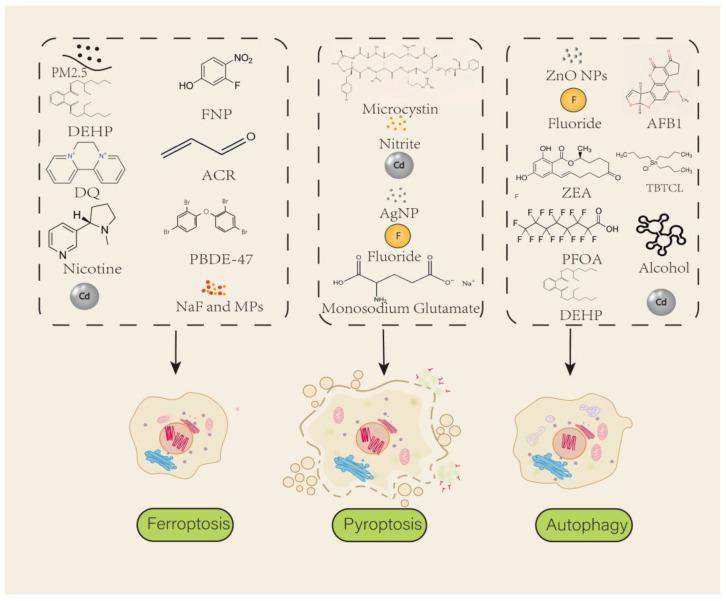
Male infertility is intricately linked to dysregulated cell death pathways, including ferroptosis, cuproptosis, pyroptosis, and autophagy. Ferroptosis, driven by iron-dependent lipid peroxidation through the Fenton reaction and inactivation of the GPX4/Nrf2/SLC7A11 axis, disrupts spermatogenesis under conditions of oxidative stress, environmental toxin exposure, or metabolic disorders. Similarly, cuproptosis-characterized by mitochondrial dysfunction and disulfide stress due to copper overload-exacerbates germ cell apoptosis via FDX1 activation and NADPH depletion. Pyroptosis, mediated by the NLRP3 inflammasome and gasdermin D, amplifies testicular inflammation and germ cell loss via IL-1β/IL-18 release, particularly in response to environmental insults. Autophagy maintains testicular homeostasis by clearing damaged organelles and proteins; however, its dysregulation impairs sperm maturation and compromises blood-testis barrier integrity. These pathways intersect through shared regulators; reactive oxygen species and mTOR modulate the autophagy-pyroptosis balance, while Nrf2 and FDX1 bridge ferroptosis-cuproptosis crosstalk. Therapeutic interventions targeting these mechanisms have shown promise in preclinical models. However, challenges persist, including the tissue-specific roles of gasdermin isoforms, off-target effects of pharmacological inhibitors, and transgenerational epigenetic impacts of environmental toxins. This review synthesizes current molecular insights into the cell death pathways implicated in male infertility, emphasizing their interplay and translational potential for restoring spermatogenic function.
男性不育与细胞死亡途径失调密切相关,包括铁死亡、铜死亡、焦亡和自噬。铁死亡由铁依赖性脂质过氧化通过芬顿反应以及GPX4/Nrf2/SLC7A11轴失活驱动,在氧化应激、环境毒素暴露或代谢紊乱的情况下破坏精子发生。同样,铜死亡以线粒体功能障碍和铜过载导致的二硫键应激为特征,通过激活FDX1和消耗NADPH加剧生殖细胞凋亡。由NLRP3炎性小体和gasdermin D介导的焦亡,通过释放IL-β/IL-18放大睾丸炎症和生殖细胞损失,特别是在对环境损伤的反应中。自噬通过清除受损的细胞器和蛋白质维持睾丸内环境稳定;然而,其失调会损害精子成熟并破坏血睾屏障的完整性。这些途径通过共同的调节因子相互交叉;活性氧和mTOR调节自噬-焦亡平衡,而Nrf2和FDX1架起铁死亡-铜死亡的串扰桥梁。针对这些机制的治疗干预在临床前模型中已显示出前景。然而,挑战依然存在,包括gasdermin亚型的组织特异性作用、药理抑制剂的脱靶效应以及环境毒素的跨代表观遗传影响。本综述综合了目前对男性不育相关细胞死亡途径的分子见解,强调了它们之间的相互作用以及恢复生精功能的转化潜力。


 Zotero 插件