
雷帕霉素靶蛋白(mTOR)抑制作用会影响鞭毛蛋白增强的人气道上皮细胞对铜绿假单胞菌的炎症和抗菌反应。
mTOR inhibition impacts the flagellin-augmented inflammatory and antimicrobial response of human airway epithelial cells to Pseudomonas aeruginosa.
作者信息
van Linge Christine C A, Hulme Katina D, Peters-Sengers Hessel, Kullberg Robert F J, de Jong Menno D, Russell Colin A, de Vos Alex F, van der Poll Tom
机构信息
Center for Infection and Molecular Medicine, Amsterdam University Medical Center, University of Amsterdam, Amsterdam, The Netherlands.
Amsterdam Institute for Immunology and Infectious Diseases, Amsterdam, The Netherlands.
出版信息
PLoS One. 2025 May 8;20(5):e0321462. doi: 10.1371/journal.pone.0321462. eCollection 2025.
OBJECTIVE
The airway epithelium provides a first line of defense against pathogens by release of antimicrobial factors and neutrophil-attracting chemokines. Pseudomonas (P.) aeruginosa, a Gram-negative bacterium that expresses flagellin as an important virulence factor, is a common cause of injurious airway inflammation. The aim of our study was to determine the contribution of flagellin to the inflammatory, antimicrobial, and metabolic responses of the airway epithelium to P. aeruginosa. Furthermore, as we previously showed that targeting mTOR limited the glycolytic and inflammatory response induced by flagellin, we assessed the effect of rapamycin on human bronchial epithelial (HBE) cells stimulated with flagellated and non-flagellated P. aeruginosa.
METHODS
Primary pseudostratified HBE cells, cultured on an air-liquid-interface, were treated on the basolateral side with medium, vehicle or rapamycin, exposed on the apical side with flagellated or flagellin-deficient P. aeruginosa, and analyzed for their inflammatory, antimicrobial, and glycolytic responses.
RESULTS
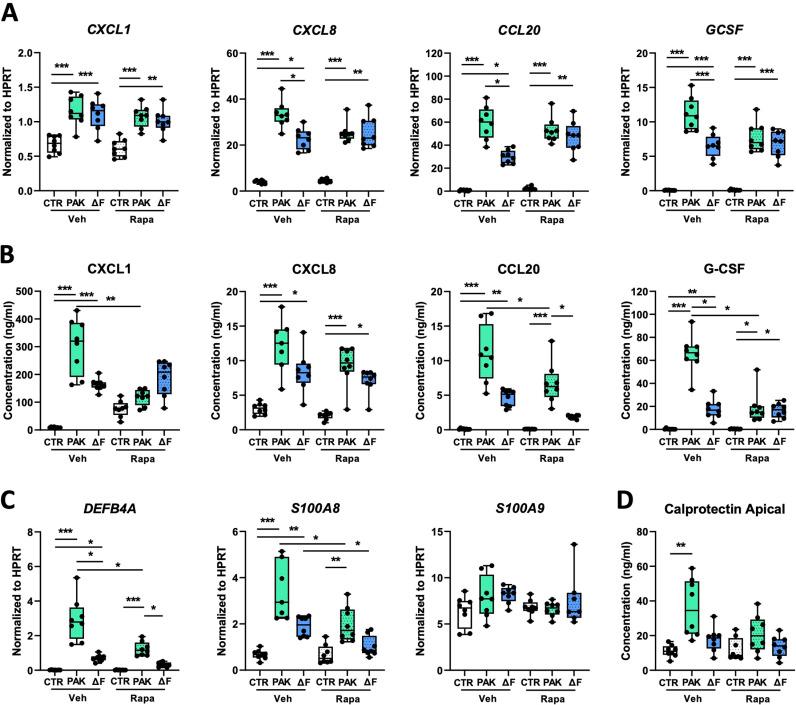
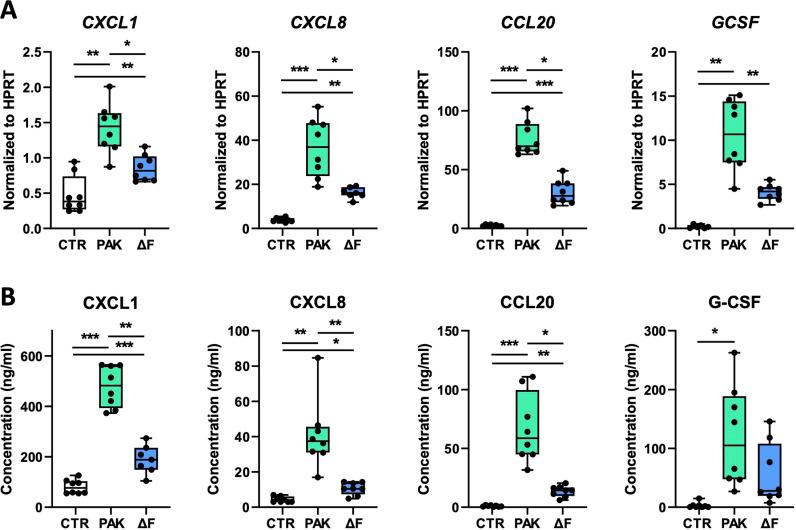
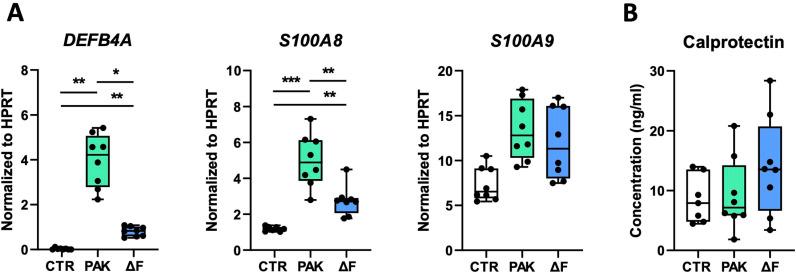
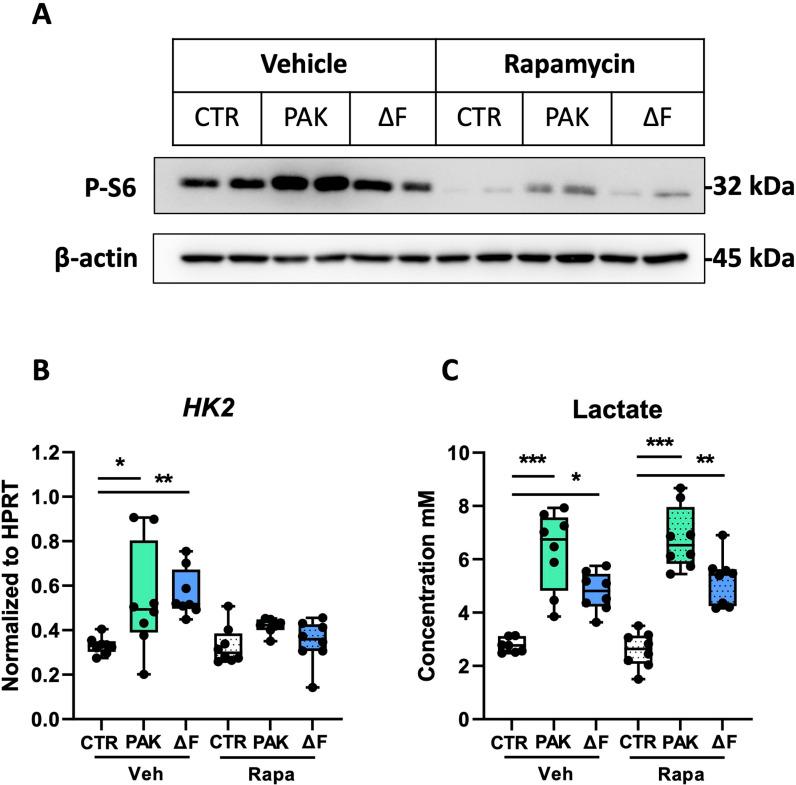
Flagellin augmented the P. aeruginosa-induced expression of antimicrobial factors and secretion of chemokines by HBE cells but did not further increase the glycolytic response. Treatment of HBE cells with rapamycin inhibited mTOR activation in general and flagellin-augmented mTOR activation in particular, but did not affect the glycolytic response. Rapamycin, however, diminished the flagellin-augmented inflammatory and antimicrobial response induced by Pseudomonas.
CONCLUSIONS
These results demonstrate that flagellin is a significant factor that augments the inflammatory and antimicrobial response of human airway epithelial cells upon exposure to P. aeruginosa and suggest that mTOR inhibition by rapamycin in the airway epithelium diminishes these exaggerated responses.
目的
气道上皮通过释放抗菌因子和吸引中性粒细胞的趋化因子,提供抵御病原体的第一道防线。铜绿假单胞菌是一种革兰氏阴性菌,表达鞭毛蛋白作为重要的毒力因子,是导致气道炎症损伤的常见原因。我们研究的目的是确定鞭毛蛋白对气道上皮对铜绿假单胞菌的炎症、抗菌和代谢反应的作用。此外,正如我们之前所表明的,靶向mTOR可限制鞭毛蛋白诱导的糖酵解和炎症反应,我们评估了雷帕霉素对用有鞭毛和无鞭毛铜绿假单胞菌刺激的人支气管上皮(HBE)细胞的影响。
方法
在气液界面培养的原代假复层HBE细胞,在基底外侧用培养基、溶剂或雷帕霉素处理,在顶端用有鞭毛或缺乏鞭毛蛋白的铜绿假单胞菌暴露,并分析其炎症、抗菌和糖酵解反应。
结果
鞭毛蛋白增强了铜绿假单胞菌诱导的HBE细胞抗菌因子的表达和趋化因子的分泌,但没有进一步增加糖酵解反应。用雷帕霉素处理HBE细胞一般会抑制mTOR激活,特别是抑制鞭毛蛋白增强的mTOR激活,但不影响糖酵解反应。然而,雷帕霉素减少了由铜绿假单胞菌诱导的鞭毛蛋白增强的炎症和抗菌反应。
结论
这些结果表明,鞭毛蛋白是暴露于铜绿假单胞菌时增强人气道上皮细胞炎症和抗菌反应的重要因素,并表明雷帕霉素在气道上皮中抑制mTOR可减少这些过度反应。

 Zotero 插件