
五氟利多与黏菌素协同作用,逆转革兰氏阴性杆菌对黏菌素的耐药性。
Penfluridol synergizes with colistin to reverse colistin resistance in Gram-negative bacilli.
作者信息
Chatupheeraphat Chawalit, Kaewsai Noramon, Anuwongcharoen Nuttapat, Phanus-Umporn Chuleeporn, Pornsuwan Sudarat, Eiamphungporn Warawan
机构信息
Center for Research Innovation and Biomedical Informatics, Faculty of Medical Technology, Mahidol University, Nakhon Pathom, Thailand.
Department of Community Medical Technology, Faculty of Medical Technology, Mahidol University, Nakhon Pathom, Thailand.
出版信息
Sci Rep. 2025 May 8;15(1):16114. doi: 10.1038/s41598-025-01303-9.
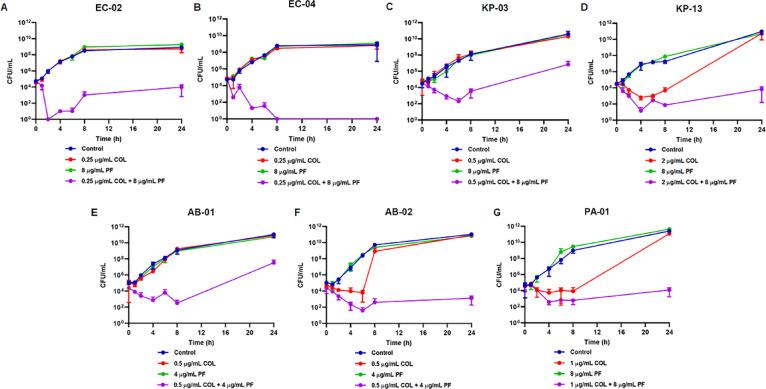
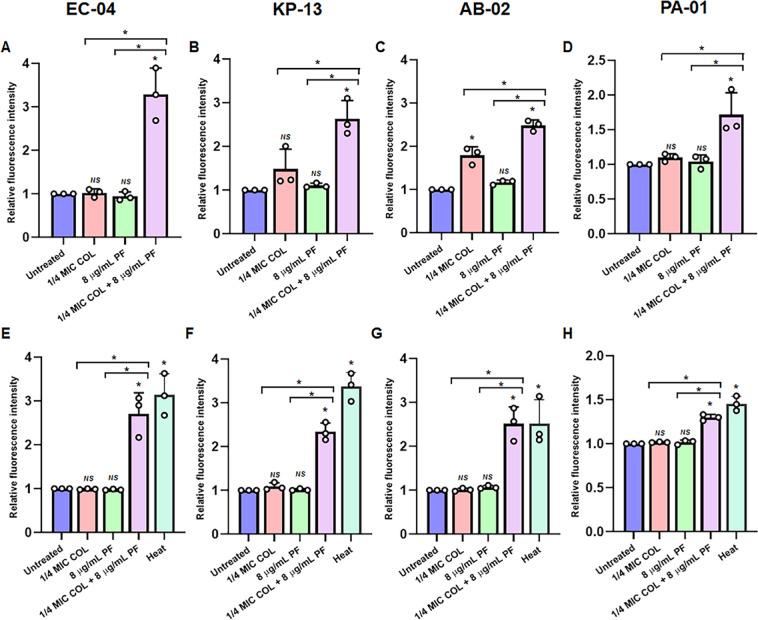
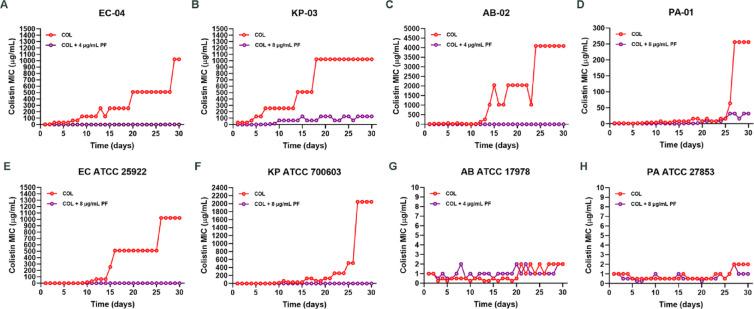
The growing prevalence of antibiotic resistance in multidrug-resistant Gram-negative bacteria (MDR-GNB), exacerbated by the misuse of antibiotics, presents a critical global health challenge. Colistin, a last-resort antibiotic for severe MDR-GNB infections, has faced diminishing efficacy due to the emergence of colistin-resistant (COL-R) strains. This study evaluates the potential of penfluridol (PF), an antipsychotic drug with notable antibacterial and antibiofilm properties, to restore colistin activity against COL-R GNB in vitro. PF alone exhibited limited antibacterial activity against COL-R GNB; however, its combination with colistin demonstrated strong synergistic effects, significantly reducing colistin's minimum inhibitory concentrations (MICs) by 4-128 times. Time-kill assays confirmed the combination's superior bactericidal activity compared to either agent alone. Membrane permeability assays revealed that PF enhanced colistin's ability to disrupt bacterial membranes, likely by facilitating colistin binding to lipopolysaccharide. Furthermore, PF significantly inhibited the development of colistin resistance over a 30-day resistance development assay. In addition to its antibacterial effects, PF exhibited notable antibiofilm activity. The combination of PF and colistin effectively inhibited biofilm formation and eradicated mature biofilms in most of the tested COL-R GNB strains. These findings mark the first report of PF's synergistic interaction with colistin against GNB biofilms, offering a promising strategy to combat biofilm-associated infections. Overall, the colistin/PF combination holds potential as an effective therapeutic strategy to enhance colistin efficacy, delay resistance development, and manage biofilm-associated infections in MDR-GNB.
多重耐药革兰氏阴性菌(MDR - GNB)中抗生素耐药性的日益普遍,因抗生素的滥用而加剧,这是一项严峻的全球健康挑战。黏菌素是治疗严重MDR - GNB感染的最后一道防线抗生素,但由于黏菌素耐药(COL - R)菌株的出现,其疗效逐渐降低。本研究评估了具有显著抗菌和抗生物膜特性的抗精神病药物五氟利多(PF)在体外恢复黏菌素对COL - R GNB活性的潜力。单独使用PF对COL - R GNB的抗菌活性有限;然而,它与黏菌素联合使用时表现出强大的协同效应,显著降低了黏菌素的最低抑菌浓度(MIC)4至128倍。时间杀菌试验证实,与单独使用任何一种药物相比,联合用药具有更强的杀菌活性。膜通透性试验表明,PF可能通过促进黏菌素与脂多糖的结合,增强了黏菌素破坏细菌膜的能力。此外,在为期30天的耐药性发展试验中,PF显著抑制了黏菌素耐药性的发展。除了抗菌作用外,PF还表现出显著的抗生物膜活性。PF和黏菌素的联合用药有效抑制了大多数测试的COL - R GNB菌株的生物膜形成,并根除了成熟生物膜。这些发现标志着PF与黏菌素针对GNB生物膜的协同相互作用的首次报道,为对抗生物膜相关感染提供了一种有前景的策略。总体而言,黏菌素/PF联合用药有望成为一种有效的治疗策略,以提高黏菌素疗效、延缓耐药性发展并管理MDR - GNB中与生物膜相关的感染。


 Zotero 插件