
2021年至2023年中国南方深圳地区新冠疫情期间及之后呼吸道感染的流行病学特征
Epidemiological characteristics of respiratory tract infections during and after the pandemic of COVID-19 from 2021 - 2023 in Shenzhen, southern China.
作者信息
Jin Qiaoruo, Yu Sheng, Qu Jiuxin
机构信息
Department of Clinical Laboratory, Shenzhen Third People's Hospital, Second Affiliated Hospital of Southern University of Science and Technology, National Clinical Research Center for Infectious Diseases, No 29 Bulan Rd, Shenzhen, Guangdong, 518112, China.
出版信息
BMC Public Health. 2025 May 9;25(1):1724. doi: 10.1186/s12889-025-22884-0.
OBJECTIVE
It is now understood that the COVID-19 pandemic and its associated containment measures have affected the epidemiology of other respiratory viruses. This study aimed to investigate respiratory pathogen infections in Shenzhen during and after the COVID-19 pandemic.
METHODS
A retrospective analysis was conducted on test data from 24,814 patients at Shenzhen Third People's Hospital between January 2021 and December 2023. The analysis focused on changes in detection rates, epidemiological characteristics, and clinical features of respiratory pathogens, including three viruses and eight bacteria.
RESULTS
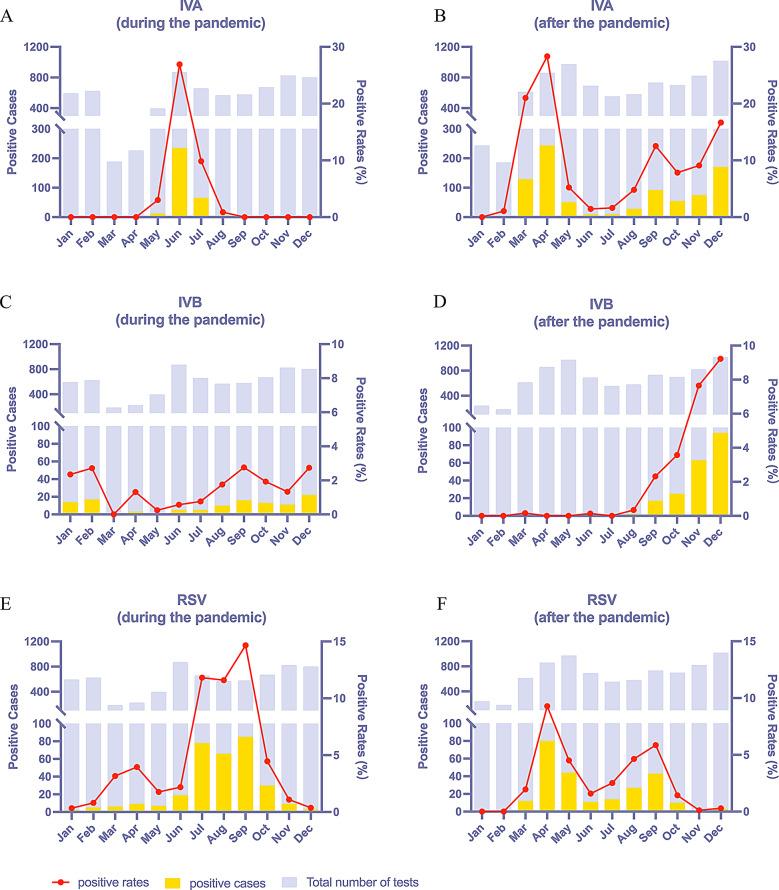
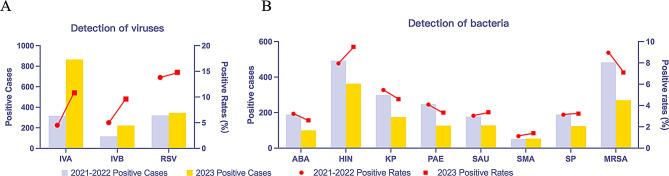
The overall positivity rate for respiratory viruses increased after the COVID-19 epidemic (P < 0.05), whereas no significant difference was detected in the overall positivity rate of most respiratory bacteria. Notably, the detection rates of influenza A and B increased after the COVID-19 epidemic, with influenza A showing the most significant increase from 4.5 to 10.8% (P < 0.05). Conversely, the detection rates of PAE and MRSA decreased significantly (P < 0.05), whereas those of HIN and SMA increased significantly (P < 0.05). The seasonal patterns of influenza A changed markedly, with a shift in peak occurrence and extended periods of high positivity. The age distribution of infections also shifted, with adults showing higher detection rates after the pandemic than school-aged children and elderly individuals did.
CONCLUSION
The removal of non-pharmaceutical interventions following the COVID-19 pandemic has significantly affected the epidemiological and seasonal patterns of certain respiratory pathogens in Shenzhen. These findings highlight the need for continuous surveillance of multiple respiratory pathogens and adaptive public health strategies in the post-pandemic era.
目的
目前已了解到,新冠疫情及其相关防控措施对其他呼吸道病毒的流行病学产生了影响。本研究旨在调查新冠疫情期间及之后深圳的呼吸道病原体感染情况。
方法
对2021年1月至2023年12月期间深圳市第三人民医院24814例患者的检测数据进行回顾性分析。分析重点为呼吸道病原体(包括三种病毒和八种细菌)的检出率变化、流行病学特征和临床特征。
结果
新冠疫情后呼吸道病毒的总体阳性率有所上升(P < 0.05),而大多数呼吸道细菌的总体阳性率未发现显著差异。值得注意的是,新冠疫情后甲型和乙型流感的检出率有所上升,其中甲型流感的增幅最为显著,从4.5%升至10.8%(P < 0.05)。相反,嗜麦芽窄食单胞菌和耐甲氧西林金黄色葡萄球菌的检出率显著下降(P < 0.05),而嗜肺军团菌和粘质沙雷氏菌的检出率显著上升(P < 0.05)。甲型流感的季节性模式发生了明显变化,发病高峰出现转移,高阳性率持续时间延长。感染的年龄分布也发生了变化,疫情后成年人的检出率高于学龄儿童和老年人。
结论
新冠疫情后非药物干预措施的解除对深圳某些呼吸道病原体的流行病学和季节性模式产生了显著影响。这些发现凸显了在疫情后时代持续监测多种呼吸道病原体以及采取适应性公共卫生策略的必要性。
 Zotero 插件