
耳念珠菌细胞形成巨大的脂滴以在恶劣环境中生存。
Candida auris cells form giant lipid droplets to survive in harsh environments.
作者信息
Zheng Qiushi, Li Chao, Hu Tianren, Bing Jian, Nobile Clarissa J, Chu Haiqing, Huang Guanghua
机构信息
State Key Laboratory of Genetic Engineering, School of Life Sciences, Shanghai Institute of Infectious Disease and Biosecurity, and Department of infectious diseases, Huashan Hospital, Fudan University, Shanghai, China.
Department of Respiratory and Critical Care Medicine, Shanghai Pulmonary Hospital, School of Medicine, Tongji University, Shanghai, China.
出版信息
Commun Biol. 2025 May 22;8(1):783. doi: 10.1038/s42003-025-08204-7.
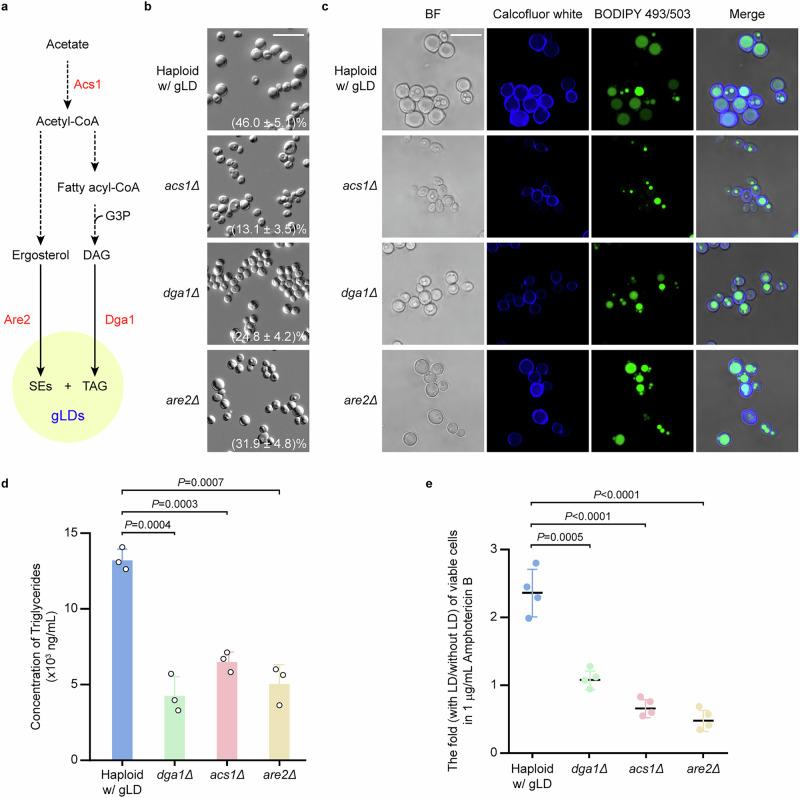
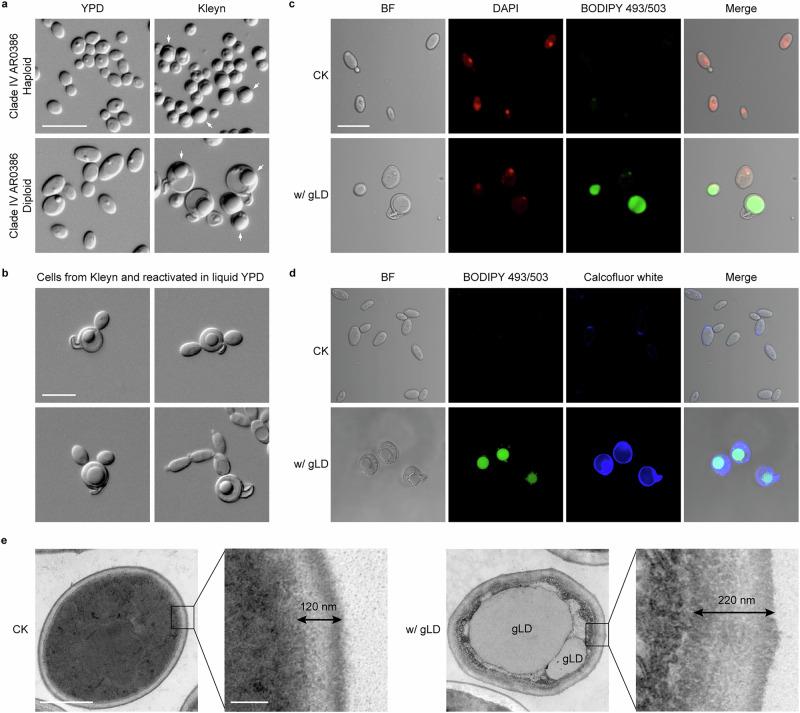
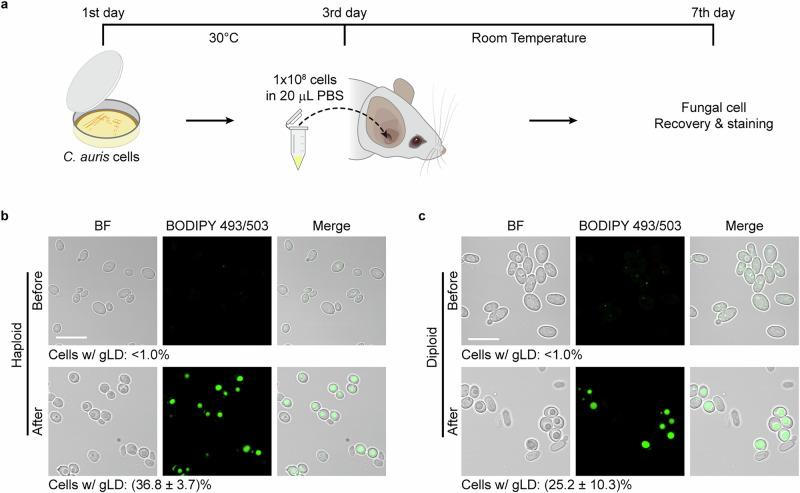
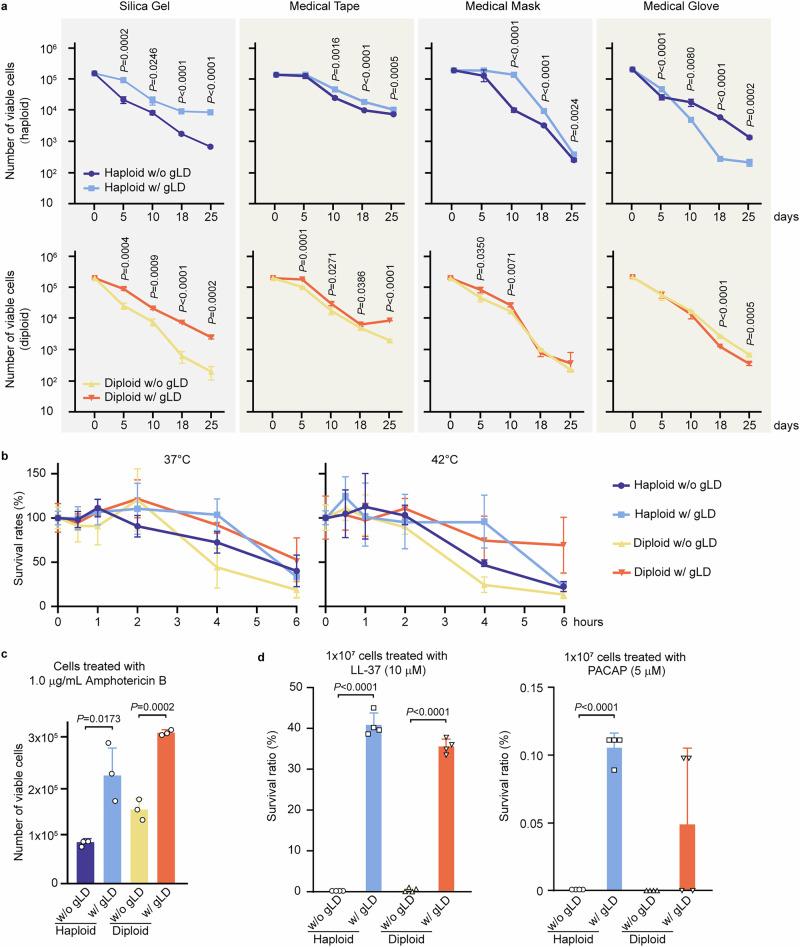
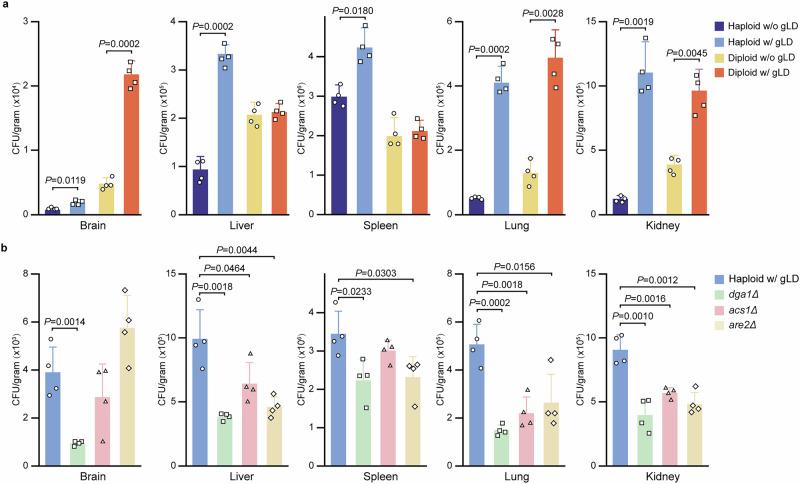
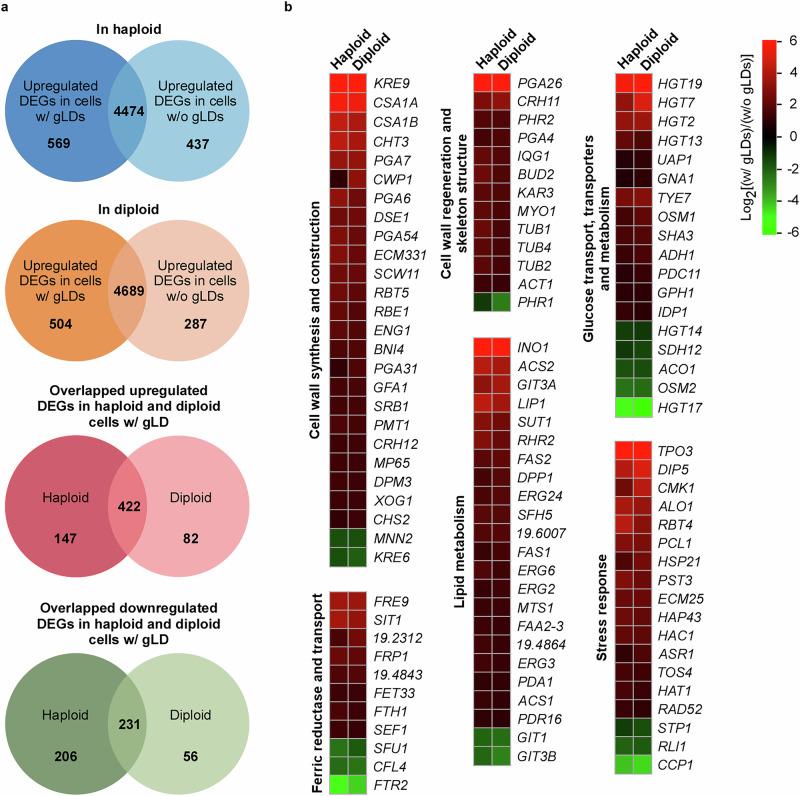
The emerging fungal pathogen Candida auris is notorious for environmental persistence, which is a major contributor to outbreaks in healthcare settings. Here we report that giant lipid droplets (gLDs) inside C. auris cells play critical roles in the ability to survive harsh environments. C. auris cells that contain gLDs exhibit an increased tolerance to environmental stresses, antifungals, and host-associated antimicrobial peptides. These cells often undergo significant cell wall remodeling and sloughing of the outer layer of the cell wall. Lipidomics analysis indicates that cells with gLDs contain a significantly higher level of triacylglycerols, sterol esters, and other lipids, such as glycerolipids, sphingolipids, and sterol lipids. At the transcriptional level, a large set of differentially expressed genes was observed between C. auris cells with and without gLDs. Our study reveals that gLDs are a new strategy used by C. auris to adapt to stressful conditions and to persist in hospital environments.
新兴的真菌病原体耳念珠菌因能在环境中持久存在而声名狼藉,这是医疗机构爆发感染的一个主要因素。在此,我们报告耳念珠菌细胞内的巨大脂滴(gLDs)在其在恶劣环境中存活的能力方面发挥着关键作用。含有gLDs的耳念珠菌细胞对环境压力、抗真菌药物和宿主相关抗菌肽表现出更高的耐受性。这些细胞通常会经历显著的细胞壁重塑和细胞壁外层脱落。脂质组学分析表明,含有gLDs的细胞中三酰甘油、甾醇酯和其他脂质,如甘油脂质、鞘脂和甾醇脂质的含量显著更高。在转录水平上,在有和没有gLDs的耳念珠菌细胞之间观察到大量差异表达基因。我们的研究表明,gLDs是耳念珠菌用于适应压力条件并在医院环境中持续存在的一种新策略。

 Zotero 插件