
间歇性禁食对与自噬、代谢和抗氧化相关的生存及基因表达谱的影响 (此处原文不完整,未明确具体研究对象)
Impact of Intermittent Fasting on Survival and Gene Expression Profiles Associated with Autophagy, Metabolism, and Antioxidant in .
作者信息
Nainu Fifi Dismayanti Indriani, Arsyad Aryadi, Aminuddin Aminuddin, Ariyandy Andi, Asbah Asbah, Latada Nadila Pratiwi, Rumata Nur Rahma, Nainu Firzan
机构信息
Postgraduate Program in Biomedical Science, Graduate School of Hasanuddin University, Hasanuddin University, Tamalanrea, Makassar 90245, Indonesia.
Department of Physiology, Faculty of Medicine, Hasanuddin University, Tamalanrea, Makassar 90245, Indonesia.
出版信息
ACS Omega. 2025 May 12;10(19):19636-19642. doi: 10.1021/acsomega.5c00400. eCollection 2025 May 20.
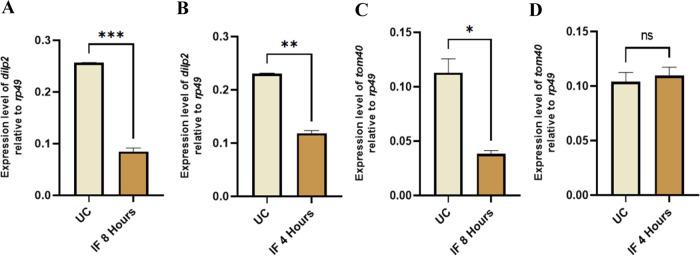
Intermittent fasting (IF) has attracted significant interest as a potential approach with promising health benefits, including lifespan extension and metabolic improvement. Previous studies have shown that IF influences autophagy, metabolism, and oxidative stress across various organisms. was used in this study due to its genetic structure and metabolic responses that closely resemble those of humans, making it a valuable model for studying the effects of IF on cellular and molecular mechanisms. This study investigates the effects of IF on survival and the expression of genes related to autophagy, metabolic, and endogenous antioxidants in to elucidate the molecular mechanisms underlying these effects. Male flies were subjected to either a 4-h or 8-h fasting protocol, three times per week. The results revealed that both fasting protocols improved the survival of flies, with the 8-h IF group showing the most significant benefit (over 60% survival at day 10 compared to ∼50% in the control). Gene expression analysis demonstrated a significant downregulation in the fasting groups, with decreasing by 45%, by 40%, by 50%, by 35%, and by 48%, indicating reduced insulin signaling, altered mitochondrial function, decreased antioxidant defense, and suppressed autophagy-related pathways. Notably, these findings contrast with previous studies reporting upregulation of autophagy and antioxidant responses during fasting, suggesting context-dependent regulatory mechanisms. Given the genetic and physiological similarities between and mammals, these results provide insights into IF-induced metabolic adaptations and their potential implications for longevity and cellular homeostasis. Further research is warranted to clarify the molecular pathways involved.
间歇性禁食(IF)作为一种具有潜在健康益处的方法,包括延长寿命和改善新陈代谢,已引起了广泛关注。先前的研究表明,IF会影响各种生物体的自噬、新陈代谢和氧化应激。由于其基因结构和代谢反应与人类极为相似,本研究选用了[具体生物名称],使其成为研究IF对细胞和分子机制影响的有价值模型。本研究调查了IF对[具体生物名称]生存以及与自噬、代谢和内源性抗氧化剂相关基因表达的影响,以阐明这些影响背后的分子机制。雄性[具体生物名称]果蝇每周接受三次4小时或8小时的禁食方案。结果显示,两种禁食方案均提高了果蝇的存活率,其中8小时IF组的益处最为显著(第10天存活率超过60%,而对照组约为50%)。基因表达分析表明,禁食组中基因表达显著下调,[具体基因名称1]下降45%,[具体基因名称2]下降40%,[具体基因名称3]下降50%,[具体基因名称4]下降35%,[具体基因名称5]下降48%,这表明胰岛素信号传导减少、线粒体功能改变、抗氧化防御能力下降以及自噬相关途径受到抑制。值得注意的是,这些发现与先前关于禁食期间自噬和抗氧化反应上调的研究结果形成对比,表明存在依赖于具体情况的调节机制。鉴于[具体生物名称]与哺乳动物在基因和生理上的相似性,这些结果为IF诱导的代谢适应及其对长寿和细胞稳态的潜在影响提供了见解。有必要进一步研究以阐明其中涉及的分子途径。




 Zotero 插件