
用于芯片器官系统中乳腺癌组织建模的具有可调刚度的核壳水凝胶。
Core-Shell Hydrogels with Tunable Stiffness for Breast Cancer Tissue Modelling in an Organ-on-Chip System.
作者信息
Parodi Ilaria, Palamà Maria Elisabetta Federica, Di Lisa Donatella, Pastorino Laura, Lagazzo Alberto, Falleroni Fabio, Aiello Maurizio, Fato Marco Massimo, Scaglione Silvia
机构信息
Department of Informatics, Bioengineering, Robotics, and System Engineering, University of Genoa, 16145 Genoa, Italy.
National Research Council of Italy, Institute of Electronic, Computer and Telecommunications Engineering (CNR-IEIIT), 16149 Genoa, Italy.
出版信息
Gels. 2025 May 13;11(5):356. doi: 10.3390/gels11050356.
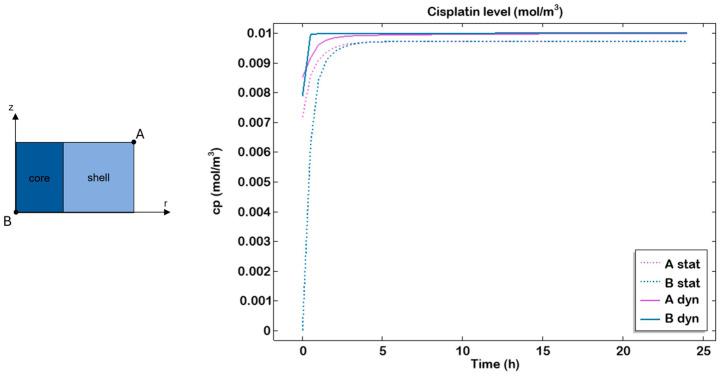
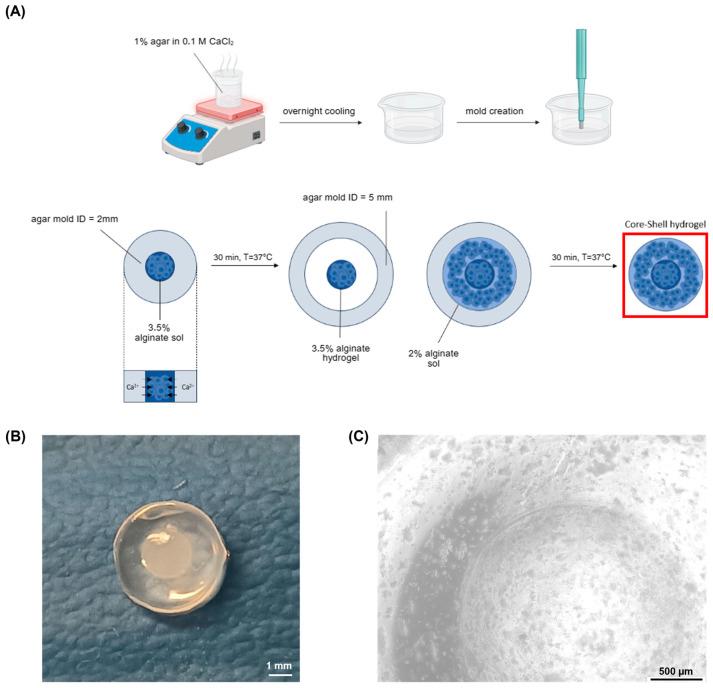
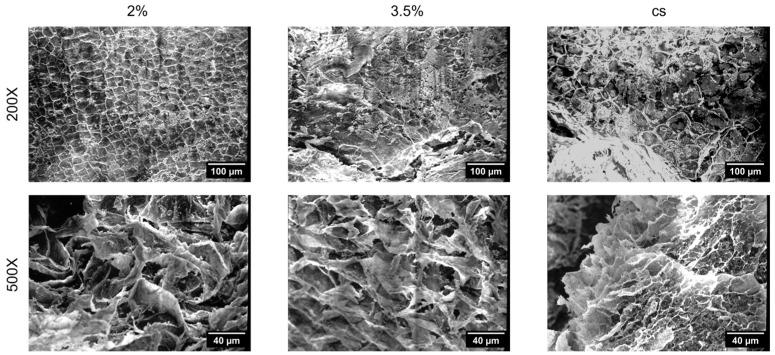
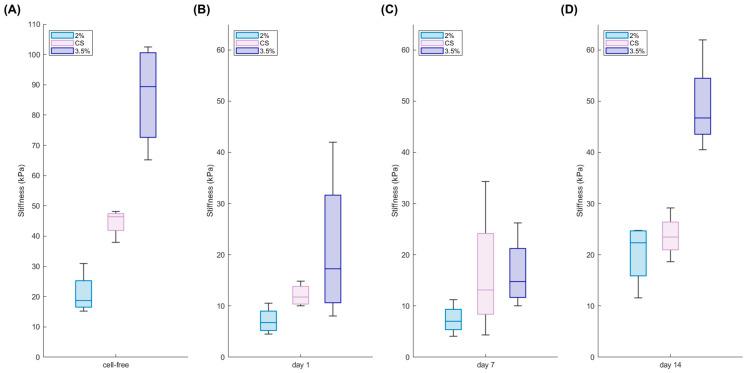
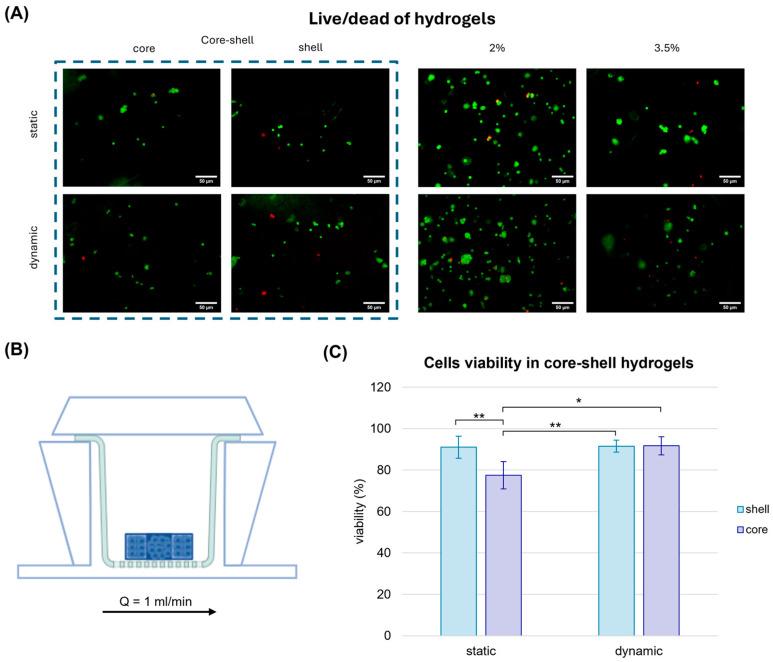
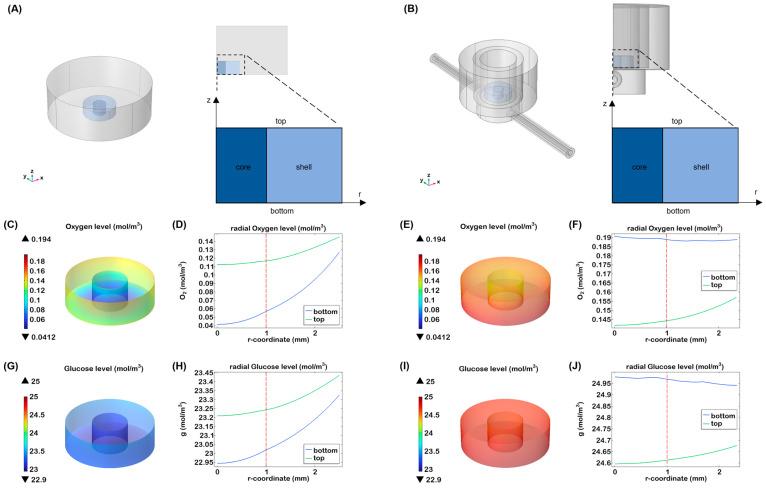
Breast cancer remains the most common malignancy in women, yet, many patients fail to achieve full remission despite significant advancements. This is largely due to tumour heterogeneity and the limitations of current experimental models in accurately replicating the complexity of in vivo tumour environment. In this study, we present a compartmentalised alginate hydrogel platform as an innovative in vitro tool for three-dimensional breast cancer cell culture. To mimic the heterogeneity of tumour tissues, we developed a core-shell structure (3.5% alginate core and 2% alginate shell) that mimic the stiffer, denser internal tumour matrix. The human triple-negative breast cancer cell line (MDA-MB-231) was embedded in core-shell alginate gels to assess viability, proliferation and hypoxic activity. Over one week, good cells proliferation and viability was observed, especially in the softer shell. Interestingly, cells within the stiffer core were more positive to hypoxic marker expression (HIF-1α) than those embedded in the shell, confirming the presence of a hypoxic niche, as observed in vivo. When cultured in the MIVO milli fluidic organ-on-chip resembling the physiological fluid flow conditions, cancer cells viability became comparable between core and shell hydrogel area, emphasising the importance of the fluid flow in nutrients diffusion within three-dimensional matrixes. Cisplatin chemotherapy treatment further highlighted these differences: under static conditions, cancer cell death was prominent in the softer shell, whereas cells in the stiffer core remained resistant to cisplatin. Conversely, drug diffusion was more homogeneous in the core-shell structured treated in the organ-on-chip, leading to a uniform reduction in cell viability. These findings suggest that integrating a compartmentalised core-shell cell laden alginate model with the millifluidic organ on chip offers a more physiologically relevant experimental approach to deepening cancer cell behaviour and drug response.
乳腺癌仍然是女性中最常见的恶性肿瘤,然而,尽管取得了重大进展,许多患者仍未能实现完全缓解。这在很大程度上是由于肿瘤异质性以及当前实验模型在准确复制体内肿瘤环境复杂性方面的局限性。在本研究中,我们提出了一种分隔式海藻酸盐水凝胶平台,作为一种用于三维乳腺癌细胞培养的创新体外工具。为了模拟肿瘤组织的异质性,我们开发了一种核壳结构(3.5%海藻酸盐核和2%海藻酸盐壳),该结构模拟了更硬、更致密的内部肿瘤基质。将人三阴性乳腺癌细胞系(MDA-MB-231)嵌入核壳海藻酸盐凝胶中,以评估细胞活力、增殖和缺氧活性。在一周多的时间里,观察到细胞有良好的增殖和活力,尤其是在较软的壳中。有趣的是,较硬核内的细胞比嵌入壳中的细胞对缺氧标记物表达(HIF-1α)更呈阳性,这证实了体内观察到的缺氧微环境的存在。当在类似于生理流体流动条件的MIVO微流控器官芯片中培养时,癌细胞在核和壳水凝胶区域之间的活力变得相当,这强调了流体流动在三维基质中营养物质扩散中的重要性。顺铂化疗进一步突出了这些差异:在静态条件下,较软壳中的癌细胞死亡明显,而较硬核中的细胞对顺铂仍有抗性。相反,在器官芯片中处理的核壳结构中药物扩散更均匀,导致细胞活力均匀降低。这些发现表明,将分隔式核壳载细胞海藻酸盐模型与微流控器官芯片相结合,为深入了解癌细胞行为和药物反应提供了一种更具生理相关性的实验方法。


 Zotero 插件