
金黄色葡萄球菌宿主反应的全基因组规模荟萃分析确定了宿主导向性治疗靶点的途径。
Genome-Scale Meta-analysis of Host Responses to Staphylococcus aureus Identifies Pathways for Host-Directed Therapeutic Targeting.
作者信息
Russell Clark D, Goeldner-Thompson Seraphima, Smith Emilie, Millar Jonathan E, Wang Bo, Parkinson Nicholas, Clohisey Hendry Sara, Swets Maaike, Fitzgerald J Ross, Baillie J Kenneth, Dockrell David H
机构信息
University of Edinburgh Centre for Inflammation Research, Institute for Regeneration and Repair, Edinburgh, United Kingdom.
Baillie-Gifford Pandemic Science Hub, Institute for Regeneration and Repair, University of Edinburgh, Edinburgh, United Kingdom.
出版信息
J Infect Dis. 2025 Aug 14;232(2):e290-e300. doi: 10.1093/infdis/jiaf290.
BACKGROUND
Staphylococcus aureus infections are frequently complicated by metastatic foci, recurrence, and death. Antimicrobial resistance and intracellular bacterial persistence limit the effectiveness of conventional antimicrobials. Host-directed therapies could improve outcomes, but the interpretive complexity of pathogen-host interactions impedes identification of critical responses suitable for therapeutic targeting. To address this, we performed a meta-analysis of genome-scale studies aiming to prioritize host responses to S aureus.
METHODS
Lists of genes associated with host responses to S aureus were retrieved from systematically identified genome-scale studies, then integrated using the meta-analysis by information content (MAIC) algorithm. This generated a single aggregated gene list, ranked based on the cumulative evidence supporting each gene.
RESULTS
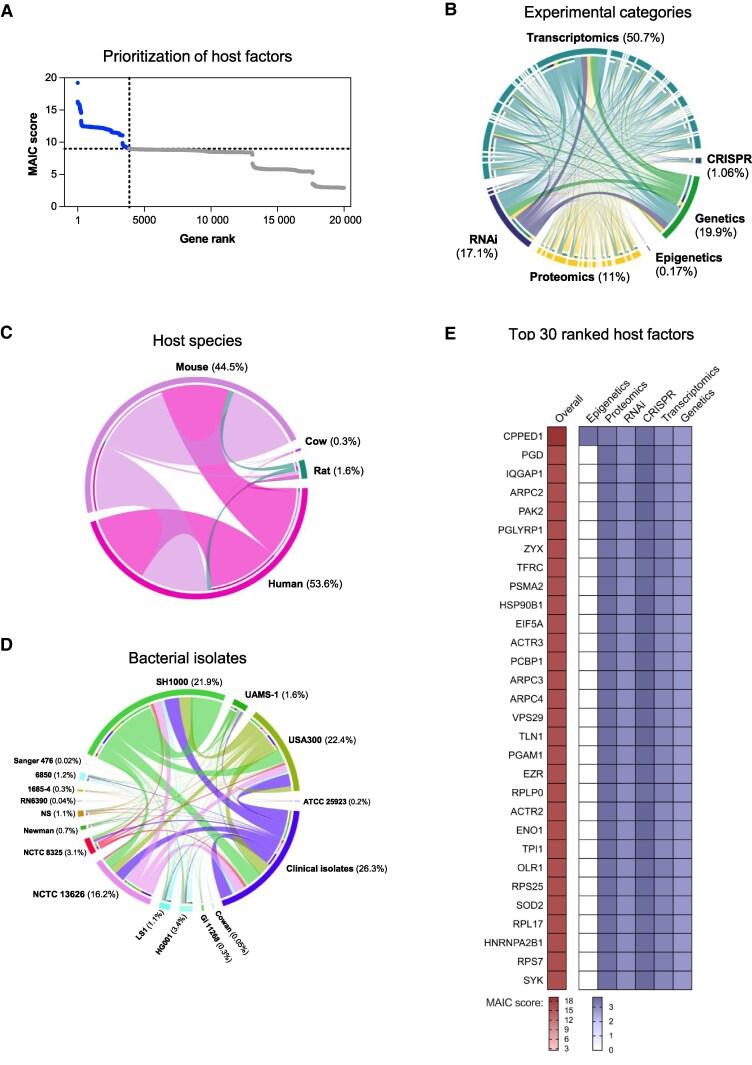
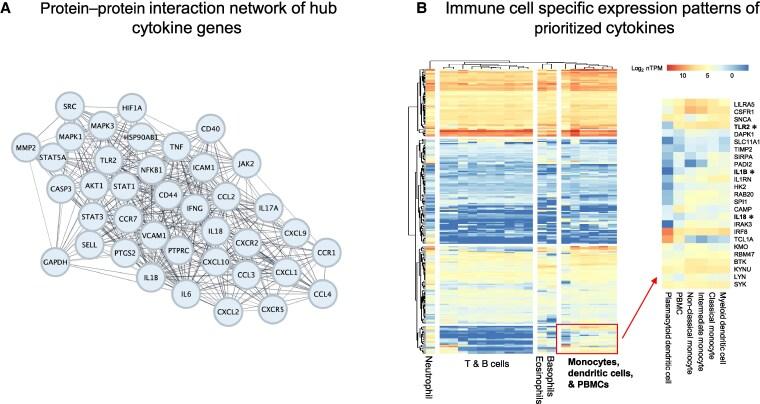
MAIC prioritized 3867 host genes. Myeloid cell immune responses were enriched with specific hubs including TLR2, IL-17, IFN-γ, and IL-1β. Noncanonical effector pathways were also enriched: autophagy (specific factors including mTOR and LAMP2), apoptosis (including BAD and BID), ferroptosis and iron metabolism (TFRC ranked 8/3876), and proteasomal antimicrobial responses (including PSME3 and the novel antimicrobial peptide PPP1CB). Prioritized genes were associated with genome-wide association study traits related to platelet count. In a cohort of patients with S aureus bacteremia, platelet count was differentially associated with clinical outcomes. Targets with immediate therapeutic relevance included S aureus/fibrin/platelet microthrombus formation (VWF, GP11b), S aureus-induced platelet loss (ASGR2), autophagy (mTOR), BID-mediated apoptosis, and intracellular bacterial killing (IFN-γ).
CONCLUSIONS
This in silico analysis identifies cytokine hubs associated with the response to S aureus infection and prioritizes additional host responses including apoptosis, autophagy, iron metabolism, and thrombosis as therapeutic targets.
背景
金黄色葡萄球菌感染常伴有转移性病灶、复发和死亡等并发症。抗菌药物耐药性和细菌在细胞内的持续存在限制了传统抗菌药物的有效性。宿主导向疗法可能会改善治疗结果,但病原体与宿主相互作用的解释复杂性阻碍了对适合作为治疗靶点的关键反应的识别。为解决这一问题,我们对基因组规模研究进行了荟萃分析,旨在确定宿主对金黄色葡萄球菌反应的优先级。
方法
从系统鉴定的基因组规模研究中检索与宿主对金黄色葡萄球菌反应相关的基因列表,然后使用信息含量荟萃分析(MAIC)算法进行整合。这生成了一个单一的汇总基因列表,根据支持每个基因的累积证据进行排名。
结果
MAIC确定了3867个宿主基因的优先级。髓样细胞免疫反应富含特定的枢纽分子,包括Toll样受体2(TLR2)、白细胞介素-17(IL-17)、干扰素-γ(IFN-γ)和白细胞介素-1β(IL-1β)。非经典效应途径也得到了富集:自噬(包括雷帕霉素靶蛋白(mTOR)和溶酶体相关膜蛋白2(LAMP2)等特定因子)、凋亡(包括BAD和BID)、铁死亡和铁代谢(转铁蛋白受体(TFRC)在3876个基因中排名第8)以及蛋白酶体抗菌反应(包括蛋白酶体激活因子3(PSME3)和新型抗菌肽蛋白磷酸酶1催化亚基β(PPP1CB))。优先级基因与全基因组关联研究中与血小板计数相关的性状有关。在一组金黄色葡萄球菌菌血症患者中血小板计数与临床结果存在差异关联。具有直接治疗相关性的靶点包括金黄色葡萄球菌/纤维蛋白/血小板微血栓形成(血管性血友病因子(VWF)、糖蛋白IIb(GP11b))、金黄色葡萄球菌诱导的血小板减少(无唾液酸糖蛋白受体2(ASGR2))、自噬(mTOR)、BID介导的凋亡以及细胞内细菌杀伤(IFN-γ)。
结论
这项计算机模拟分析确定了与金黄色葡萄球菌感染反应相关的细胞因子枢纽分子,并将包括凋亡、自噬、铁代谢和血栓形成在内的其他宿主反应作为治疗靶点进行了优先级排序。



 Zotero 插件