
评估大规模核酸检测和居家隔离对新型突发传染病预防与控制的影响:一种动态建模方法。
Evaluating the impact of large-scale nucleic acid testing and home quarantine on a novel emerging infectious disease prevention and control: a dynamic modeling approach.
作者信息
Guo Zuiyuan, Chen Yuheng, Xiao Guangquan, Jiang Huawei, Yang Zurong, Li Jiangfan, Gong Lili, Jin Meisong, Wang Feng
机构信息
The First Department of Infectious Disease Prevention and Control, Center for Disease Control and Prevention in Northern Theater Command, Shenyang, China.
College of Communication Engineering, Jilin University, Changchun, China.
出版信息
Front Public Health. 2025 May 19;13:1447738. doi: 10.3389/fpubh.2025.1447738. eCollection 2025.
INTRODUCTION
Conducting large-scale viral nucleic acid testing and isolating SARS-CoV-2-infections were crucial strategies in China, which played a key role in successfully controlling multiple waves of the Omicron epidemic. To thoroughly analyze the mechanisms and value of these measures, including testing and isolation, in epidemic prevention and control, and to provide a theoretical basis for scientific epidemic prevention and precise strategies in the face of potential future outbreaks of novel respiratory infectious diseases.
METHODS
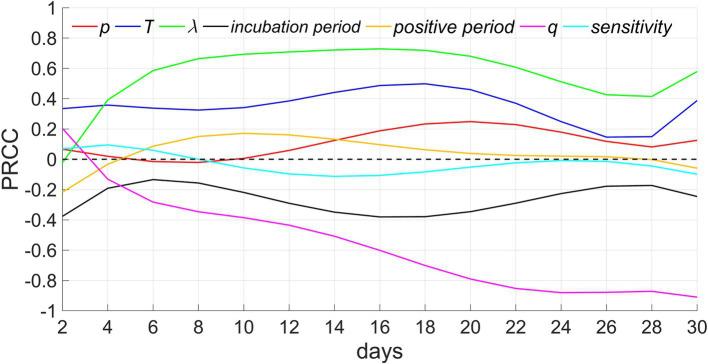
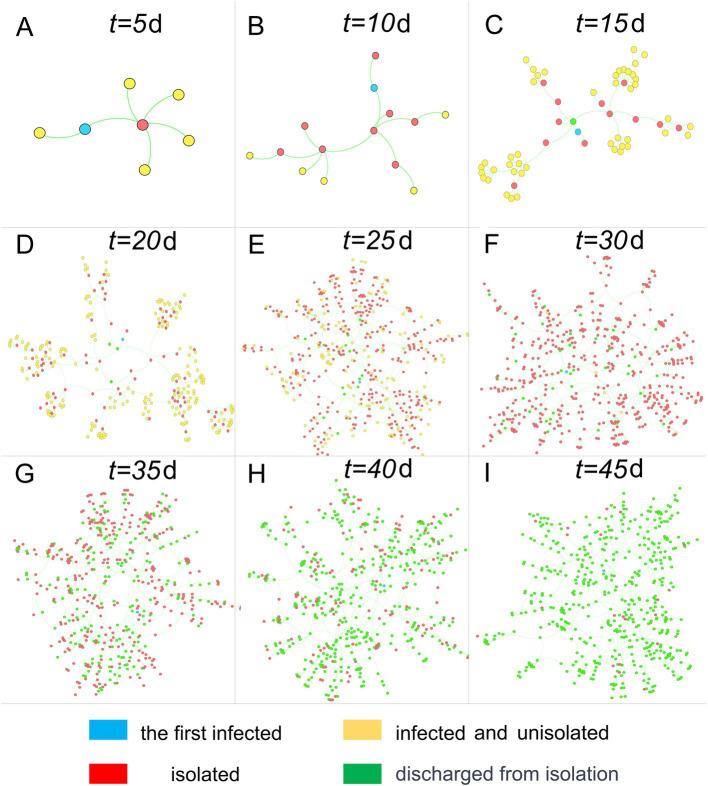
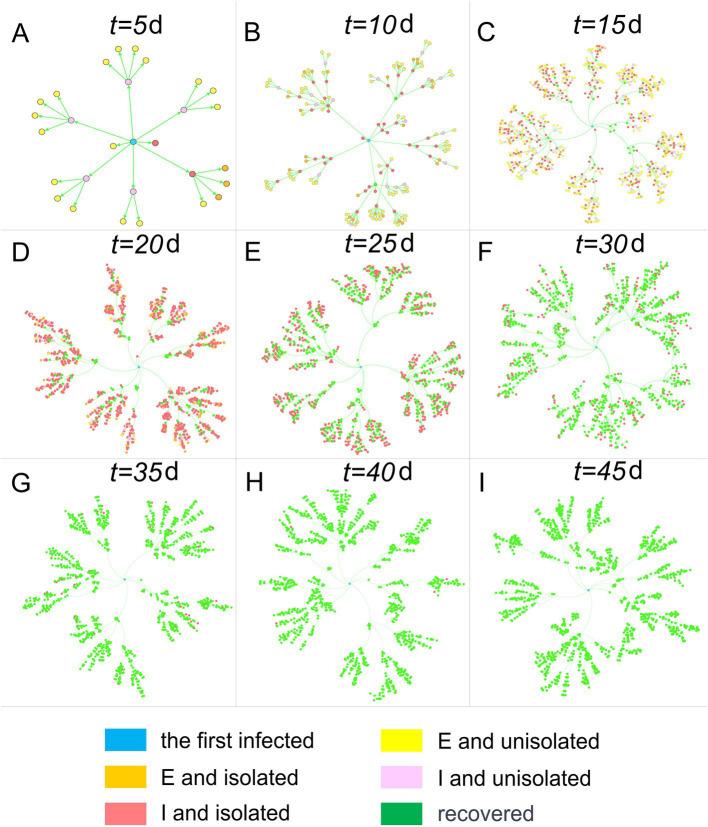
We developed an individual-based computational model of infectious disease dynamics. The model simulates regular large-scale nucleic acid testing for community residents during an epidemic. When individuals tested positive, they and their household members, as close contacts, are subjected to home isolation. During home isolation, the virus is assumed not to spread outside the household, but the potential for transmission within the household remained. Isolation measures can be lifted once the testing results turned negative. Finally, sensitivity analysis was conducted to verify the scientific validity and reliability of the model.
RESULTS
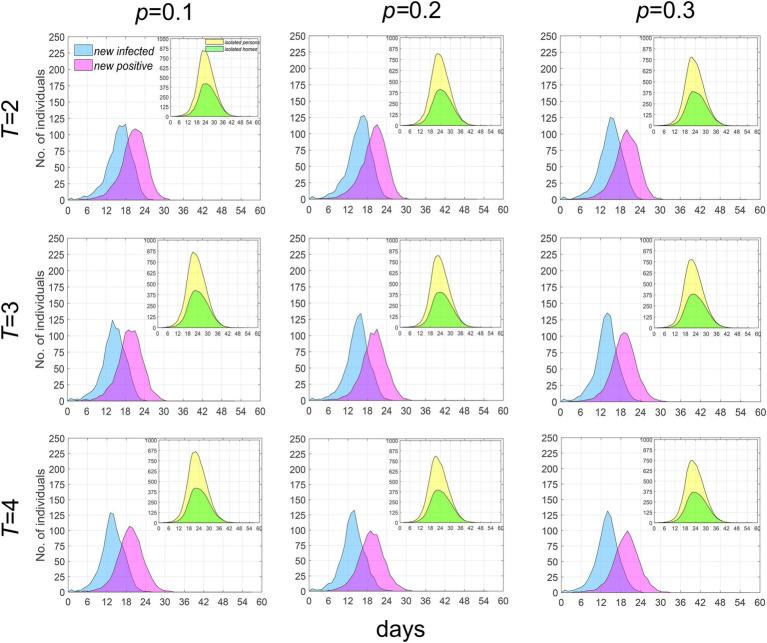
The study found that the efficacy of testing and isolation in epidemic prevention is closely related to the speed of disease transmission. When the basic reproduction number () is less than 3, these measures can significantly reduce the infection rate among the population and the speed of epidemic spread; otherwise, they fail to achieve the goal of controlling the epidemic.
DISCUSSION
Reducing person-to-person contact is crucial for epidemic prevention and control. In addition to testing and isolation, comprehensive non-pharmaceutical interventions (NPIs) should also be implemented, such as increasing social distancing, restricting gatherings in public places, and promoting vaccination, to control the transmission of the epidemic.
引言
开展大规模病毒核酸检测以及隔离新型冠状病毒感染病例是中国的关键防控策略,在成功控制多波奥密克戎疫情中发挥了关键作用。为深入分析这些措施(包括检测和隔离)在疫情防控中的机制和价值,为未来应对新型呼吸道传染病潜在暴发时科学防疫和精准施策提供理论依据。
方法
我们建立了一个基于个体的传染病动力学计算模型。该模型模拟疫情期间对社区居民进行定期大规模核酸检测。当个体检测呈阳性时,他们及其家庭成员作为密切接触者将接受居家隔离。居家隔离期间,假设病毒不会在家庭外传播,但家庭内部仍存在传播风险。一旦检测结果转为阴性,隔离措施即可解除。最后,进行敏感性分析以验证模型的科学有效性和可靠性。
结果
研究发现,检测和隔离措施在疫情防控中的效果与疾病传播速度密切相关。当基本再生数()小于3时,这些措施可显著降低人群感染率和疫情传播速度;否则,无法实现控制疫情的目标。
讨论
减少人际接触对疫情防控至关重要。除检测和隔离外,还应实施全面的非药物干预措施(NPIs),如增加社交距离、限制公共场所聚集以及推广疫苗接种,以控制疫情传播。




 Zotero 插件