
外泌体在转化生长因子-β介导的癌细胞可塑性和耐药性中的作用。
Role of exosomes in transforming growth factor-β-mediated cancer cell plasticity and drug resistance.
作者信息
Ruksha Tatiana, Palkina Nadezhda
机构信息
Pathophysiology Department, Krasnoyarsk State Medical University, 660022 Krasnoyarsk, Russian Federation.
出版信息
Explor Target Antitumor Ther. 2025 Jun 5;6:1002322. doi: 10.37349/etat.2025.1002322. eCollection 2025.
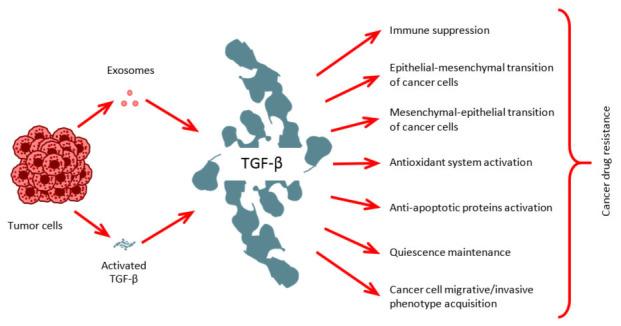
Transforming growth factor-β (TGF-β) is a multifunctional molecule with a dual role in carcinogenesis. Recent studies have demonstrated its various effects on cancer-related processes. However, the identification of TGF-β and TGF-β signaling pathway regulators in extracellular vesicles (EVs) appears promising for targeting them to control cancer progression associated with drug resistance. Exosomal TGF-β has been shown to be implicated in cancer cell phenotypic plasticity, a dynamic feature of cancer cells, and an evasive process hampering treatment efficacy. Additionally, EVs can influence the metastatic cascade through mechanisms, including their effects on the immune system and their binding to extracellular matrix (ECM) proteins. These processes collaborate to provide a supportive microenvironment for the development and growth of metastatic tumors. A deeper understanding of the mechanisms by which EVs facilitate TGF-β-mediated intercellular communication may have practical implications for better controlling oncological disorders and providing new methods for cancer diagnostics and treatment, including approaches targeting EVs.
转化生长因子-β(TGF-β)是一种多功能分子,在肿瘤发生过程中具有双重作用。最近的研究已经证明了它对癌症相关过程的多种影响。然而,在细胞外囊泡(EVs)中鉴定TGF-β和TGF-β信号通路调节剂,对于将它们作为靶点来控制与耐药性相关的癌症进展似乎很有前景。外泌体TGF-β已被证明与癌细胞表型可塑性有关,癌细胞表型可塑性是癌细胞的一个动态特征,也是一个阻碍治疗效果的逃避过程。此外,EVs可以通过多种机制影响转移级联反应,包括它们对免疫系统的影响以及它们与细胞外基质(ECM)蛋白的结合。这些过程共同作用,为转移性肿瘤的发展和生长提供了一个支持性的微环境。更深入地了解EVs促进TGF-β介导的细胞间通讯的机制,可能对更好地控制肿瘤疾病以及为癌症诊断和治疗提供新方法具有实际意义,包括针对EVs的方法。

 Zotero 插件