
百日咳的死灰复燃:流行病学趋势、促成因素、挑战以及疫苗接种和监测建议。
Resurgence of pertussis: Epidemiological trends, contributing factors, challenges, and recommendations for vaccination and surveillance.
作者信息
Wang Sijia, Zhang Shimo, Liu Jue
机构信息
Department of Epidemiology and Biostatistics, School of Public Health, Peking University, Beijing, China.
Institute for Global Health and Development, Peking University, Beijing, China.
出版信息
Hum Vaccin Immunother. 2025 Dec;21(1):2513729. doi: 10.1080/21645515.2025.2513729. Epub 2025 Jun 9.
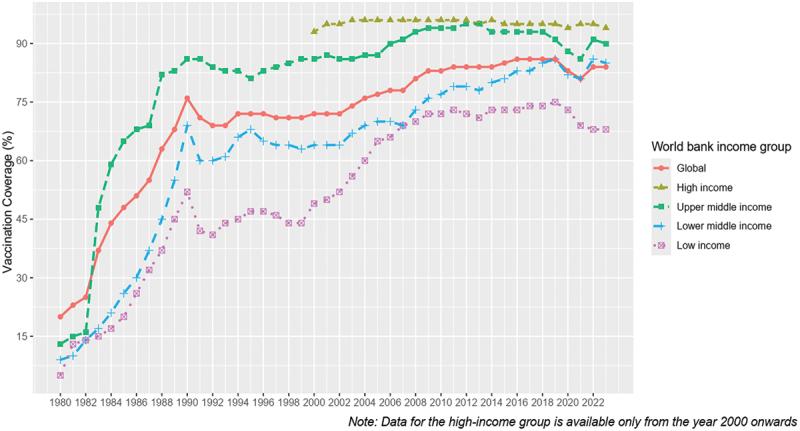
Pertussis, a respiratory disease caused by , remains a global health challenge despite decades of vaccination. The inclusion of diphtheria, tetanus, and whole-cell pertussis (DTwP) vaccines in the World Health Organization (WHO) Expanded Program on Immunization (EPI) in 1974 significantly reduced incidence worldwide. However, since the 1980s, pertussis resurgence has been observed in both high-income and low- and middle-income nations. The COVID-19 pandemic further disrupted vaccination, exacerbating outbreaks. Contributing factors include genetic mutations in , vaccine differences, waning immunity, inadequate immunization, disease cyclicity, and the impact of the COVID-19 pandemic, coupled with improved surveillance, diagnostics, and awareness. Pertussis continues to impose a substantial disease burden, with infants being the most vulnerable. This review examines pertussis epidemiology from 1980 to 2023, analyzing resurgence drivers and evaluating current progress and persistent challenges in vaccination strategies and surveillance efforts.
百日咳是一种由[病原体未提及]引起的呼吸道疾病,尽管进行了数十年的疫苗接种,但它仍然是一项全球性的卫生挑战。1974年,白喉、破伤风和全细胞百日咳(DTwP)疫苗被纳入世界卫生组织(WHO)的扩大免疫规划(EPI),这显著降低了全球范围内的发病率。然而,自20世纪80年代以来,高收入国家以及低收入和中等收入国家均出现了百日咳疫情的反弹。新冠疫情进一步扰乱了疫苗接种工作,加剧了疫情爆发。促成因素包括[病原体相关因素未提及]的基因突变、疫苗差异、免疫力下降、免疫接种不足、疾病周期性以及新冠疫情的影响,同时还有监测、诊断和认知方面的改善。百日咳继续造成巨大的疾病负担,婴儿是最易受影响的群体。本综述考察了1980年至2023年的百日咳流行病学情况,分析了疫情反弹的驱动因素,并评估了疫苗接种策略和监测工作的当前进展及持续存在的挑战。


 Zotero 插件