
大脑中的天冬氨酸:综述
Aspartate in the Brain: A Review.
作者信息
Rae Caroline D, Rowlands Benjamin D, Balcar Vladimir J
机构信息
Neuroscience Research Australia, Barker St, Randwick, NSW, 2031, Australia.
School of Psychology, The University of New South Wales, Kensington, NSW, 2052, Australia.
出版信息
Neurochem Res. 2025 Jun 12;50(3):199. doi: 10.1007/s11064-025-04454-3.
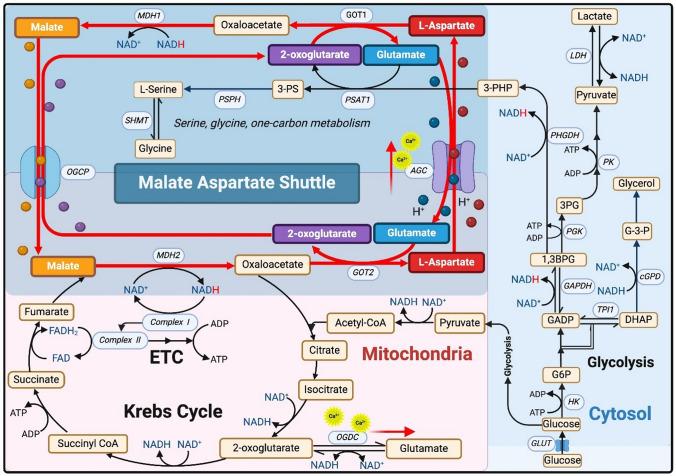
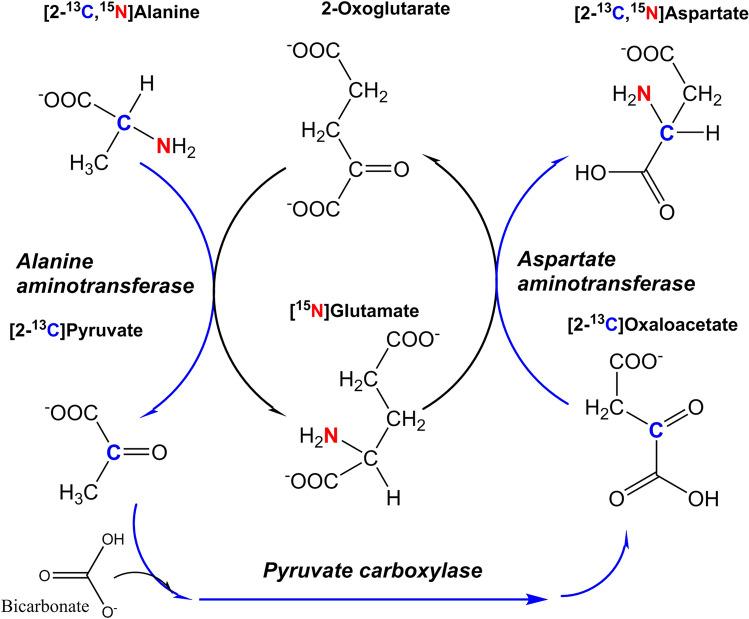
L-Aspartate (aspartic acid; CHNO; 2-aminobutanedoic acid) is a non-essential α-amino acid found ubiquitously throughout the body, including in the brain. Aspartate is one of the protein-forming amino acids and the formation of tRNA-aspartate complex is catalysed by aspartyl tRNA synthetase. Free aspartate, which is the main subject of this review, plays key roles in metabolism, as an amino donor and acceptor. It contributes to the synthesis of protein, arginine and nitric oxide, asparagine, N-acetylaspartate and N-methyl-D-aspartate. Its major metabolic role in the brain is recycling reducing equivalents (protons) between the cytoplasm and mitochondrial matrix as part of the malate-aspartate shuttle. L-Aspartate's actions on synaptic receptors, as well as its possible presence in nerve terminals and synaptic vesicles, are, in principle, consistent with a role as an excitatory neurotransmitter. The evidence is far from conclusive and at times controversial. The role of D-aspartate in brain function is even less certain but, it appears that, rather than being a minor neurotransmitter, D-aspartate is more likely to be involved in fine regulation of endocrine and homeostatic processes. Much research remains to be done in this area. The diversity of its functions and chemistry make aspartate a complex molecule to investigate and measure in vivo. Perturbations of aspartate metabolism have been described in a range of neurological deficits, particularly those of white matter. Here, we examine what is known about the various roles of aspartate in brain, its metabolism, transport and compartmentation, its role as a neurotransmitter or a more general signalling molecule, and what is currently known about its role(s) in disease processes.
L-天冬氨酸(天冬氨酸;C₄H₇NO₄;2-氨基丁二酸)是一种非必需的α-氨基酸,在全身广泛存在,包括大脑。天冬氨酸是构成蛋白质的氨基酸之一,天冬氨酰tRNA合成酶催化形成tRNA-天冬氨酸复合物。游离天冬氨酸是本综述的主要研究对象,它在代谢中作为氨基供体和受体发挥关键作用。它有助于蛋白质、精氨酸、一氧化氮、天冬酰胺、N-乙酰天冬氨酸和N-甲基-D-天冬氨酸的合成。其在大脑中的主要代谢作用是作为苹果酸-天冬氨酸穿梭的一部分,在细胞质和线粒体基质之间循环还原当量(质子)。L-天冬氨酸对突触受体的作用,以及它可能在神经末梢和突触小泡中的存在,原则上与作为兴奋性神经递质的作用一致。证据远非确凿,有时还存在争议。D-天冬氨酸在脑功能中的作用甚至更不确定,但似乎D-天冬氨酸不太可能是一种次要的神经递质,而更有可能参与内分泌和稳态过程的精细调节。该领域仍有许多研究有待开展。天冬氨酸功能和化学性质的多样性使其成为一个在体内难以研究和测量的复杂分子。天冬氨酸代谢紊乱已在一系列神经功能缺损中被描述,尤其是白质方面的缺损。在这里,我们研究了关于天冬氨酸在大脑中的各种作用、其代谢、转运和分隔、其作为神经递质或更一般信号分子的作用,以及目前已知其在疾病过程中的作用。



 Zotero 插件