
一种用于确定局部晚期头颈癌中化疗耐药基因的多模态方法。
A multimodal approach for establishing and as chemoresistance genes in locally advanced head and neck cancer.
作者信息
Chaudhary Raushan Kumar, Patil Prakash, Shetty Vijith Vittal, Mateti Uday Venkat, Shetty Praveenkumar
机构信息
Department of Pharmacy Practice, NGSM Institute of Pharmaceutical Sciences (NGSMIPS), Nitte (Deemed to be University), Mangalore, Karnataka, India.
Central Research Laboratory, K.S. Hegde Medical Academy (KSHEMA), Nitte (Deemed to be University), Mangalore, Karnataka, India.
出版信息
Front Pharmacol. 2025 May 29;16:1541987. doi: 10.3389/fphar.2025.1541987. eCollection 2025.
BACKGROUND
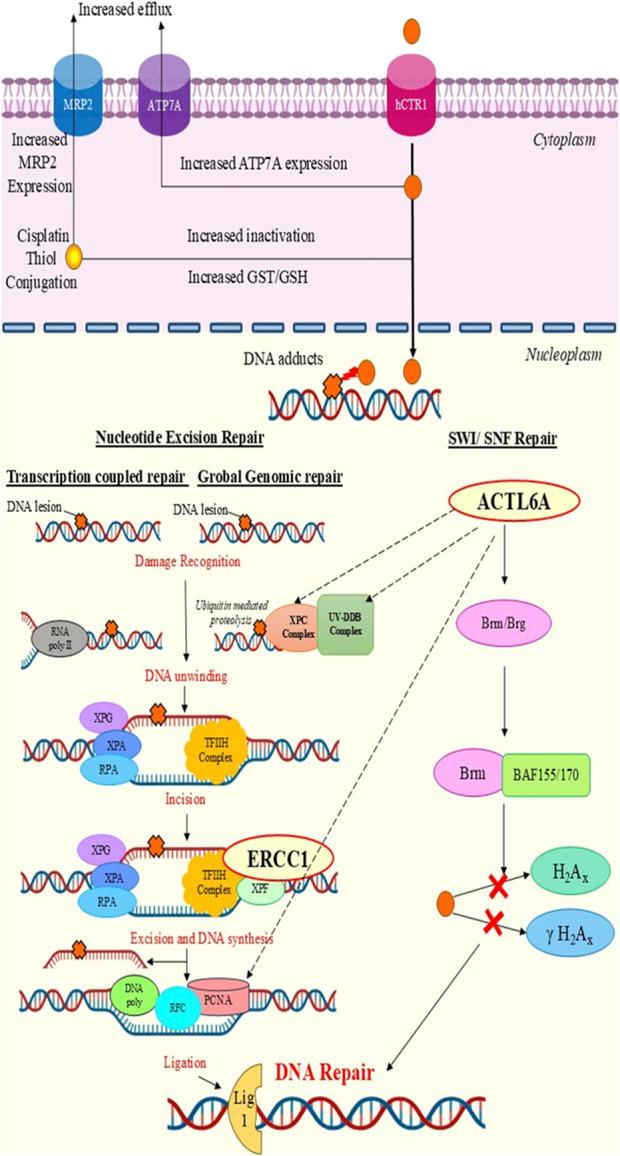
DNA is generally considered the ultimate target of cisplatin, so DNA repair has become the hallmark for cisplatin chemoresistance that is attributed to the poor overall survival (50%) among patients with head and neck cancer (HNC). As the efficacy of cisplatin is dose-dependent, we conducted the first study in an Asian population to characterize the DNA repair genes and based on the dosing of cisplatin-based chemoradiotherapy (CRT).
METHODS
Locally advanced HNC (LAHNC) patients who were planning to undergo cisplatin-based CRT were enrolled in a prospective study to quantify the dose-dependent expressions of and from peripheral blood mononuclear cells via quantitative polymerase chain reaction; these results were integrated with computational analysis and systematic review/meta-analysis to formulate evidence-based translation decisions. The Friedman test and Wilcoxon's test were used to compare the expressions of the two genes before and after CRT, and Spearman's rank correlation was used to find the correlation between and expressions. All statistical analyses were performed using SPSS version 29.
RESULTS
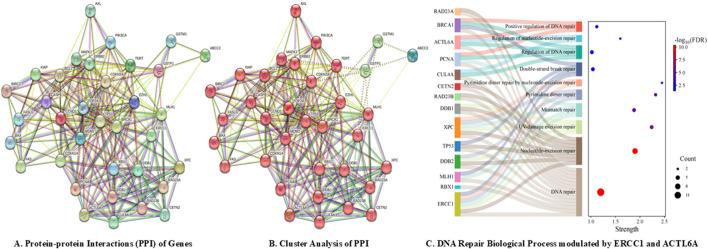
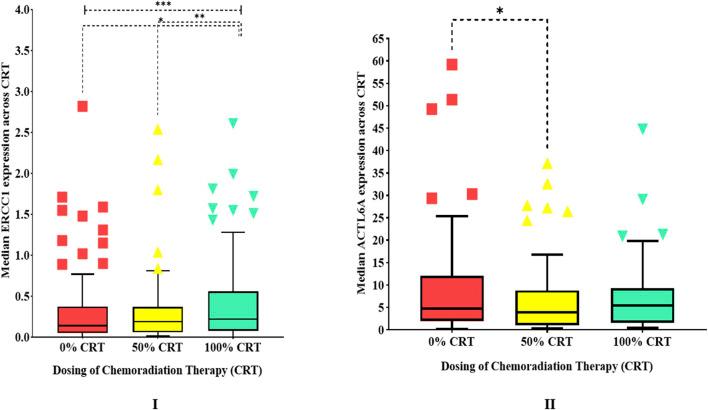
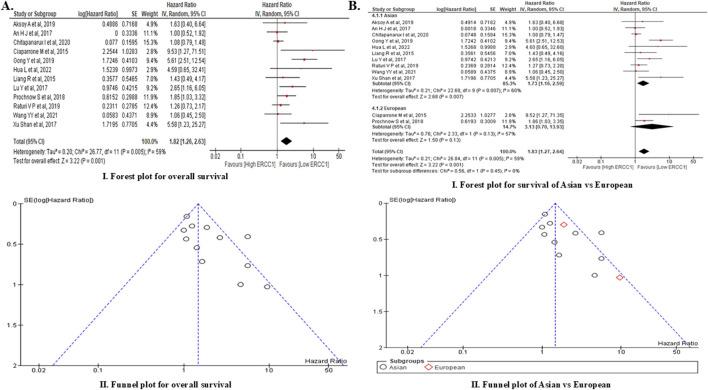
A total of 77 LAHNC patients were enrolled in this study, of which 96.1% were men and 3.9% were women with a mean age of 52.88 ± 9.68 years. The median expressions of were significantly increased ( < 0.001) after 50% (0.19) and 100% CRT (0.23) compared to the baseline value (0.14), whereas expression decreased from 4.77 to 3.87 after 50% CRT ( < 0.05) and increased to 5.43 after 100% CRT. From the computational analysis, and were found to be overexpressed among HNC patients and observed to regulate 10 repair pathways. Overexpressions of and were predicted to infiltrate the tumors with CD4 cells, macrophages, dendritic cells, and B cells. The hazard ratios for overall survival were found to be 1.67 among the overexpressed and 1.82 among the overexpressed HNC patients via computational analysis and meta-analysis, respectively. Furthermore, FDA-approved drugs like gemcitabine and panobinostat were found to be the best candidates for downregulating and expressions based on binding affinities of -3.707 and -4.198 kcal/mol, respectively.
CONCLUSION
The increased expressions of and during/after cisplatin-based CRT are expected to mediate DNA repair leading to chemoresistance, which could result in poor overall survival in HNC patients. Thus, FDA-approved drugs like panobinostat and gemcitabine can be repurposed to target the chemoresistance genes and , respectively.
背景
DNA通常被认为是顺铂的最终作用靶点,因此DNA修复已成为顺铂化疗耐药的标志,这归因于头颈癌(HNC)患者总体生存率较低(50%)。由于顺铂的疗效具有剂量依赖性,我们在亚洲人群中开展了第一项研究,以基于顺铂同步放化疗(CRT)的剂量来表征DNA修复基因。
方法
计划接受顺铂为基础的CRT的局部晚期HNC(LAHNC)患者被纳入一项前瞻性研究,通过定量聚合酶链反应来量化外周血单个核细胞中DNA修复基因的剂量依赖性表达;这些结果与计算分析以及系统评价/荟萃分析相结合,以制定基于证据的转化决策。采用Friedman检验和Wilcoxon检验比较CRT前后两个基因的表达,并使用Spearman等级相关性分析来寻找两个基因表达之间的相关性。所有统计分析均使用SPSS 29版软件进行。
结果
本研究共纳入77例LAHNC患者,其中男性占96.1%,女性占3.9%,平均年龄为52.88±9.68岁。与基线值(0.14)相比,在50%(0.19)和100%CRT后(0.23),DNA修复基因的中位表达显著增加(P<0.001),而在50%CRT后,另一个基因的表达从4.77降至3.87(P<0.05),在100%CRT后增加至5.43。通过计算分析发现,这两个基因在HNC患者中过表达,并观察到它们调节10条修复途径。通过计算分析和荟萃分析发现,在过表达该基因的HNC患者中,总生存的风险比分别为过表达该基因的患者为1.67,过表达另一个基因的患者为1.82。此外基于结合亲和力分别为-3.707和-4.198kcal/mol,发现FDA批准的药物如吉西他滨和帕比司他分别是下调这两个基因表达的最佳候选药物。
结论
在基于顺铂的CRT期间/之后,这两个基因表达的增加预计会介导DNA修复,导致化疗耐药,这可能导致HNC患者总体生存率较低。因此,FDA批准的药物如帕比司他和吉西他滨可分别重新用于靶向化疗耐药基因。


 Zotero 插件