
与表面多糖II相关的细胞外DNA细丝赋予艰难梭菌生物膜基质一种网络状结构。
Extracellular DNA filaments associated with surface polysaccharide II give Clostridioides difficile biofilm matrix a network-like structure.
作者信息
Kamwouo Tania, Bouttier Sylvie, Domenichini Séverine, Saunier Johanna, Coullon Héloïse, Simons Alexis, Janoir Claire
机构信息
Micalis Institute, Université Paris-Saclay, INRAE, AgroParisTech, 17 avenue des Sciences, Orsay, France.
UMS IPSIT, Université Paris-Saclay-US 31 INSERM-UAR 3679 CNRS, Plateforme d'Imagerie Cellulaire MIPSIT, Orsay, France.
出版信息
NPJ Biofilms Microbiomes. 2025 Jun 13;11(1):108. doi: 10.1038/s41522-025-00751-5.
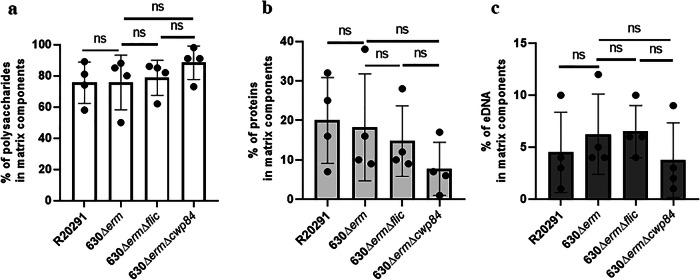
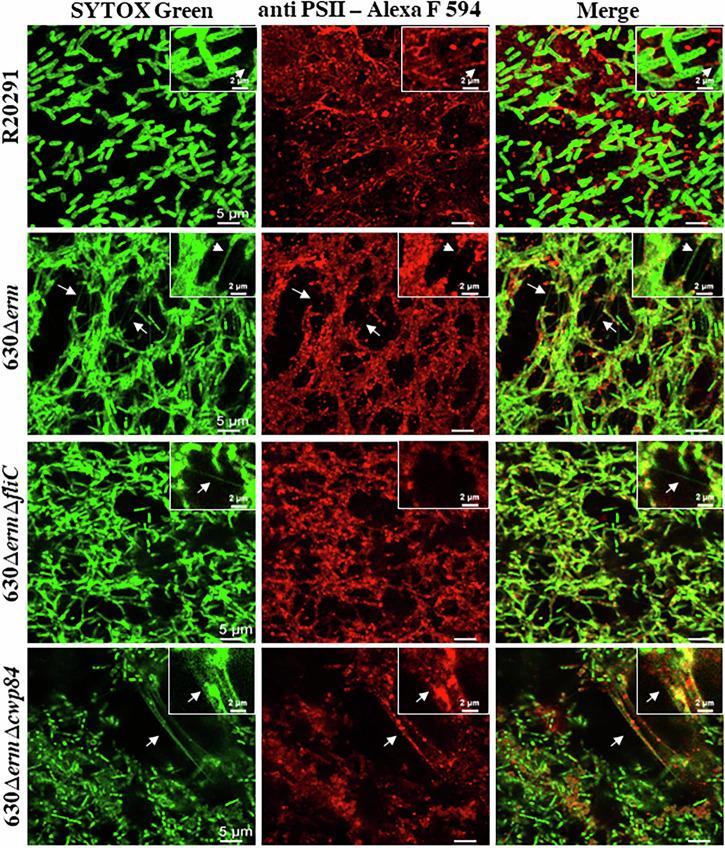
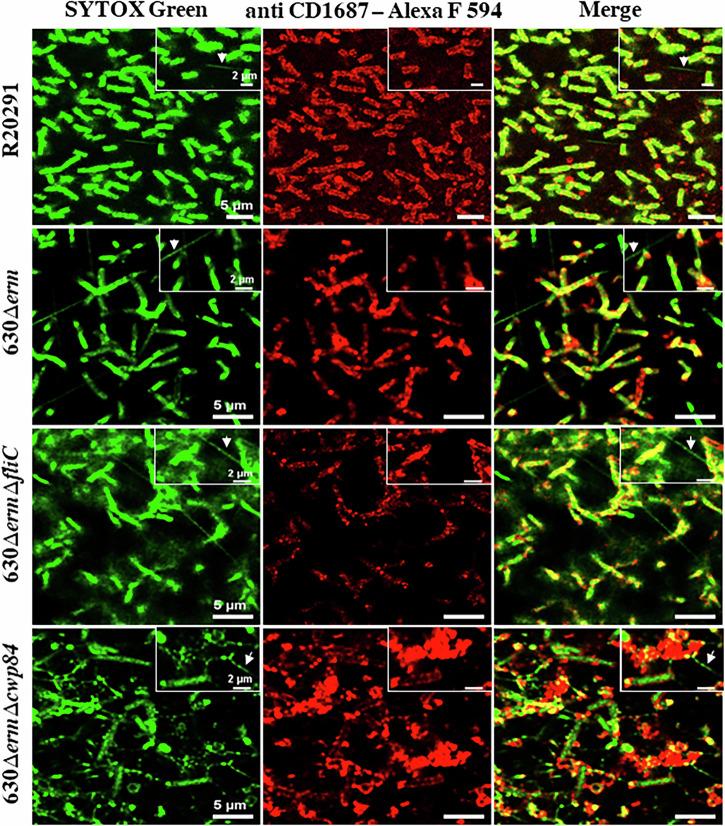
Clostridioides difficile is an anaerobic, spore-forming, Gram-positive bacterium, and a leading cause of healthcare-associated intestinal infections. Recurrences occur frequently, most of them being relapses. Apart from spores, C. difficile biofilm is hypothesized as a reservoir for relapses. Thus, increased knowledge on in vitro biofilm formation and characteristics is required. We finely characterized the matrix components in 4 C. difficile strains. Confocal microscopy revealed for the first time the presence of eDNA filaments connecting bacteria, with a spider's web-like organization. Biofilm disruption with DNase I suggests that eDNA, even in low abundance, plays a key role in the biofilm scaffold, maintaining biofilm cohesion by connecting bacteria. Observation of strong overlapping staining, particularly in the highest biofilm-producing strain tested between eDNA and polysaccharide II or lipoprotein CD1687, suggests that interactions between these components may enhance biofilm cohesion. Whereas autolysis does not appear to be a major way of matrix component release under our conditions, eDNA was sometimes associated with lipidic round shapes that can evoke vesicle structures. Together, these results suggest that the bacterial aggregation and structuring of the C. difficile biofilm involve several components of the matrix, including eDNA, interacting with each other to build the scaffold of biofilm.
艰难梭菌是一种厌氧、产芽孢的革兰氏阳性细菌,是医疗保健相关肠道感染的主要原因。复发频繁发生,其中大多数是复发。除了芽孢外,艰难梭菌生物被膜被认为是复发的一个储存库。因此,需要增加对体外生物被膜形成及其特性的了解。我们对4株艰难梭菌菌株的基质成分进行了精细表征。共聚焦显微镜首次揭示了连接细菌的细胞外DNA(eDNA)细丝的存在,其呈蜘蛛网样结构。用脱氧核糖核酸酶I破坏生物被膜表明,即使eDNA含量很低,它在生物被膜支架中也起着关键作用,通过连接细菌来维持生物被膜的凝聚力。观察到强烈的重叠染色,特别是在测试的最高产生物被膜菌株中,eDNA与多糖II或脂蛋白CD1687之间的重叠染色,表明这些成分之间的相互作用可能增强生物被膜的凝聚力。虽然在我们的条件下自溶似乎不是基质成分释放的主要方式,但eDNA有时与可能引发囊泡结构的脂质圆形结构相关。总之,这些结果表明,艰难梭菌生物被膜的细菌聚集和结构形成涉及基质的几个成分,包括eDNA,它们相互作用以构建生物被膜的支架。





 Zotero 插件