
艰难梭菌生物膜调控:与强毒力相关的新型系统。
Biofilm regulation in Clostridioides difficile: Novel systems linked to hypervirulence.
机构信息
Nutrition Innovation Centre for Food and Health (NICHE), School of Biomedical Sciences, Ulster University, Coleraine, Co. Londonderry, Northern Ireland.
Department of Pathology and Infectious Diseases, School of Veterinary Medicine, University of Surrey, Guildford, Surrey, United Kingdom.
出版信息
PLoS Pathog. 2021 Sep 9;17(9):e1009817. doi: 10.1371/journal.ppat.1009817. eCollection 2021 Sep.
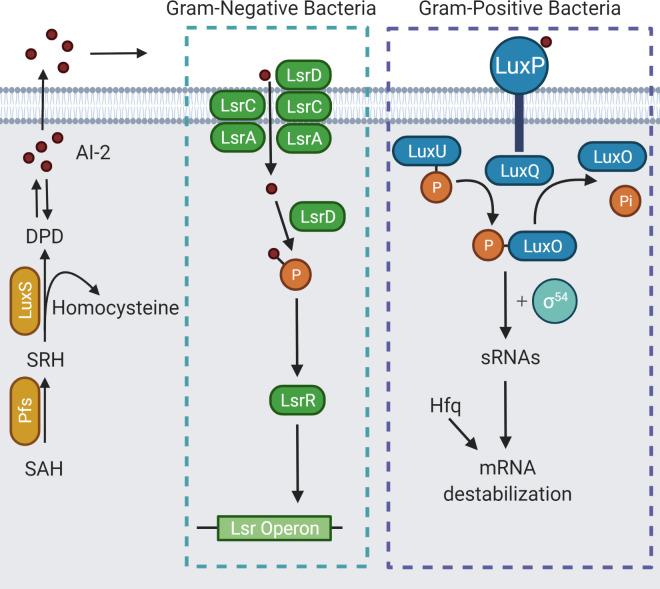
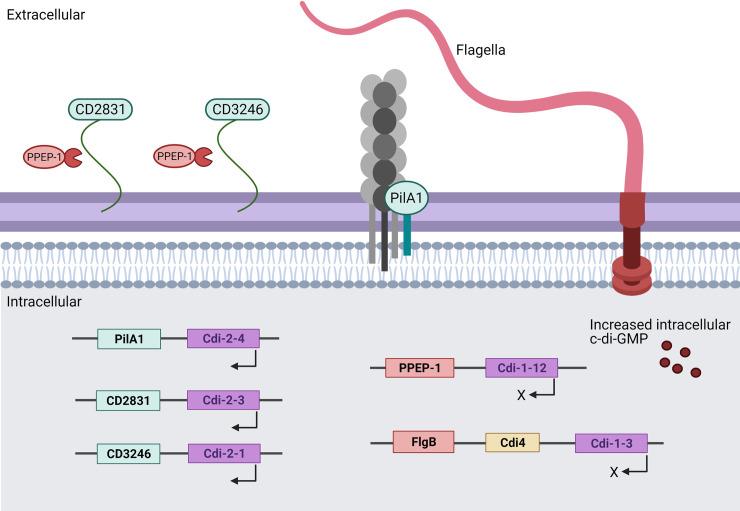
Clostridiodes difficile (C. difficile) was ranked an "urgent threat" by the Centers for Disease Control and Prevention (CDC) in 2019. C. difficile infection (CDI) is the most common healthcare-associated infection (HAI) in the United States of America as well as the leading cause of antibiotic-associated gastrointestinal disease. C. difficile is a gram-positive, rod-shaped, spore-forming, anaerobic bacterium that causes infection of the epithelial lining of the gut. CDI occurs most commonly after disruption of the human gut microflora following the prolonged use of broad-spectrum antibiotics. However, the recurrent nature of this disease has led to the hypothesis that biofilm formation may play a role in its pathogenesis. Biofilms are sessile communities of bacteria protected from extracellular stresses by a matrix of self-produced proteins, polysaccharides, and extracellular DNA. Biofilm regulation in C. difficile is still incompletely understood, and its role in disease recurrence has yet to be fully elucidated. However, many factors have been found to influence biofilm formation in C. difficile, including motility, adhesion, and hydrophobicity of the bacterial cells. Small changes in one of these systems can greatly influence biofilm formation. Therefore, the biofilm regulatory system would need to coordinate all these systems to create optimal biofilm-forming physiology under appropriate environmental conditions. The coordination of these systems is complex and multifactorial, and any analysis must take into consideration the influences of the stress response, quorum sensing (QS), and gene regulation by second messenger molecule cyclic diguanosine monophosphate (c-di-GMP). However, the differences in biofilm-forming ability between C. difficile strains such as 630 and the "hypervirulent" strain, R20291, make it difficult to assign a "one size fits all" mechanism to biofilm regulation in C. difficile. This review seeks to consolidate published data regarding the regulation of C. difficile biofilms in order to identify gaps in knowledge and propose directions for future study.
艰难梭菌(C. difficile)在 2019 年被疾病控制与预防中心(CDC)列为“紧急威胁”。艰难梭菌感染(CDI)是美国最常见的医疗保健相关感染(HAI),也是抗生素相关胃肠道疾病的主要原因。艰难梭菌是一种革兰氏阳性、杆状、产芽孢、厌氧细菌,会引起肠道上皮衬里的感染。CDI 最常发生在广谱抗生素长期使用后,人类肠道微生物群被破坏之后。然而,这种疾病的反复发作导致了生物膜形成可能在其发病机制中起作用的假设。生物膜是细菌的定殖群落,由自身产生的蛋白质、多糖和细胞外 DNA 组成的基质保护免受细胞外应激。艰难梭菌的生物膜调控仍不完全清楚,其在疾病复发中的作用尚未完全阐明。然而,已经发现许多因素会影响艰难梭菌的生物膜形成,包括细菌细胞的运动性、粘附性和疏水性。这些系统中的一个小变化会极大地影响生物膜的形成。因此,生物膜调节系统需要协调所有这些系统,以在适当的环境条件下创造最佳的生物膜形成生理学。这些系统的协调是复杂的和多因素的,任何分析都必须考虑到应激反应、群体感应(QS)和第二信使分子环二鸟苷单磷酸(c-di-GMP)的基因调控的影响。然而,艰难梭菌菌株(如 630 和“高毒力”菌株 R20291)之间生物膜形成能力的差异使得难以将生物膜调节机制归结为艰难梭菌的“一刀切”机制。本综述旨在整合关于艰难梭菌生物膜调控的已发表数据,以确定知识空白,并为未来的研究提出方向。

 Zotero 插件