
沙粒病毒属Z蛋白的肉豆蔻酰化和寡聚化对于其对病毒核糖核蛋白(vRNP)活性的剂量依赖性抑制作用并非必需。
Mammarenavirus Z Protein Myristoylation and Oligomerization Are Not Required for Its Dose-Dependent Inhibitory Effect on vRNP Activity.
作者信息
Witwit Haydar, de la Torre Juan C
机构信息
Department of Immunology and Microbiology, The Scripps Research Institute, La Jolla, CA 92037, USA.
出版信息
Biochem (Basel). 2025 Jun;5(2). doi: 10.3390/biochem5020010. Epub 2025 Apr 29.
BACKGROUND/OBJECTIVES: N-Myristoyltransferase inhibitors (NMTi) represent a novel antiviral strategy against mammarenaviruses such as Lassa and Junin viruses. The Z matrix protein inhibits viral ribonucleoprotein (vRNP) activity in a dose-dependent manner. Here, we investigated whether Z-mediated vRNP inhibition depends on Z myristoylation or oligomerization.
METHODS
We used HEK293T cells transfected with wild-type (WT) or G2A-mutated Z constructs in LCMV minigenome (MG) assays. Cells were treated with the NMTi IMP-1088 and the proteasome inhibitor MG132. Z protein expression, vRNP activity, and VLP production were analyzed by immunofluorescence, western blotting, and colocalization analyses.
RESULTS
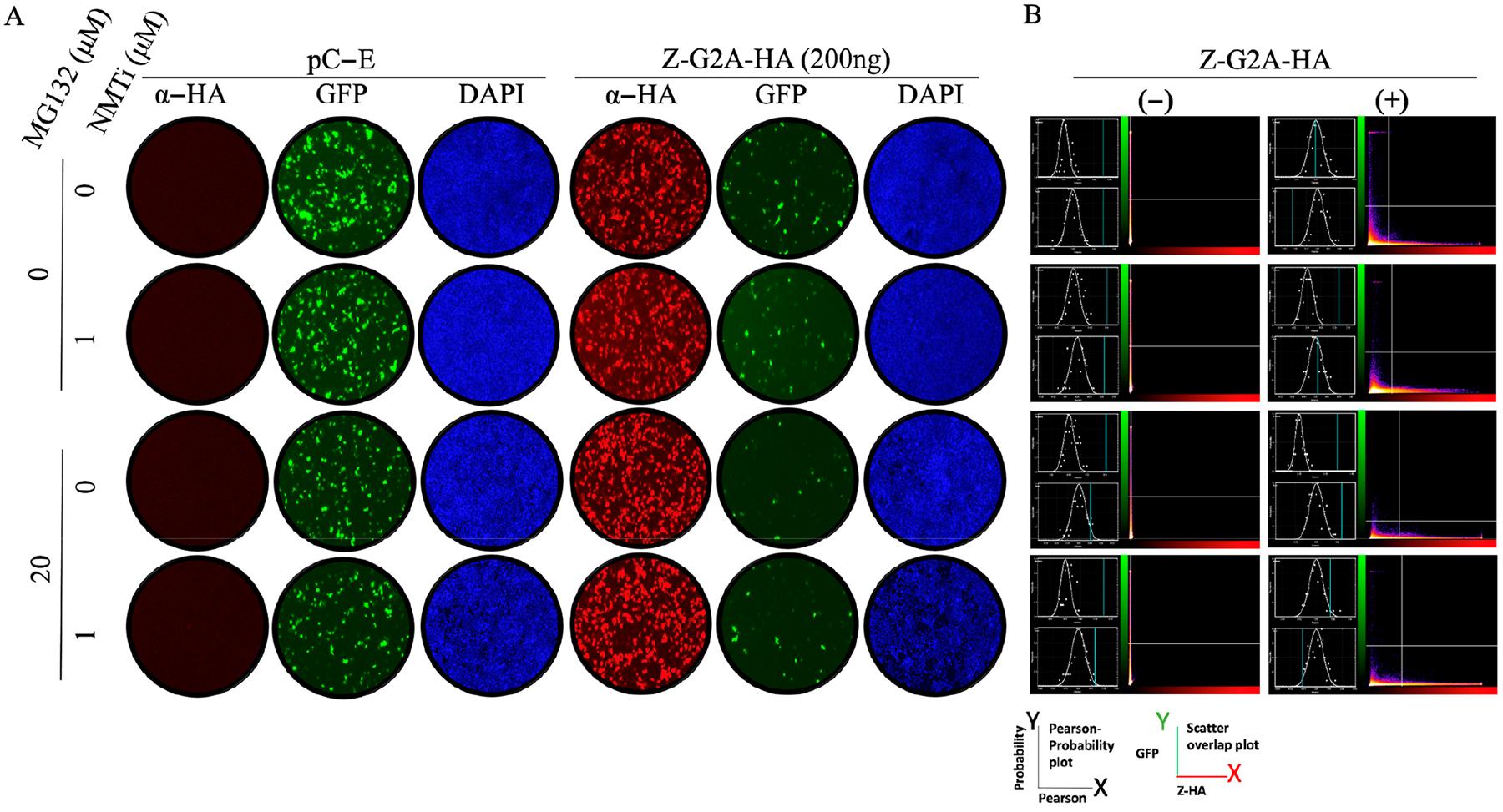
IMP-1088 treatment led to proteasome-mediated degradation of Z, reducing its inhibition of vRNP activity, which was restored by MG132. The non-myristoylated Z G2A mutant retained vRNP inhibitory activity but showed impaired oligomerization and budding capacity. These findings demonstrate that Z-mediated vRNP inhibition is independent of myristoylation and oligomerization.
CONCLUSIONS
Z myristoylation and oligomerization are not required for its inhibitory vRNP activity. Targeting Z myristoylation with NMTi impairs virus assembly and budding without affecting Z-mediated inhibition of vRNP activity, supporting the development of NMTi as a promising broad-spectrum antiviral strategy against mammarenaviruses.
背景/目的:N-肉豆蔻酰转移酶抑制剂(NMTi)代表了一种针对拉沙病毒和胡宁病毒等沙粒病毒的新型抗病毒策略。Z基质蛋白以剂量依赖性方式抑制病毒核糖核蛋白(vRNP)活性。在此,我们研究了Z介导的vRNP抑制是否依赖于Z的肉豆蔻酰化或寡聚化。
方法
我们在淋巴细胞脉络丛脑膜炎病毒(LCMV)微型基因组(MG)试验中使用了转染野生型(WT)或G2A突变Z构建体的人胚肾293T细胞(HEK293T)。细胞用NMTi IMP-1088和蛋白酶体抑制剂MG132处理。通过免疫荧光、蛋白质印迹和共定位分析来分析Z蛋白表达、vRNP活性和病毒样颗粒(VLP)产生。
结果
IMP-1088处理导致蛋白酶体介导的Z降解,降低其对vRNP活性的抑制,而MG132可恢复这种抑制。非肉豆蔻酰化的Z G2A突变体保留了vRNP抑制活性,但显示出寡聚化和出芽能力受损。这些发现表明Z介导的vRNP抑制独立于肉豆蔻酰化和寡聚化。
结论
Z的肉豆蔻酰化和寡聚化对于其抑制vRNP活性并非必需。用NMTi靶向Z的肉豆蔻酰化会损害病毒组装和出芽,而不影响Z介导的对vRNP活性的抑制,这支持了将NMTi开发为一种有前景的针对沙粒病毒的广谱抗病毒策略。



 Zotero 插件