
基于生物信息学的肺腺癌中RNA甲基化书写蛋白相关预后基因的机制
The mechanism of RNA methylation writing protein-related prognostic genes in lung adenocarcinoma based on bioinformatics.
作者信息
Yin Sha, Luo Guangyan, Luo Lei
机构信息
Good Clinical Practice Center, Guizhou Provincial People's Hospital, Guiyang, China.
Department of Gastroenterology, Qianxi People's Hospital, Bijie, China.
出版信息
Front Genet. 2025 Jun 2;16:1541541. doi: 10.3389/fgene.2025.1541541. eCollection 2025.
OBJECTIVE
RNA methylation modifications play biological roles in tumorigenicity and immune response, mainly mediated by the "writer" enzyme. Lung adenocarcinoma (LUAD) development is closely related to RNA methylation. Here, the prognostic values of the "writer" enzymes and the tumor immunosurveillance in LUAD aim to provide new theoretical references for the research of LUAD.
METHODS
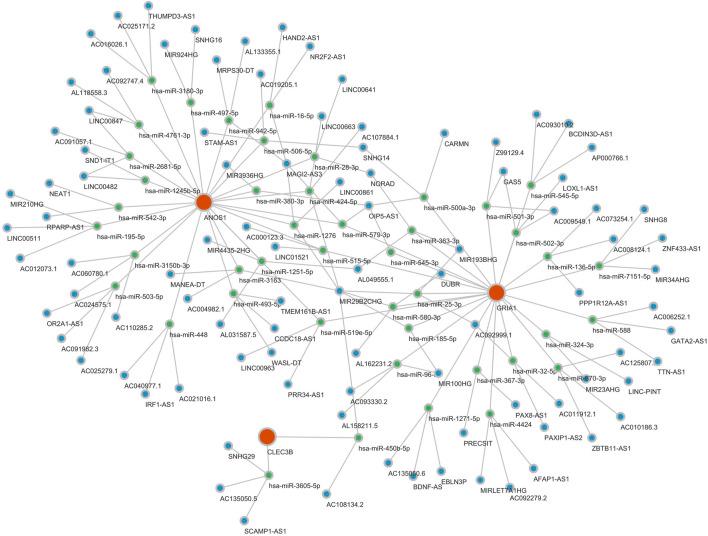
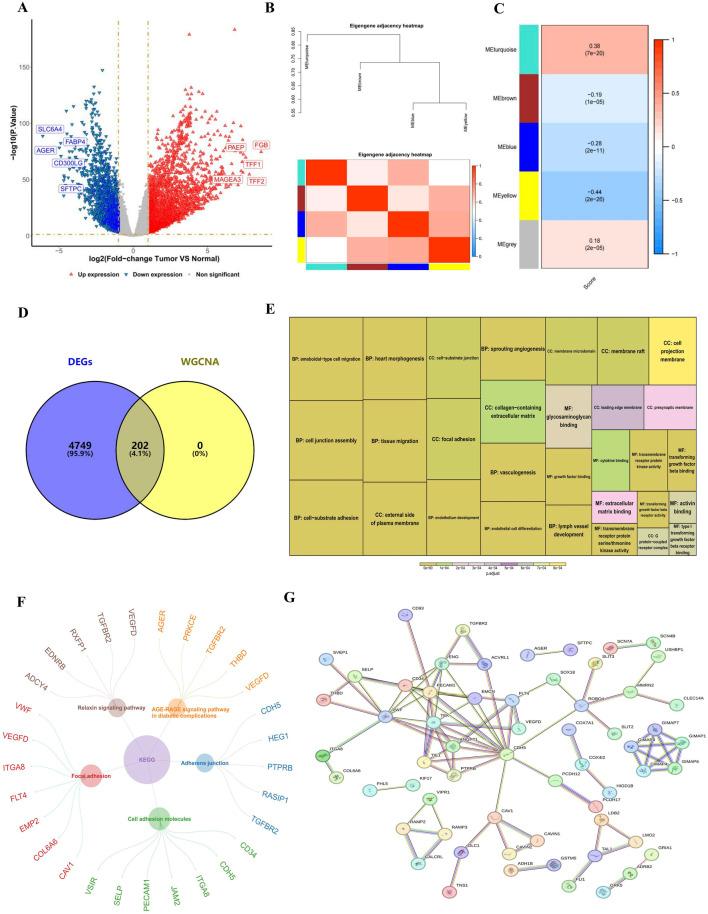
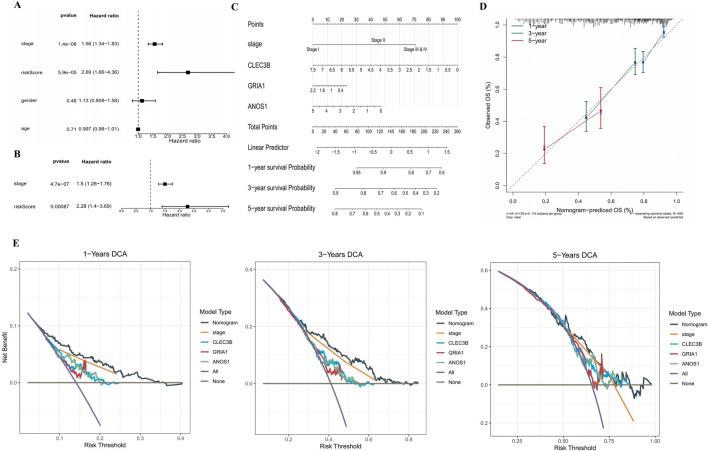
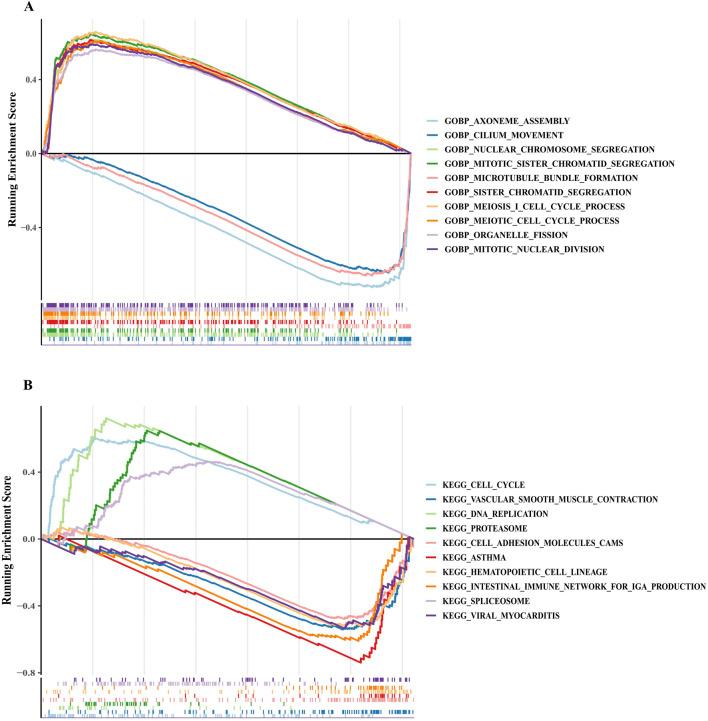
Genes associated with RNA methylation writer protein in LUAD were identified using The Cancer Genome Atlas Program (TCGA) data and weighted gene co-expression network analysis (WGCNA). Independent prognostic factors were screened by Cox regression and least absolute shrinkage and selection operator (LASSO) regression analyses. A prognostic risk model and a nomogram were established using these genes. Moreover, Gene Set Enrichment Analysis (GSEA) and CIBERSORTx were used to analyze the immune cell infiltration and enrichment pathways in the low- and high-risk groups, respectively. In addition, genes' potential functions and regulatory mechanisms were explored through gene-gene interaction (GGI) networks and competing endogenous RNA (ceRNA) networks.
RESULTS
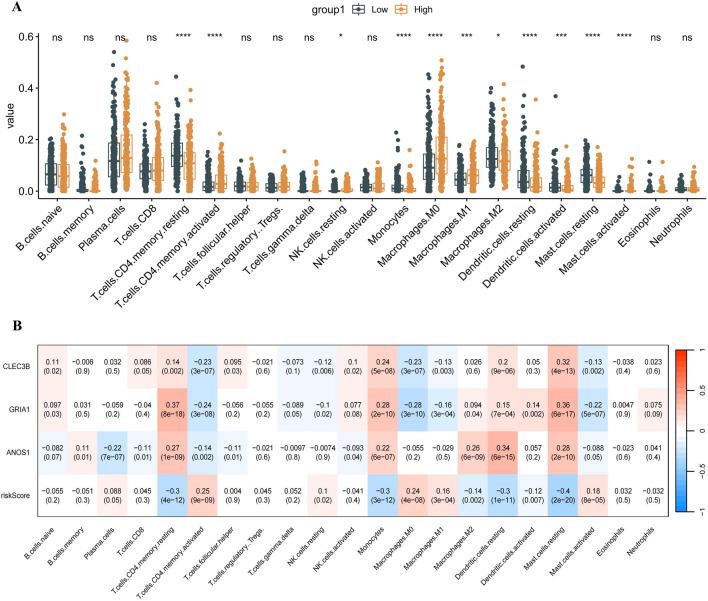
We selected 202 genes associated with RNA methylation writer proteins, from which we identified the three genes (CLEC3B, GRIA1, and ANOS1). A prognostic risk model was constructed based on genes associated with RNA methylation writer proteins and stage, demonstrating reliable predictive performance. GGI analysis revealed GRIA1 as a crucial gene. Enrichment analysis revealed that the high-risk group had upregulated pathways connected to cell division. Additionally, immune infiltration analysis revealed that the significantly higher levels of NK cells, activated mast cells, activated CD4 memory cells, and M0 and M1 macrophages displayed in the high-risk group, while the significantly lower levels of monocytes, dendritic cells, M2 macrophages, and inactive CD4 memory cells were in the low-risk group. Moreover, Spearman correlation analysis demonstrated that the three prognostic genes and risk scores correlated highly with various immune cells.
CONCLUSION
This study identified three prognostic genes related to RNA methylation writer proteins in LUAD. A reliable prognostic model was constructed. The identified prognostic genes also play significant roles in immune cell infiltration in LUAD. This study provides new theoretical references for subsequent in-depth research on LUAD.
目的
RNA甲基化修饰在肿瘤发生和免疫反应中发挥生物学作用,主要由“书写器”酶介导。肺腺癌(LUAD)的发展与RNA甲基化密切相关。在此,研究LUAD中“书写器”酶的预后价值和肿瘤免疫监视,旨在为LUAD的研究提供新的理论参考。
方法
利用癌症基因组图谱计划(TCGA)数据和加权基因共表达网络分析(WGCNA),鉴定LUAD中与RNA甲基化书写蛋白相关的基因。通过Cox回归和最小绝对收缩和选择算子(LASSO)回归分析筛选独立预后因素。利用这些基因建立预后风险模型和列线图。此外,基因集富集分析(GSEA)和CIBERSORTx分别用于分析低风险组和高风险组的免疫细胞浸润和富集途径。此外,通过基因-基因相互作用(GGI)网络和竞争性内源RNA(ceRNA)网络探索基因的潜在功能和调控机制。
结果
我们筛选出202个与RNA甲基化书写蛋白相关的基因,从中鉴定出三个基因(CLEC3B、GRIA1和ANOS1)。基于与RNA甲基化书写蛋白相关的基因和分期构建了预后风险模型,显示出可靠的预测性能。GGI分析显示GRIA1是关键基因。富集分析显示,高风险组中与细胞分裂相关的途径上调。此外,免疫浸润分析显示,高风险组中自然杀伤细胞、活化肥大细胞、活化CD4记忆细胞以及M0和M1巨噬细胞水平显著升高,而低风险组中单核细胞、树突状细胞、M2巨噬细胞和非活化CD4记忆细胞水平显著降低。此外,Spearman相关性分析表明,三个预后基因和风险评分与各种免疫细胞高度相关。
结论
本研究鉴定了LUAD中三个与RNA甲基化书写蛋白相关的预后基因。构建了可靠的预后模型。鉴定出的预后基因在LUAD的免疫细胞浸润中也发挥着重要作用。本研究为后续LUAD的深入研究提供了新的理论参考。


 Zotero 插件