
基于肼衍生物的碳点对多重耐药细菌具有强效抗菌活性
Hydrazine Derivative-Based Carbon Dots for Potent Antibacterial Activity Against Multidrug-Resistant Bacterial.
作者信息
Yuan Hou-Qun, Wang Zhu-Lin, Wang Meng-Ke, Zhang Qiu-Yu, Liang Xin-Yi, Xie Ting-Zhong, He Li-Ge, Chen Peiyao, Zhu Hongda, Bao Guang-Ming
机构信息
Key Laboratory of Fermentation Engineering (Ministry of Education), National "111" Center for Cellular Regulation and Molecular Pharmaceutics, Hubei Key Laboratory of Industrial Microbiology, School of Life and Health Sciences, Hubei University of Technology, Wuhan 430068, China.
出版信息
Nanomaterials (Basel). 2025 Jun 11;15(12):910. doi: 10.3390/nano15120910.
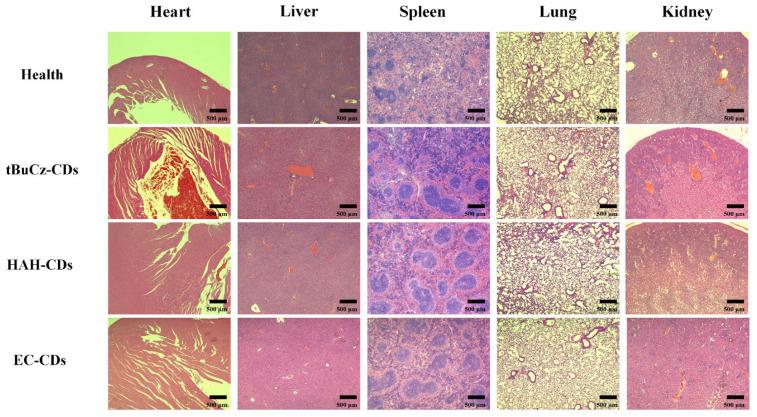
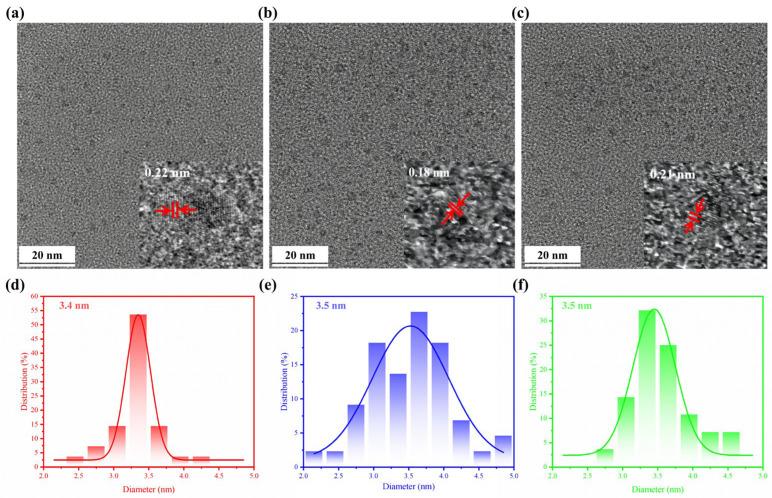
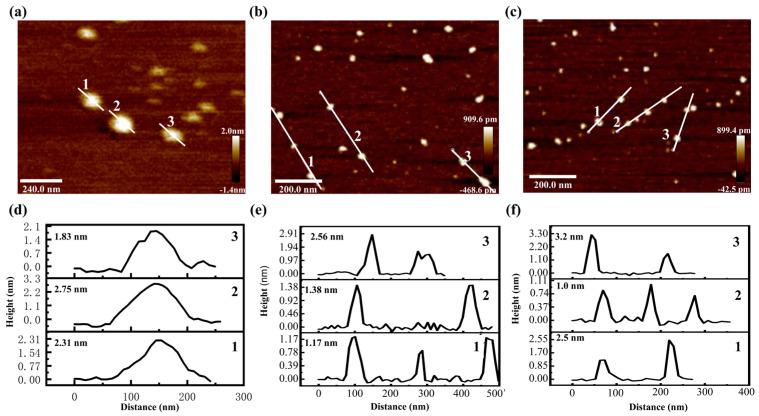
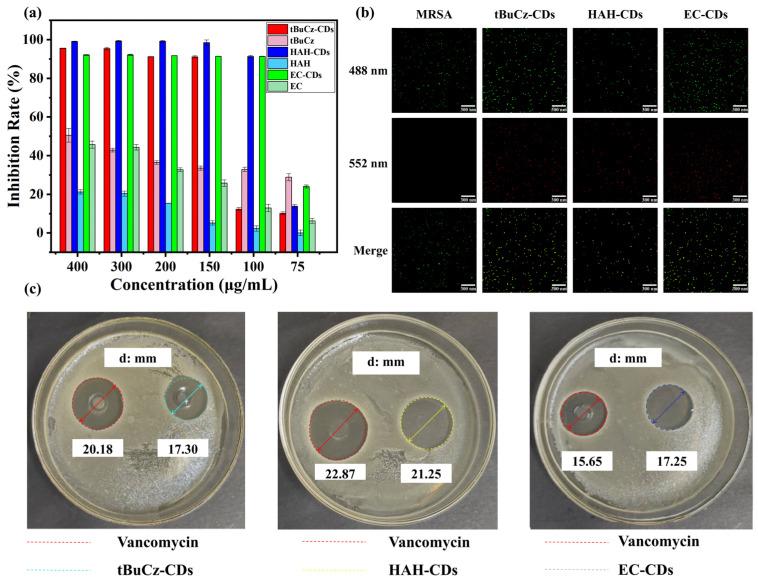
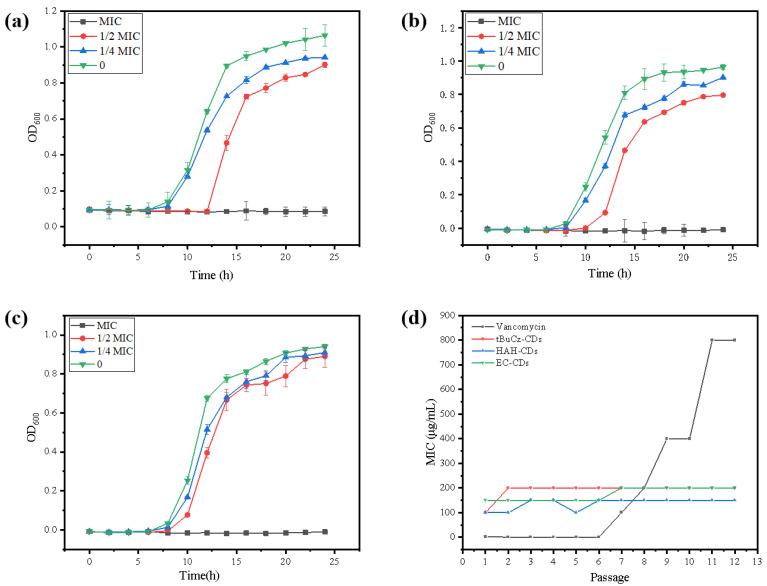
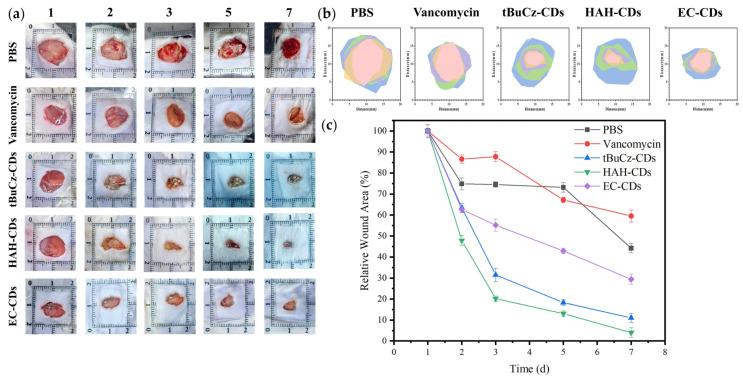
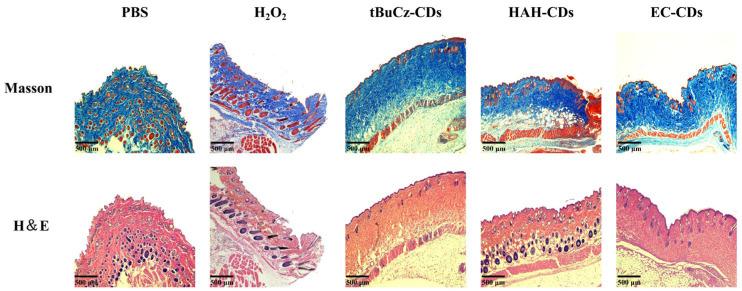
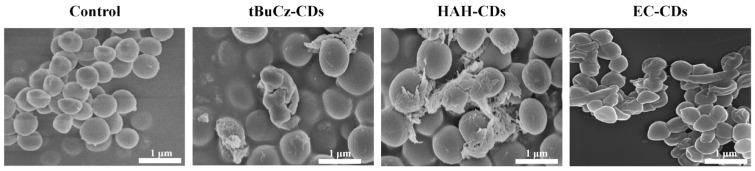
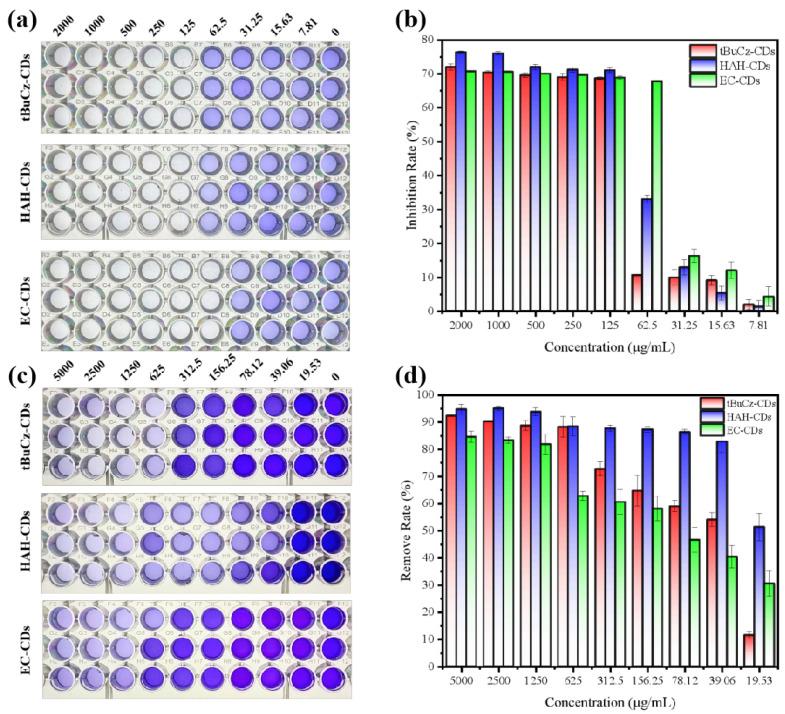
Bacterial infections, particularly those caused by multidrug-resistant strains, remain a significant global public health challenge. The growing resistance to traditional antibiotics highlights the urgent need for novel antibacterial strategies. Herein, we successfully synthesized three types of nitrogen-doped carbon dots (tBuCz-CDs, HAH-CDs, and EC-CDs) via hydrothermal method using tert-butyl carbazate, hydroxyacetic acid hydrazide, and ethyl carbazate as precursors. tBuCz-CDs, HAH-CDs, and EC-CDs exhibited potent antibacterial activity against methicillin-resistant (), with minimum inhibitory concentrations (MICs) of 100, 100, and 150 µg/mL, respectively. Their antibacterial effect on was comparable to that of the widely used antibiotic vancomycin hydrochloride, as shown by the zone of inhibition assay. Furthermore, the carbon dots exhibited low cytotoxicity and hemolytic activity showing their excellent biocompatibility both in vitro and in vivo. They also significantly promoted wound healing compared to untreated controls. Notably, the serial passaging of exposed to these carbon dots did not result in the bacterial resistance. Mechanistic studies revealed that the carbon dots exerted antibacterial effects through multiple mechanisms, including the disruption of bacterial membranes, inhibition and eradication of biofilm formation, generation of reactive oxygen species, and DNA damage. This work highlights the potential of nitrogen-doped CDs as a promising material for combating drug-resistant bacterial infections and underscores their potential for further biomedical development.
细菌感染,尤其是由多重耐药菌株引起的感染,仍然是全球重大的公共卫生挑战。对传统抗生素耐药性的不断增加凸显了对新型抗菌策略的迫切需求。在此,我们以叔丁基咔唑、羟基乙酰肼和乙基咔唑为前驱体,通过水热法成功合成了三种类型的氮掺杂碳点(tBuCz-CDs、HAH-CDs和EC-CDs)。tBuCz-CDs、HAH-CDs和EC-CDs对耐甲氧西林金黄色葡萄球菌表现出强大的抗菌活性,其最低抑菌浓度(MICs)分别为100、100和150 µg/mL。如抑菌圈试验所示,它们对金黄色葡萄球菌的抗菌效果与广泛使用的抗生素盐酸万古霉素相当。此外,这些碳点表现出低细胞毒性和溶血活性,表明它们在体外和体内均具有优异的生物相容性。与未处理的对照组相比,它们还显著促进了伤口愈合。值得注意的是,连续传代暴露于这些碳点的金黄色葡萄球菌并未产生耐药性。机理研究表明,碳点通过多种机制发挥抗菌作用,包括破坏细菌膜、抑制和消除生物膜形成、产生活性氧和DNA损伤。这项工作突出了氮掺杂碳点作为对抗耐药细菌感染的有前途材料的潜力,并强调了它们在进一步生物医学发展中的潜力。


 Zotero 插件