
黑核桃壳中关键木质素生物合成基因家族PAL和CAD的全基因组鉴定、转录组动态变化及表达调控
Genome-wide identification, transcriptome dynamics, and expression regulation of the key lignin biosynthesis gene families PAL and CAD in black walnut shell.
作者信息
Zhou Huijuan, Liu Hengzhao, Ma Jiayu, Yue Ming, Wang Yaling, Zhao Peng, Chen Zhikun
机构信息
Xi'an Botanical Garden of Shaanxi Province (Institute of Botany of Shaanxi Province), Xi'an, Shaanxi, 710061, China.
Key Laboratory of Resource Biology and Biotechnology in Western China, Ministry of Education, College of Life Sciences, Northwest University, No. 229 Tabi Rd, Xi'an, Shaanxi, 710069, China.
出版信息
BMC Plant Biol. 2025 Jul 3;25(1):859. doi: 10.1186/s12870-025-06884-1.
BACKGROUND
Walnut (Juglans), cultivated globally for their nuts and timber, holds significant economic and ecological value. The eastern black walnut (EBW, J. nigra). a diploid species, an important woody species. Key enzymes in the plant lignin biosynthesis pathway include Phenylalanine ammonia-lyase (PAL) and Cinnamyl alcohol dehydrogenase (CAD). Although the gene families of PAL and CAD have been extensively characterized in various plants, comprehensive genomic resources and expression profiles specific to the EBW remain limited.
RESULTS
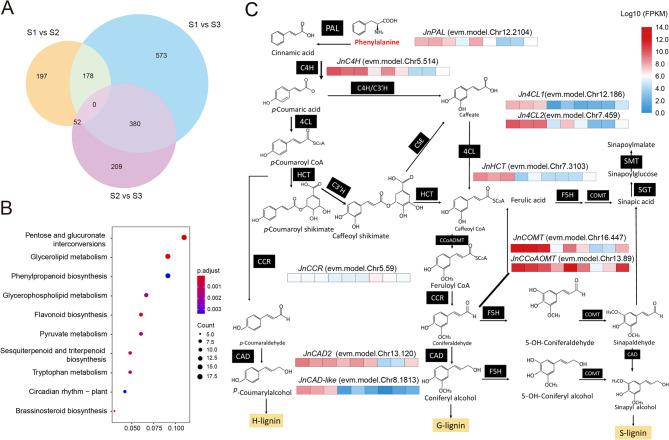
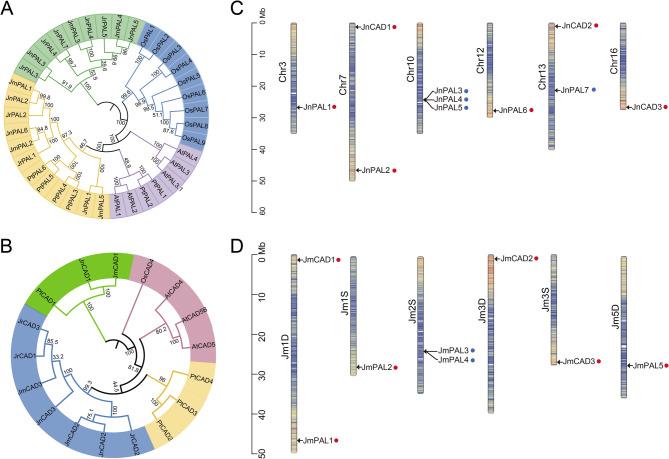
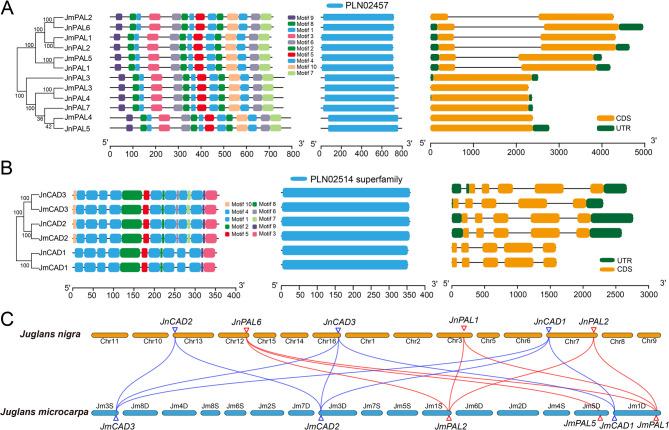
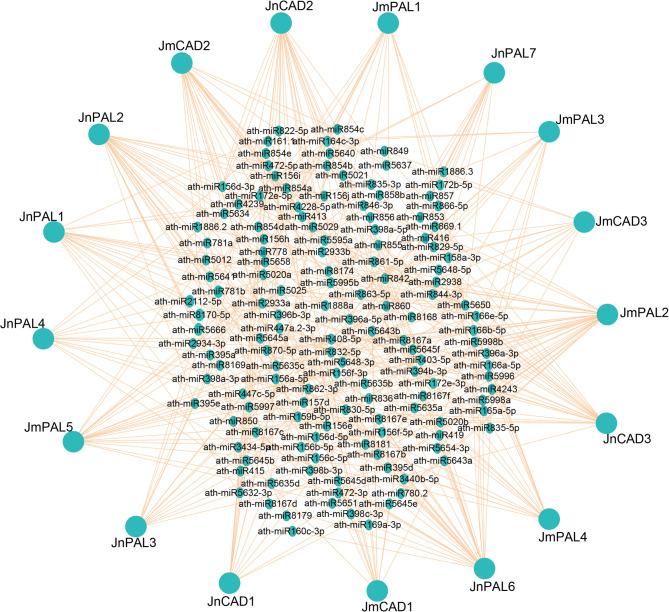
Based on RNA sequencing of shells and kernels from black walnut (Juglans nigra) among three development stages, S1 (80 days after flowering, DAF), S2 (111 DAF), and S3(140 DAF) in black walnut shells and kernels, we found the genes related to lignin biosynthesis. genes such as JnPAL, JnC4H, Jn4CL1, Jn4CL2, JnHCT, JnCOMT, JnCAD2, and JnCAD-like exhibited significant differential expression across all three developmental stages. Both PAL and CAD genes were expressed significantly in walnut shells compared to kernels across three developmental stages. We conducted a genome-wide identification and discovered 7 PAL and 3 CAD proteins in J. nigra and 5 PAL and 3 CAD proteins in J. microcarpa genome, respectively. Transcriptome DEGs (differential expressed genes) analysis and identified three candidates PAL (JnPAL1, JnPAL2, and JnPAL6) and 2 CAD genes (JnCAD2 and JnCAD3) were upregulated during the development of walnut kernels and shells. In addition, it was higher expressed of these PAL and CAD genes in the shell than kernel.
CONCLUSIONS
We conducted a comprehensive involving genome-wide identification, transcriptome dynamics, and expression regulation of the key lignin biosynthesis gene families PAL and CAD across three development stages of shells. This study not only constitutes a valuable resource for elucidating the role of PAL and CAD genes in determining shell thickness in black walnut but also holds significant potential for informing gene-assisted breeding strategies in walnut cultivation.
背景
核桃(胡桃属)因其坚果和木材而在全球范围内种植,具有重要的经济和生态价值。东部黑核桃(EBW,黑胡桃)是一种二倍体物种,是重要的木本物种。植物木质素生物合成途径中的关键酶包括苯丙氨酸解氨酶(PAL)和肉桂醇脱氢酶(CAD)。尽管PAL和CAD的基因家族已在多种植物中得到广泛表征,但针对东部黑核桃的全面基因组资源和特定表达谱仍然有限。
结果
基于对黑核桃(Juglans nigra)在三个发育阶段(S1,开花后80天;S2,开花后111天;S3,开花后140天)的壳和果仁进行RNA测序,我们发现了与木质素生物合成相关的基因。诸如JnPAL、JnC4H、Jn4CL1、Jn4CL2、JnHCT、JnCOMT、JnCAD2和JnCAD-like等基因在所有三个发育阶段均表现出显著差异表达。在三个发育阶段中,与果仁相比,PAL和CAD基因在核桃壳中的表达均显著。我们进行了全基因组鉴定,分别在黑胡桃基因组中发现了7个PAL蛋白和3个CAD蛋白,在小果胡桃基因组中发现了5个PAL蛋白和3个CAD蛋白。转录组差异表达基因(DEGs)分析鉴定出三个候选PAL基因(JnPAL1、JnPAL2和JnPAL6)和2个CAD基因(JnCAD2和JnCAD3)在核桃仁和壳的发育过程中上调。此外,这些PAL和CAD基因在壳中的表达高于果仁。
结论
我们进行了一项全面研究,涉及壳的三个发育阶段中关键木质素生物合成基因家族PAL和CAD的全基因组鉴定、转录组动态变化及表达调控。本研究不仅为阐明PAL和CAD基因在决定黑核桃壳厚度中的作用提供了宝贵资源,也为核桃栽培中的基因辅助育种策略提供了重要潜力。




 Zotero 插件