
基于网络药理学和分子对接探讨保元养心汤治疗冠心病的作用机制
Discussion on the mechanism of Bao-Yuan Yang-Xin Decoction in treating coronary heart disease based on network pharmacology and molecular docking.
作者信息
Liu Chuanqian, Liu Zhenzhen, Zhang Xueting, Yan Xipeng
机构信息
Department of Traditional Chinese Medicine, Jining No. 1 People's Hospital, Jining, Shandong Province, China.
出版信息
Medicine (Baltimore). 2025 Jul 4;104(27):e42882. doi: 10.1097/MD.0000000000042882.
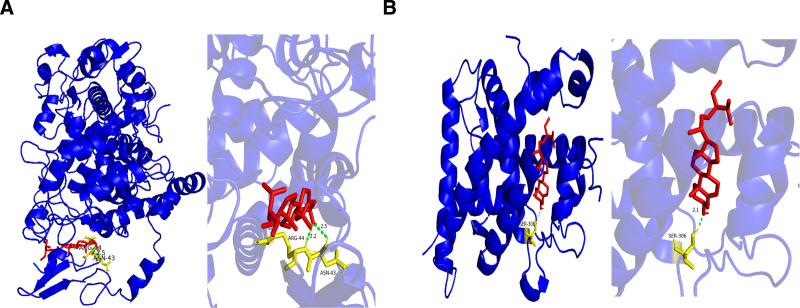
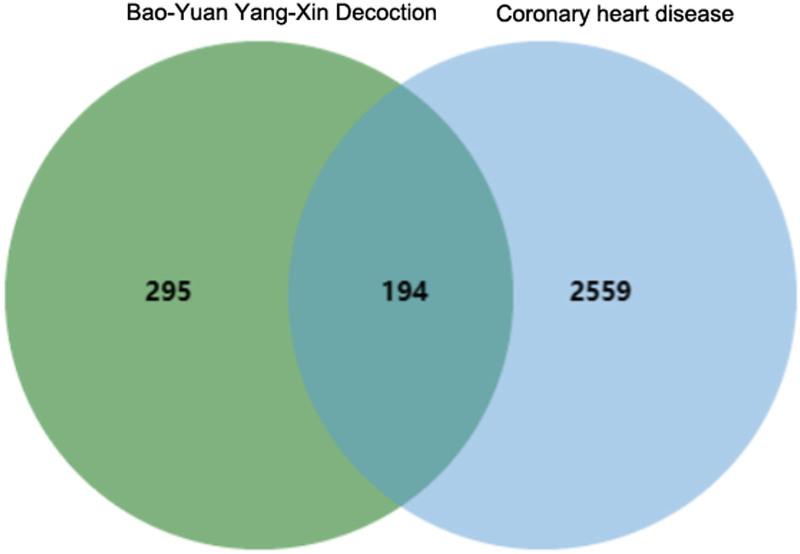
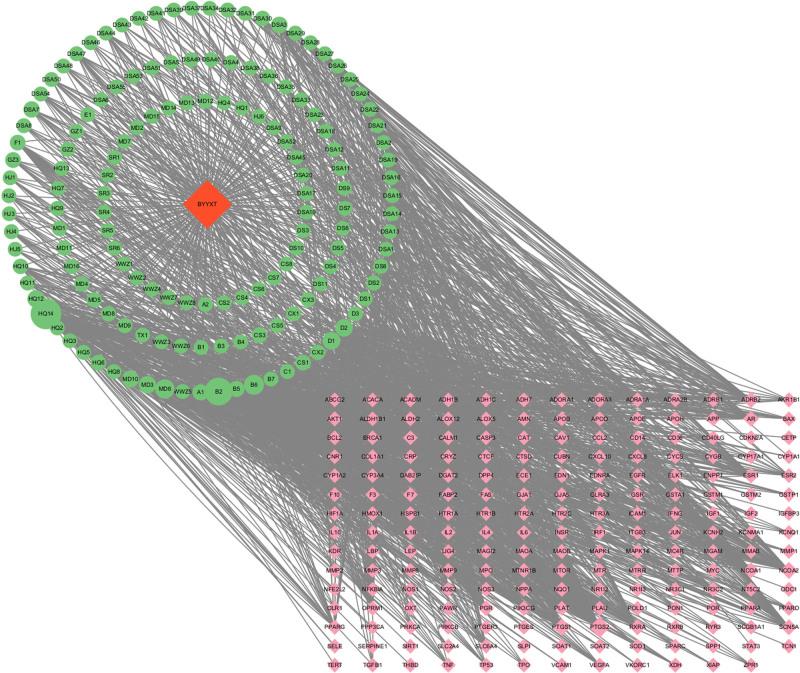
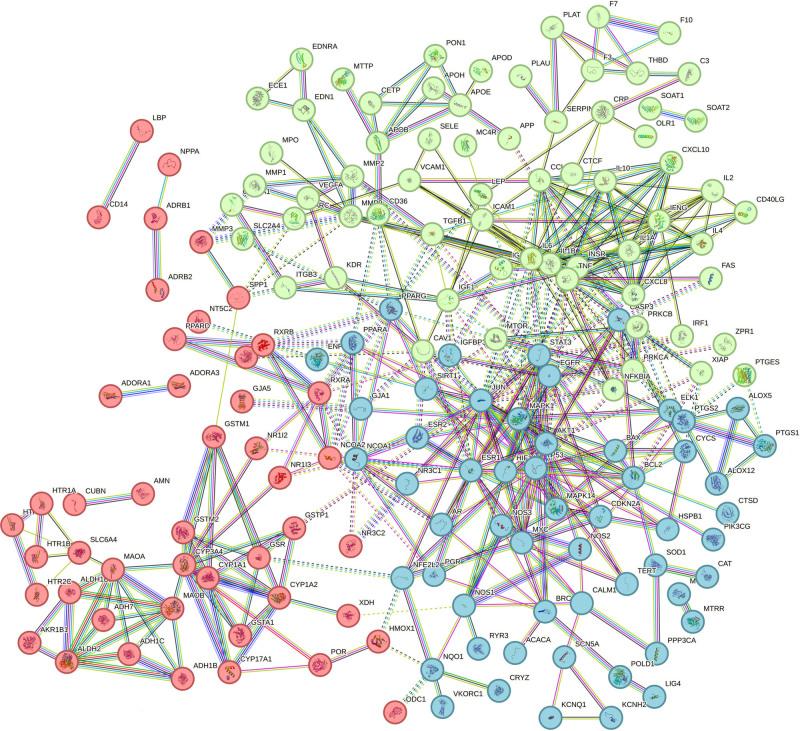
This study aimed to explore the potential therapeutic mechanisms of the Bao-Yuan Yang-Xin Decoction (BYXD) in the treatment of coronary heart disease (CHD) by integrating network pharmacology with the specificity of molecular docking methods. Effective components and their potential targets of BYXD were screened from the Traditional Chinese Medicine Systems Pharmacology and BATMAN-Traditional Chinese Medicine databases. Targets related to CHD were confirmed through the GeneCards database. A "drug-component-target" network was created using Cytoscape, and a protein-protein interaction network was established with STRING. Finally, biological enrichment analysis of the targets was performed using the Database for Annotation, Visualization and Integrated Discovery, and the top 20 highly enriched Kyoto Encyclopedia of Genes and Genomes pathways were further investigated. The pivotal active constituents of BYXD are identified as stigmasterol, quercetin, β-sitosterol, luteolin, and baicalein in this study. Major targets include PTGS2, PTGS1, NCOA2, ADRB2, SCN5A, RXRA, NCOA1, ESR1, AR, and DPP4. BYXD conveys its healing properties to CHD by controlling key communication pathways, including advanced glycation end products-receptor, tumor necrosis factor, HIF-1, and IL-17. Molecular docking shows a high degree of binding affinity between stigmasterol and PTGS2, while β-sitosterol demonstrates a notable affinity for NCOA1. The probable mechanisms underlying BYXD's efficacy in CHD treatment are disclosed by applying network pharmacology and molecular docking. The integral components of BYXD are identified to selectively engage with a range of critical targets, modulating the associated signaling pathways that are pivotal in the pathophysiology of CHD. Such targeted modulation provides a substantive scientific basis for the clinical application of BYXD.
本研究旨在通过将网络药理学与分子对接方法的特异性相结合,探索保元养心汤(BYXD)治疗冠心病(CHD)的潜在治疗机制。从中药系统药理学数据库和BATMAN-中药数据库中筛选出BYXD的有效成分及其潜在靶点。通过GeneCards数据库确认与冠心病相关的靶点。使用Cytoscape创建“药物-成分-靶点”网络,并使用STRING建立蛋白质-蛋白质相互作用网络。最后,使用注释、可视化和综合发现数据库对靶点进行生物富集分析,并进一步研究前20个高度富集的京都基因与基因组百科全书通路。本研究确定BYXD的关键活性成分是豆甾醇、槲皮素、β-谷甾醇、木犀草素和黄芩苷。主要靶点包括PTGS2、PTGS1、NCOA2、ADRB2、SCN5A、RXRA、NCOA1、ESR1、AR和DPP4。BYXD通过控制关键信号通路,包括晚期糖基化终产物受体、肿瘤坏死因子、HIF-1和IL-17,对冠心病发挥治疗作用。分子对接显示豆甾醇与PTGS2之间具有高度结合亲和力,而β-谷甾醇对NCOA1表现出显著亲和力。通过应用网络药理学和分子对接揭示了BYXD治疗冠心病疗效的可能机制。确定BYXD的整体成分选择性地与一系列关键靶点结合,调节冠心病病理生理学中起关键作用的相关信号通路。这种靶向调节为BYXD的临床应用提供了坚实的科学依据。


 Zotero 插件