
前列腺腺癌中恩杂鲁胺相关基因用于预后评估和免疫治疗的鉴定
Identification of Enzalutamide-Related Genes for Prognosis and Immunotherapy in Prostate Adenocarcinoma.
作者信息
Fang Lian, Jia Zongming, Zou Tao, Song Ouyang, Ouyang Jun, Hou Yufeng, Zhang Zhiyu, Zhang Xuefeng
机构信息
Department of Urology, First Affiliated Hospital of Soochow University, Suzhou, Jiangsu, China.
Department of Urology, The Fourth Affiliated Hospital of Soochow University, Suzhou, Jiangsu, China.
出版信息
Hum Mutat. 2025 Jul 4;2025:9755727. doi: 10.1155/humu/9755727. eCollection 2025.
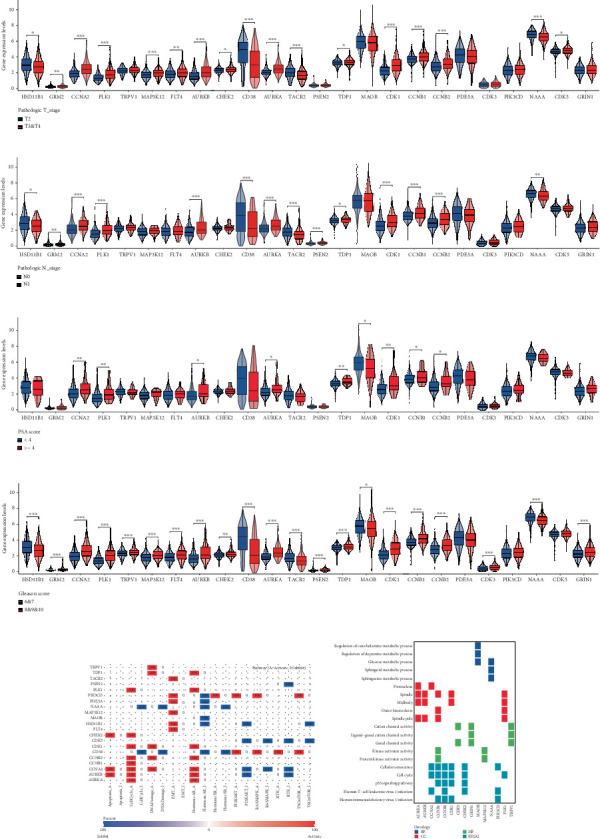
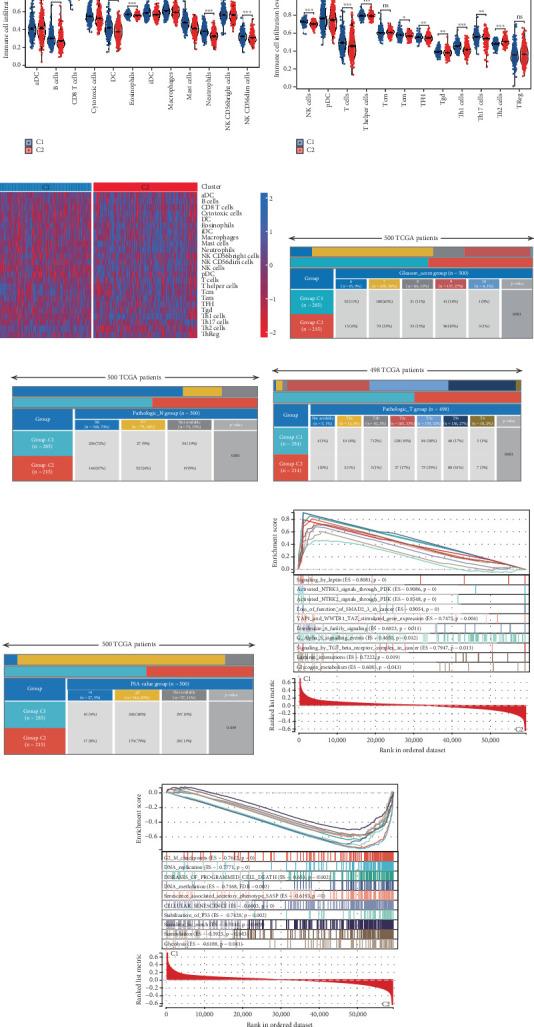
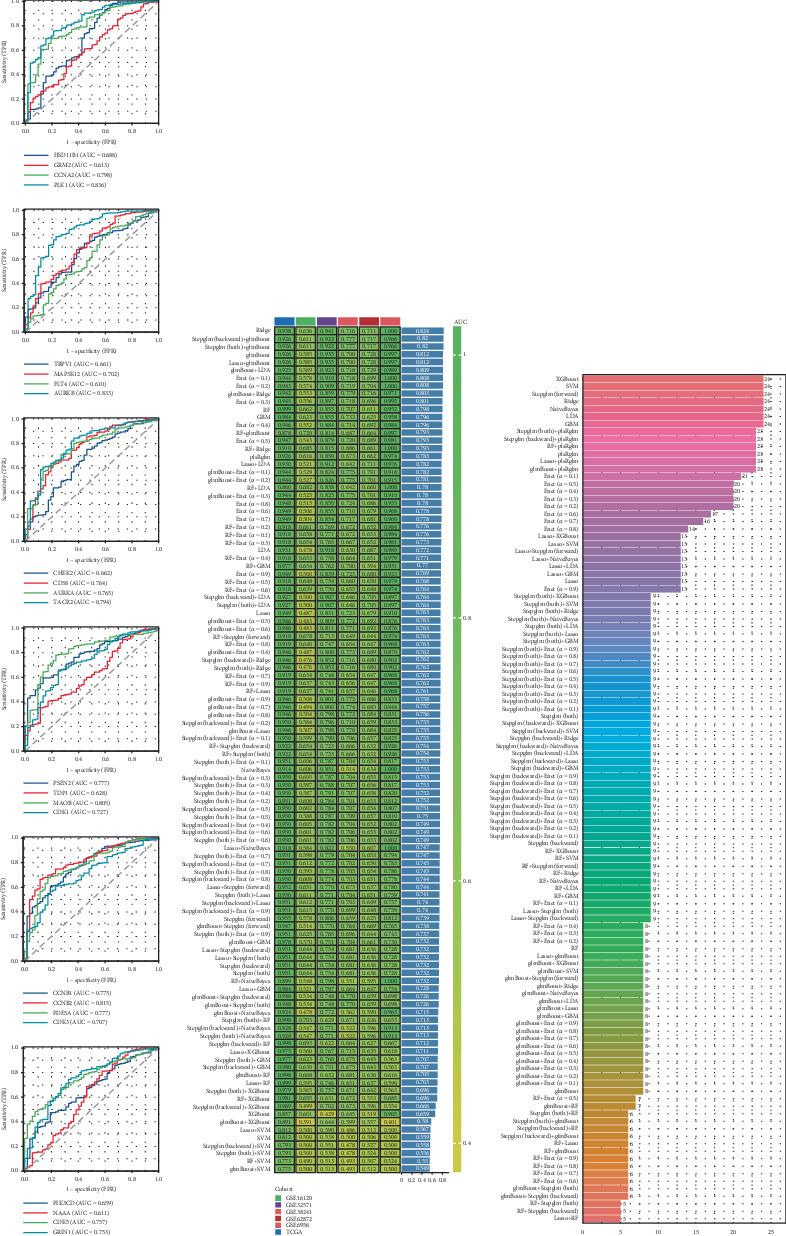
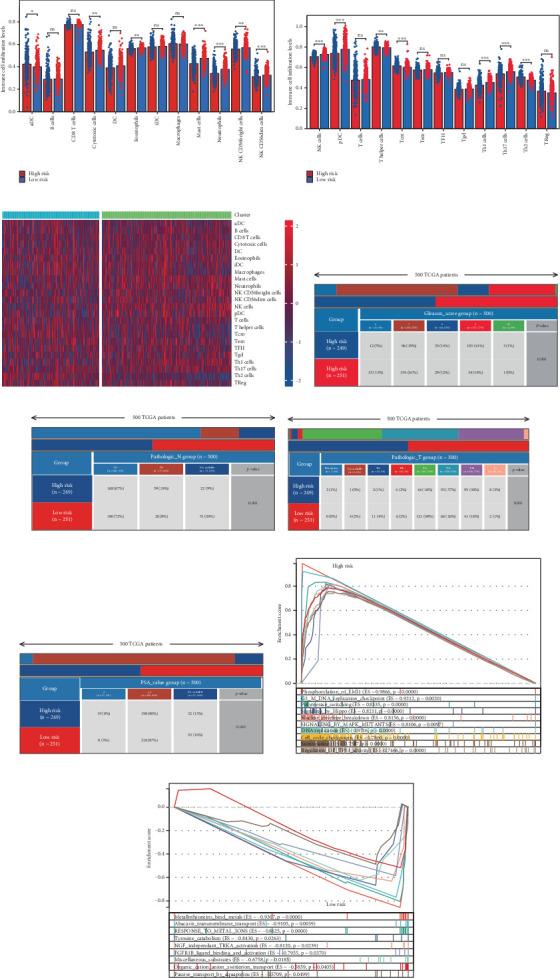
Enzalutamide is classified as a novel antiandrogen medication; however, the majority of patients ultimately develop resistance to it. Consequently, conducting an in-depth investigation into potential targets of enzalutamide is essential for addressing the drug resistance observed in patients and for facilitating the discovery of new therapeutic targets. The SwissTargetPrediction database was used to identify targets linked to enzalutamide and to assess these targets in the prostate adenocarcinoma (PRAD) dataset sourced from the TCGA database. By employing various datasets and applying different machine learning methods for clustering, researchers constructed and validated both diagnostic and prognostic models for PRAD. A correlation analysis with the androgen receptor revealed TDP1 as the gene most significantly associated with enzalutamide. In addition, this study examined the relationship between TDP1 and immune infiltration. The expression levels of TDP1 and its prognostic correlation in PRAD patients were validated through immunofluorescence staining of 60 PRAD tissue specimens. Cluster analysis revealed a notable correlation among the 24 genes related to enzalutamide with regard to both prognosis and immune infiltration in PRAD patients. The diagnostic model, which incorporates various machine learning techniques, exhibits robust predictive ability for PRAD diagnosis, while the prognostic model employing the LASSO algorithm has also shown encouraging outcomes. Among the various prognostic genes linked to enzalutamide, TDP1 stands out as an important indicator of prognosis. Furthermore, immunofluorescence experiments confirmed that an increased expression of TDP1 is associated with a worse prognosis in patients with PRAD. Our results underscore the substantial potential of TDP1 as a novel diagnostic and prognostic biomarker for individuals diagnosed with PRAD.
恩杂鲁胺被归类为一种新型抗雄激素药物;然而,大多数患者最终会对其产生耐药性。因此,深入研究恩杂鲁胺的潜在靶点对于解决患者中观察到的耐药性以及促进新治疗靶点的发现至关重要。使用瑞士靶点预测数据库来识别与恩杂鲁胺相关的靶点,并在源自TCGA数据库的前列腺腺癌(PRAD)数据集中评估这些靶点。通过采用各种数据集并应用不同的机器学习方法进行聚类,研究人员构建并验证了PRAD的诊断和预后模型。与雄激素受体的相关性分析显示TDP1是与恩杂鲁胺最显著相关的基因。此外,本研究还探讨了TDP1与免疫浸润之间的关系。通过对60例PRAD组织标本进行免疫荧光染色验证了TDP1在PRAD患者中的表达水平及其预后相关性。聚类分析显示,在PRAD患者中,与恩杂鲁胺相关的24个基因在预后和免疫浸润方面存在显著相关性。结合各种机器学习技术的诊断模型对PRAD诊断具有强大的预测能力,而采用LASSO算法的预后模型也显示出令人鼓舞的结果。在与恩杂鲁胺相关的各种预后基因中,TDP1是一个重要的预后指标。此外,免疫荧光实验证实,TDP1表达增加与PRAD患者预后较差有关。我们的结果强调了TDP1作为诊断PRAD患者的新型诊断和预后生物标志物的巨大潜力。





 Zotero 插件