
墨西哥人乳头瘤病毒(HPV)的流行率、细胞学异常情况及HPV疫苗的影响:一项对596,944名女性的全国性研究
Prevalence of HPV, cytological abnormalities, and impact of the HPV vaccine in Mexico: a Nationwide Study of 596,944 women.
作者信息
García-Gil Abraham, Luna-Ruiz-Esparza Marco Antonio, Moreno-Camacho José Luis, Calva-Espinosa Diana Yadira, González-Mena Ludwing Erick, Hernández-Lezama Luis Fernando, Kuri-Morales Pablo, Balcázar-Rodríguez Juan Carlos, Campos-Romero Abraham, Alcántar-Fernández Jonathan
机构信息
Innovation and Research Department, Salud Digna, Culiacan, Sinaloa, 80000, Mexico.
Clinical Laboratory Department, Salud Digna, Culiacan, Sinaloa, 80000, Mexico.
出版信息
Lancet Reg Health Am. 2025 Jun 25;48:101156. doi: 10.1016/j.lana.2025.101156. eCollection 2025 Aug.
BACKGROUND
Cervical cancer (CC) remains a significant public health challenge worldwide and is the second leading cause of cancer-related death in women in Mexico. Although CC is highly preventable, effective implementation of screening programs to detect women with precancerous lesions is crucial to reduce its burden. This study evaluated HPV infection, its correlation with cytological abnormalities, and the impact of HPV vaccination in 596,944 women from all 32 states of Mexico.
METHODS
Samples were processed using a fully automated molecular biology laboratory setup (Roche Cobas prime - Cobas 6800), and cytotechnologists assessed cytological outcomes.
FINDINGS
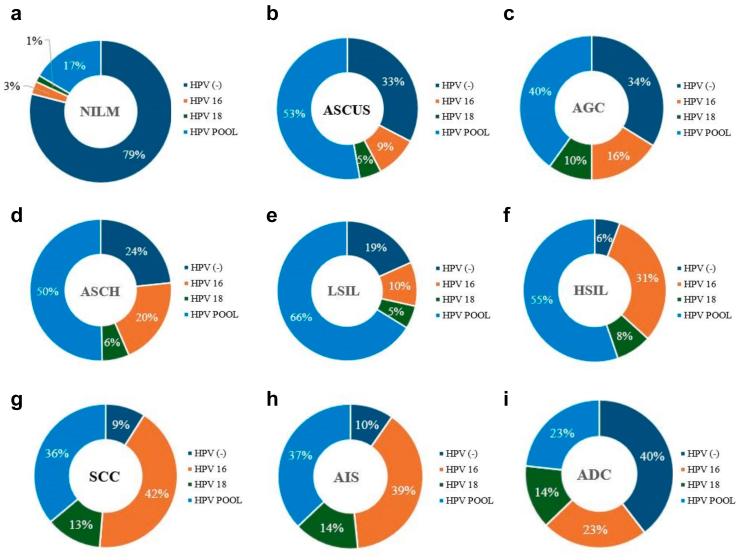
The highest prevalence of HPV infection was observed among women under the age of 25, with 23,615 individuals (37.4%) testing positive. This was primarily attributable to infections with the pooled high-risk HPV genotypes included in the assay (HPV31, 33, 35, 39, 45, 51, 52, 56, 58, 59, 66, and 68), which accounted for 22,792 cases (36.1%). In contrast, HPV16 and HPV18 were most prevalent among women aged 25-34 years, with 7251 (5.21%) and 3281 (2.36%) infections, respectively. Low-grade squamous intraepithelial lesion (LSIL) was the most frequently detected cytological abnormality, identified in 15,411 cases (2.6%), and was predominantly associated with the pooled HPV genotypes (73.7%). A two-dose HPV vaccination regimen conferred strong protection against HPV16 (odds ratio [OR] = 0.21) and HPV18 (OR = 0.33), but did not significantly reduce the prevalence of infection with the pooled HPV genotypes (OR = 0.98).
INTERPRETATION
The notable carcinogenic potential of the HPV POOL underscores the need for broader vaccine formulations. Adopting a nonavalent vaccine in future campaigns, expanding screening coverage, and reinforcing sexual education for younger women are key measures to help policymakers mitigate the impact of CC in Mexico.
FUNDING
This work was funded by Salud Digna.
背景
宫颈癌(CC)仍是全球一项重大的公共卫生挑战,并且是墨西哥女性癌症相关死亡的第二大主要原因。尽管宫颈癌具有高度可预防性,但有效实施筛查计划以检测出患有癌前病变的女性对于减轻其负担至关重要。本研究评估了墨西哥32个州的596,944名女性的HPV感染情况、其与细胞学异常的相关性以及HPV疫苗接种的影响。
方法
样本使用全自动分子生物学实验室设置(罗氏Cobas prime - Cobas 6800)进行处理,细胞技术专家评估细胞学结果。
研究结果
HPV感染率最高的是25岁以下的女性,有23,615人(37.4%)检测呈阳性。这主要归因于检测中包含的合并高危HPV基因型感染(HPV31、33、35、39、45、51、52、56、58、59、66和68),占22,792例(36.1%)。相比之下,HPV16和HPV18在25 - 34岁女性中最为普遍,感染人数分别为7251人(5.21%)和3281人(2.36%)。低度鳞状上皮内病变(LSIL)是最常检测到的细胞学异常,在15,411例(2.6%)中被发现,并且主要与合并的HPV基因型相关(73.7%)。两剂HPV疫苗接种方案对HPV16(优势比[OR]=0.21)和HPV18(OR = 0.33)具有强大的保护作用,但并未显著降低合并HPV基因型的感染率(OR = 0.98)。
解读
HPV合并基因型显著的致癌潜力凸显了采用更广泛疫苗配方的必要性。在未来的活动中采用九价疫苗、扩大筛查覆盖范围以及加强对年轻女性的性教育是帮助政策制定者减轻墨西哥宫颈癌影响的关键措施。
资金来源
本研究由Salud Digna资助。


 Zotero 插件