Zhang Binbin, Dou Bin, Gu Wenzuo, Lu Chuan, Yan Qi, Zhaxi Dawa, Wang Yu, Xu Jiale, Li Kewen
Qinghai University Affiliated Hospital (The Clinical Medical School), Qinghai University, Xining, Qinghai, China.
PLoS One. 2025 Jul 16;20(7):e0328414. doi: 10.1371/journal.pone.0328414. eCollection 2025.
High BMI is a critical risk factor for early-onset OA (diagnosed before age 55). This study aimed to analyze global trends in the age-standardized disability-adjusted life years rates (ASDR) attributable to high BMI from 1990 to 2021.
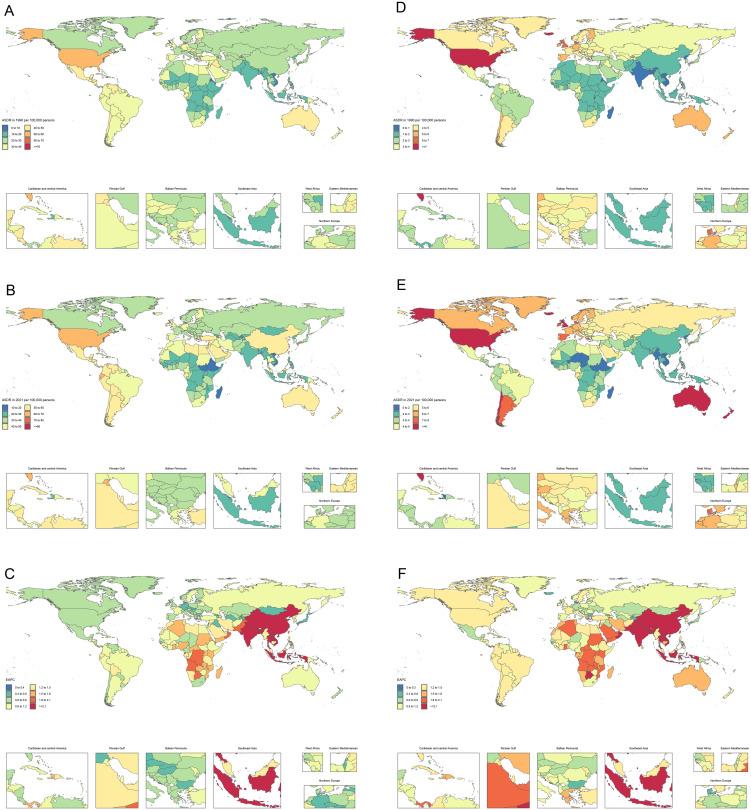
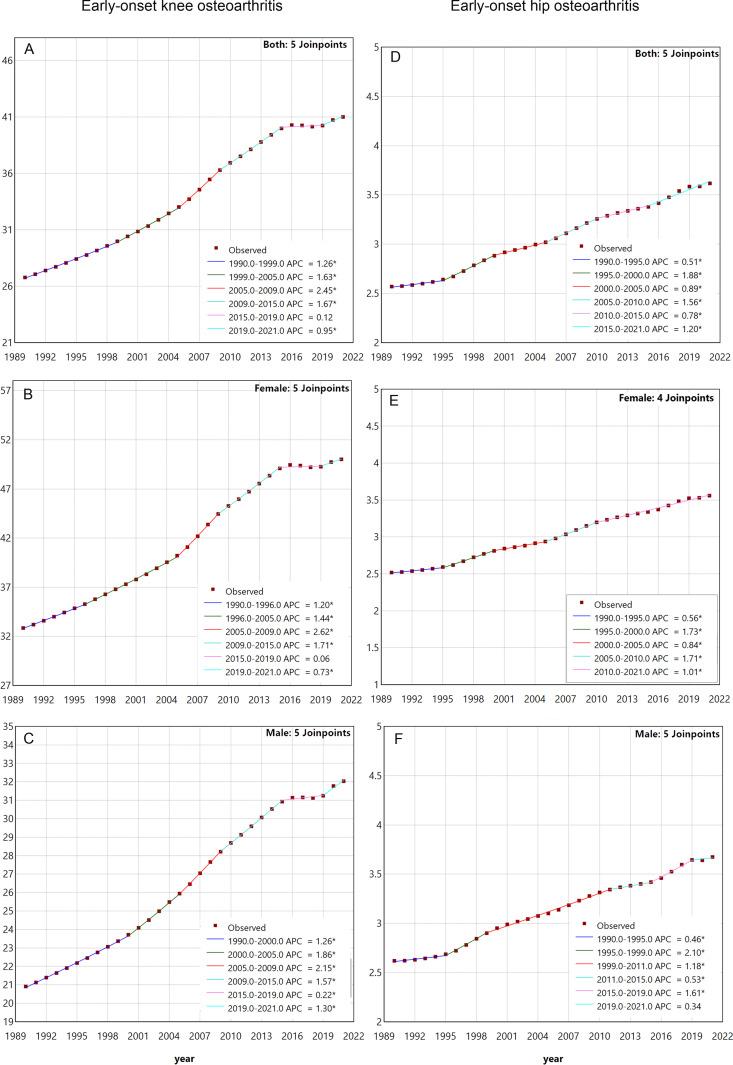
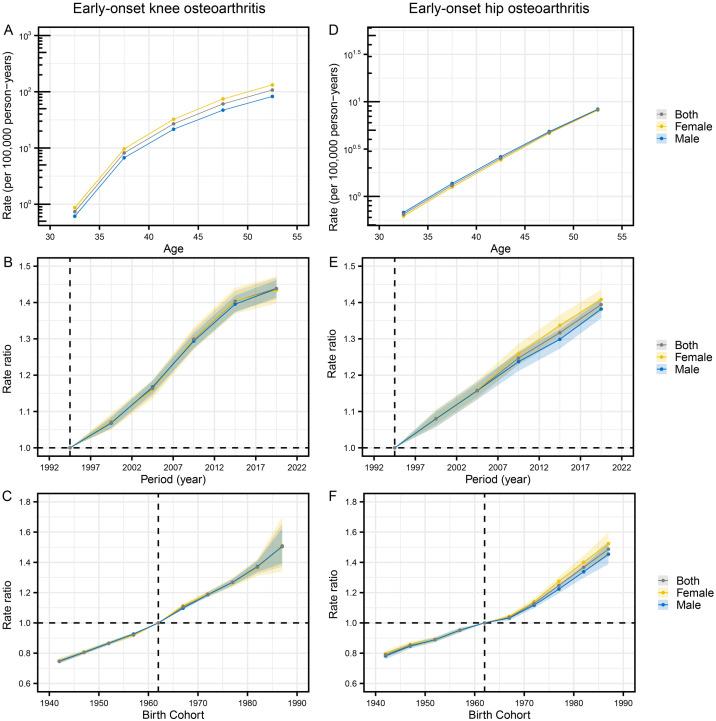
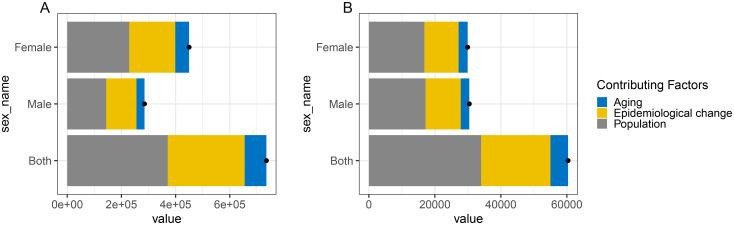
Data from the Global Burden of Disease 2021 (GBD 2021) study were analyzed to assess early-onset OA attributable to high BMI across 204 countries, 21 GBD regions, and 5 Socio-Demographic Index (SDI) tiers. Temporal trends in ASDR were quantified using the estimated annual percentage change (EAPC) and Joinpoint regression. Age-period-cohort models and decomposition analysis identified drivers of burden, while inequality was assessed using the Slope Index of Inequality (SII) and Concentration Index (CI). ARIMA models projected trends to 2036.
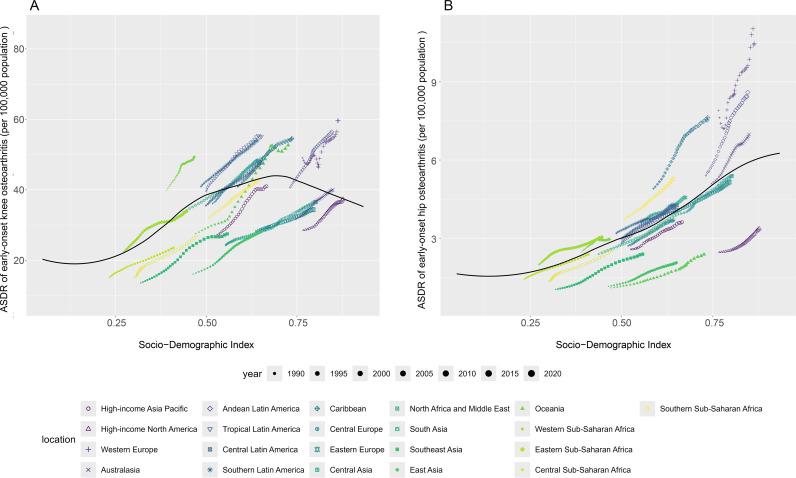
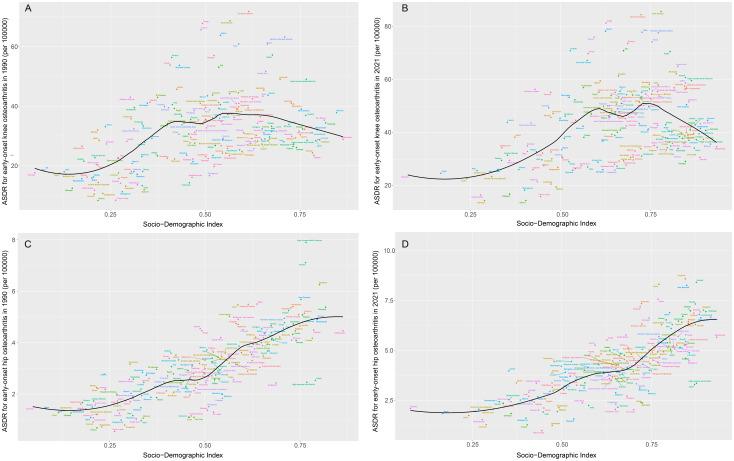
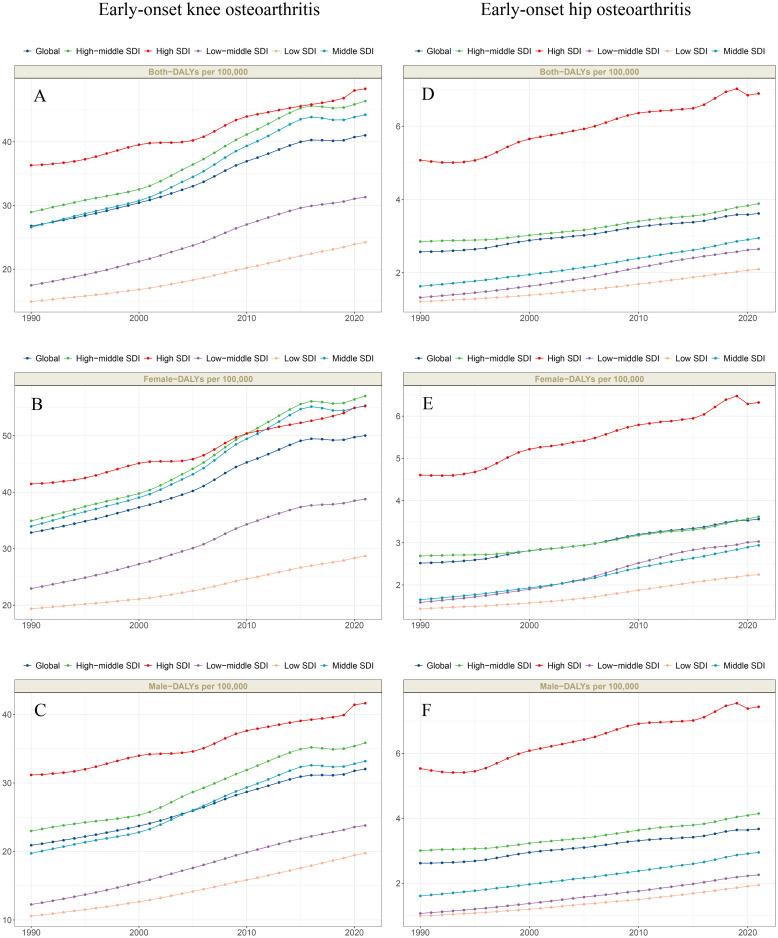
The disease burden of early-onset OA attributable to high BMI increased significantly between 1990 and 2021. The DALYs for early-onset knee and hip OA rose by 203.01% and 170.12%, respectively, with average annual percentage changes (AAPC) of 1.39% and 1.40%. The age-period-cohort analysis indicated that DALYs risk increased with age and period, and later birth cohorts experienced a higher burden of early-onset OA attributable to high BMI. Decomposition analysis revealed that population growth was the primary driver of the rising disease burden. There were significant absolute and relative inequalities in the burden of early-onset OA attributable to high BMI, as measured by the SDI. Countries with higher SDI bore a greater burden. The SII demonstrated that the ASDR gap between countries with the highest and lowest SDI widened steadily from 1990 to 2021. Predictive analysis suggested that the burden of early-onset OA attributable to high BMI will continue to increase over the next 15 years.
From 1990 to 2021, the global burden of early-onset OA attributable to high BMI showed a consistent upward trend, with significant inequalities across countries. The disease burden is projected to grow further in the future.
高体重指数是早发性骨关节炎(55岁之前确诊)的关键风险因素。本研究旨在分析1990年至2021年期间,归因于高体重指数的年龄标准化残疾调整生命年率(ASDR)的全球趋势。
分析全球疾病负担研究2021(GBD 2021)的数据,以评估204个国家、21个GBD地区和5个社会人口指数(SDI)层级中归因于高体重指数的早发性骨关节炎情况。使用估计年百分比变化(EAPC)和Joinpoint回归对ASDR的时间趋势进行量化。年龄-时期-队列模型和分解分析确定了负担的驱动因素,同时使用不平等斜率指数(SII)和集中指数(CI)评估不平等情况。ARIMA模型预测了到2036年的趋势。
1990年至2021年期间,归因于高体重指数的早发性骨关节炎的疾病负担显著增加。早发性膝关节和髋关节骨关节炎的伤残调整生命年分别上升了203.01%和170.12%,年均百分比变化(AAPC)分别为1.39%和1.40%。年龄-时期-队列分析表明,伤残调整生命年风险随年龄和时期增加,较晚出生的队列因高体重指数导致的早发性骨关节炎负担更高。分解分析显示,人口增长是疾病负担上升的主要驱动因素。归因于高体重指数的早发性骨关节炎负担存在显著的绝对和相对不平等,以SDI衡量。SDI较高的国家负担更重。SII表明,1990年至2021年期间,SDI最高和最低的国家之间的ASDR差距稳步扩大。预测分析表明,在未来15年中,归因于高体重指数的早发性骨关节炎负担将继续增加。
1990年至2021年期间,归因于高体重指数的全球早发性骨关节炎负担呈持续上升趋势,各国之间存在显著不平等。预计未来疾病负担将进一步增加。

 Zotero 插件