
欧洲心脏病学会成员国的心律失常护理:2025年欧洲心脏病学会-欧洲心律协会心律紊乱图谱
Arrhythmia care in ESC member countries: the 2025 ESC-EHRA atlas on heart rhythm disorders.
作者信息
Farkowski Michal M, Scherr Daniel, Boriani Giuseppe, Kazakiewicz Denis, Haim Moti, Huculeci Radu, Malaczynska-Rajpold Katarzyna, Petersen Steffen E, Timmis Adam, Traykov Vassil, Vardas Panos E, Pürerfellner Helmut, Merino José L
机构信息
Department of Cardiology, Ministry of Interior and Administration National Medical Institute, Wołoska 137, Warsaw 02-507, Poland.
II Department of Heart Arrhythmia, National Institute of Cardiology, Warsaw, Poland.
出版信息
Europace. 2025 Jul 1;27(7). doi: 10.1093/europace/euaf124.
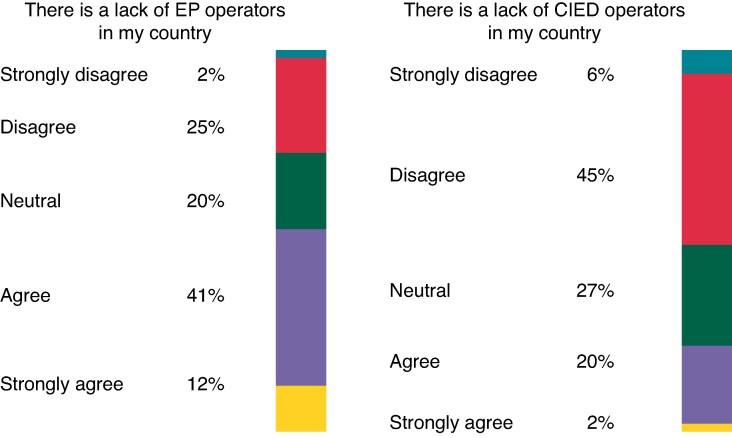
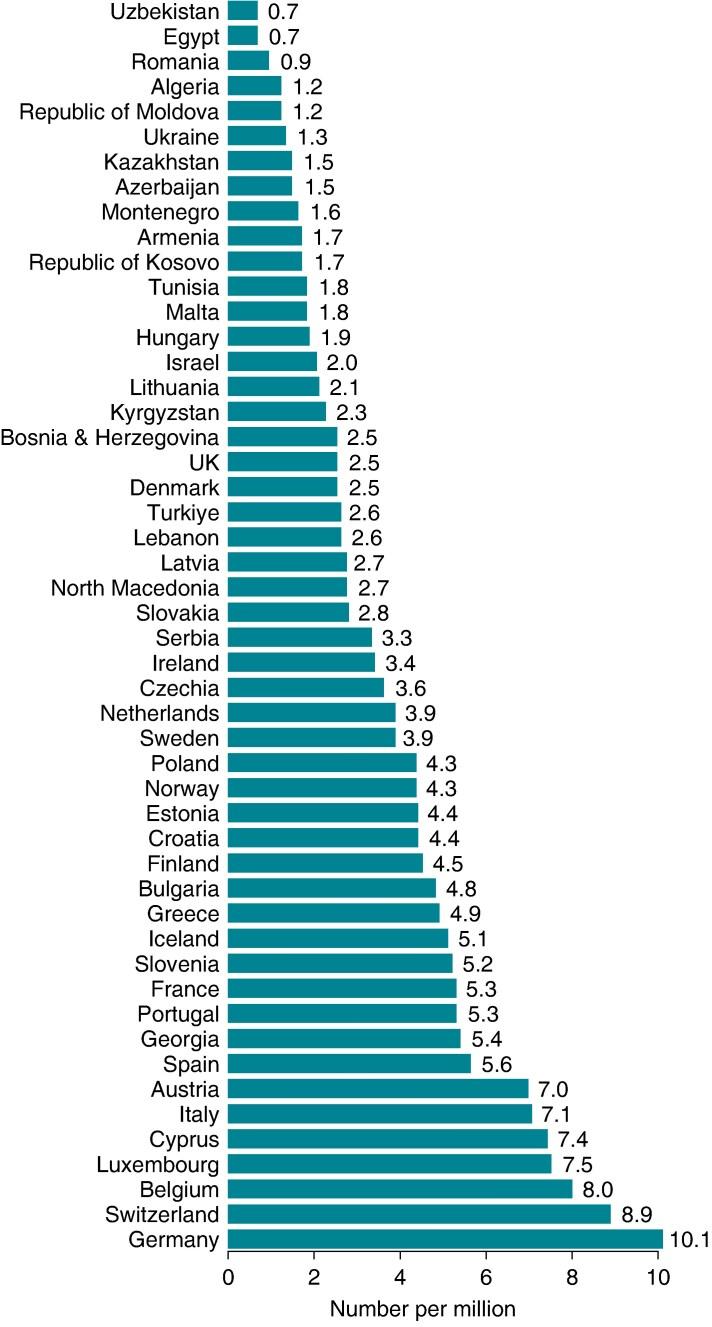
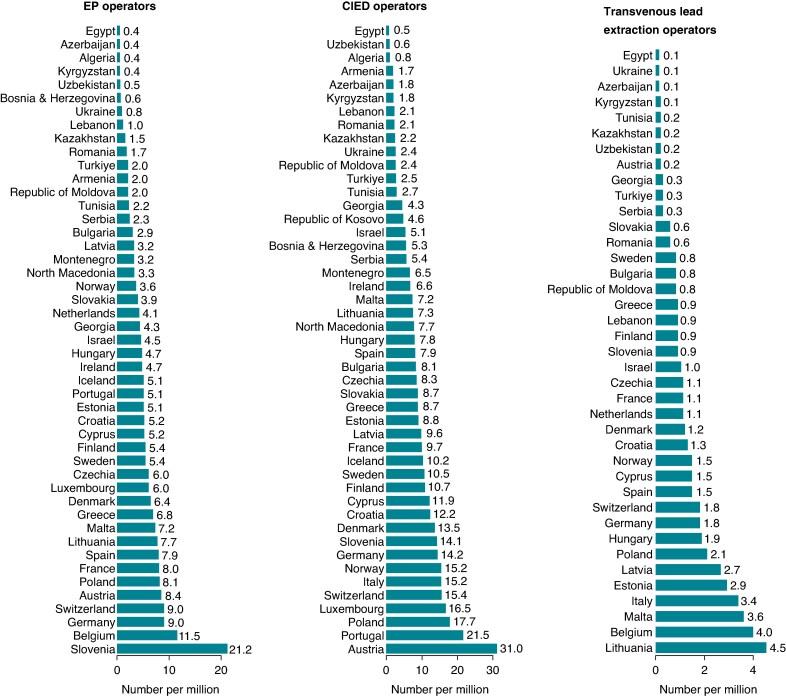
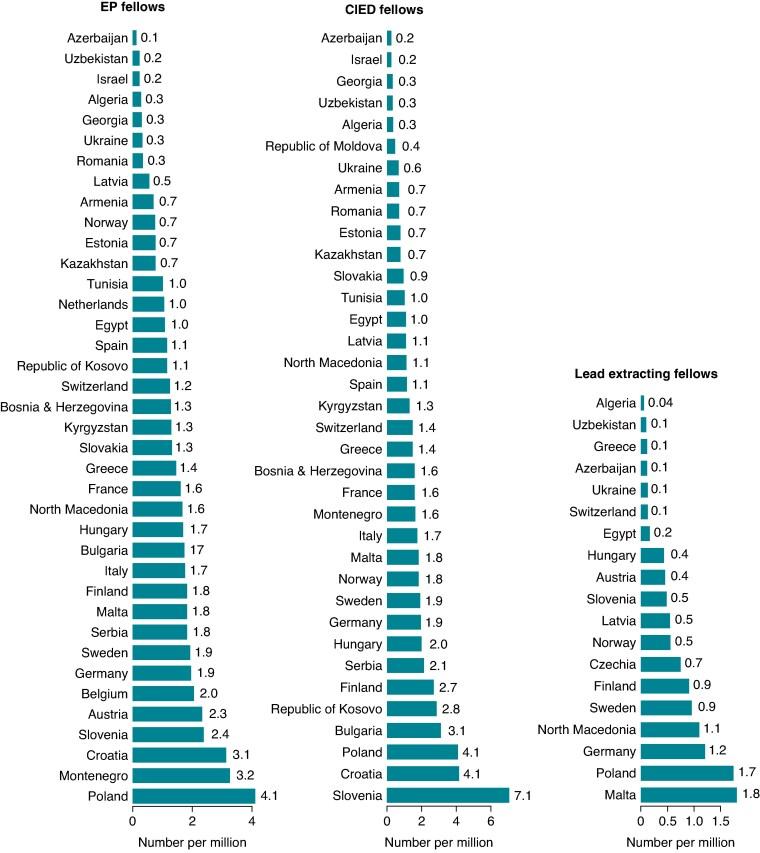
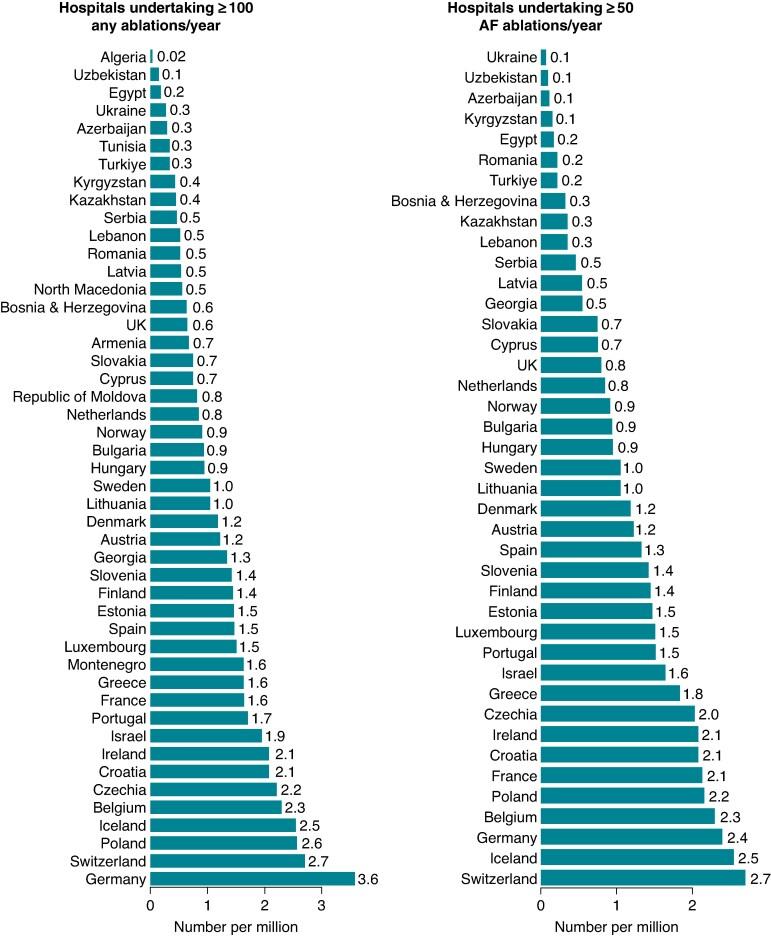
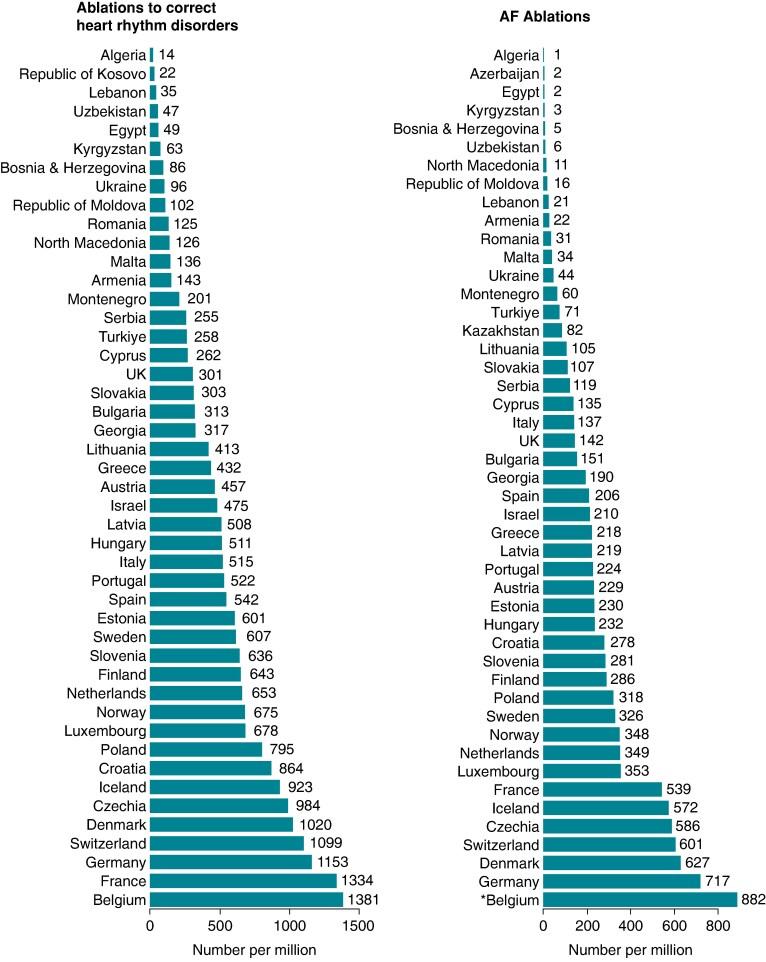
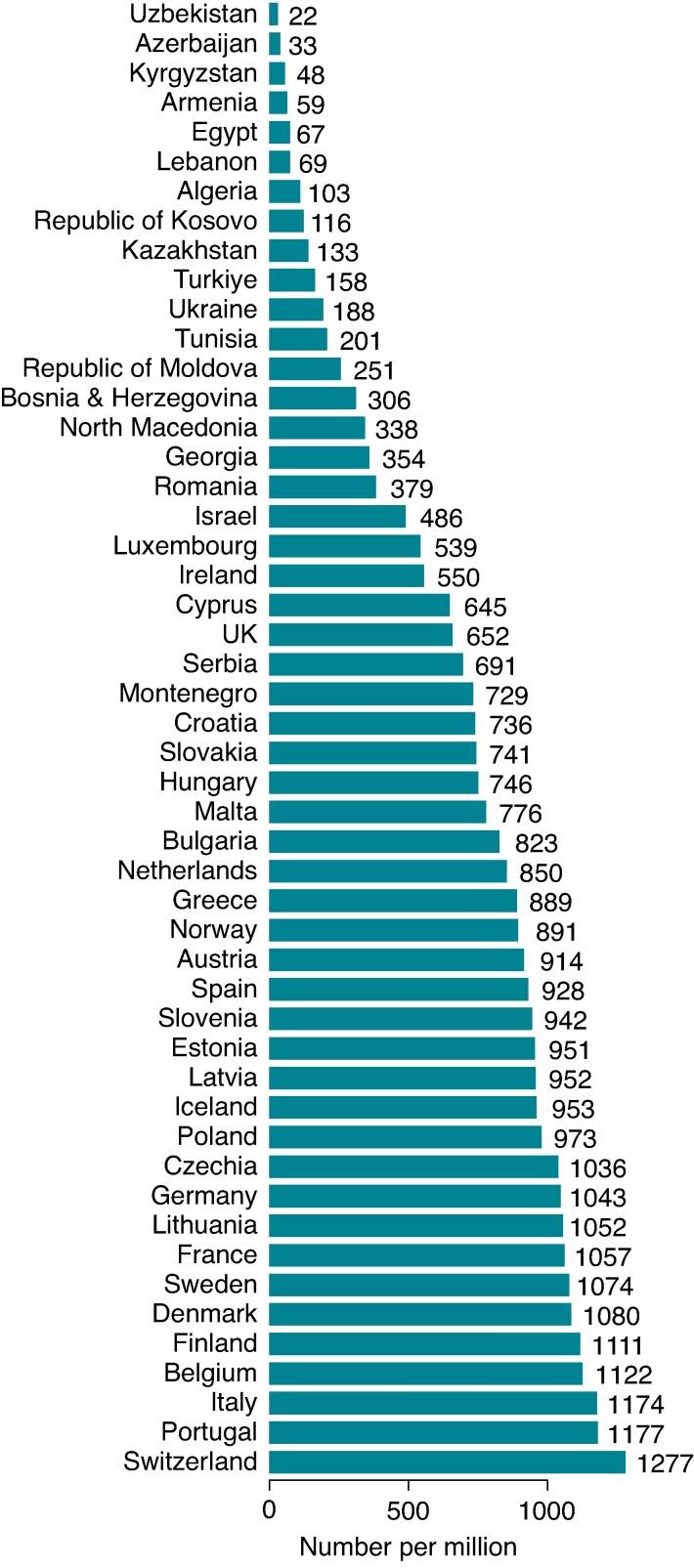
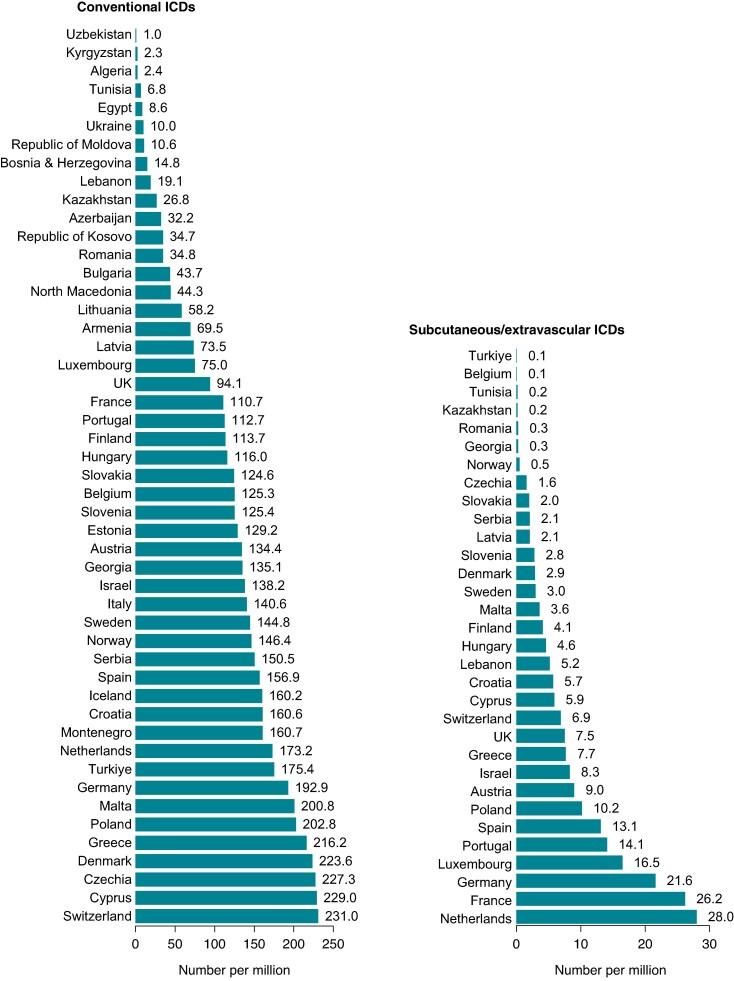
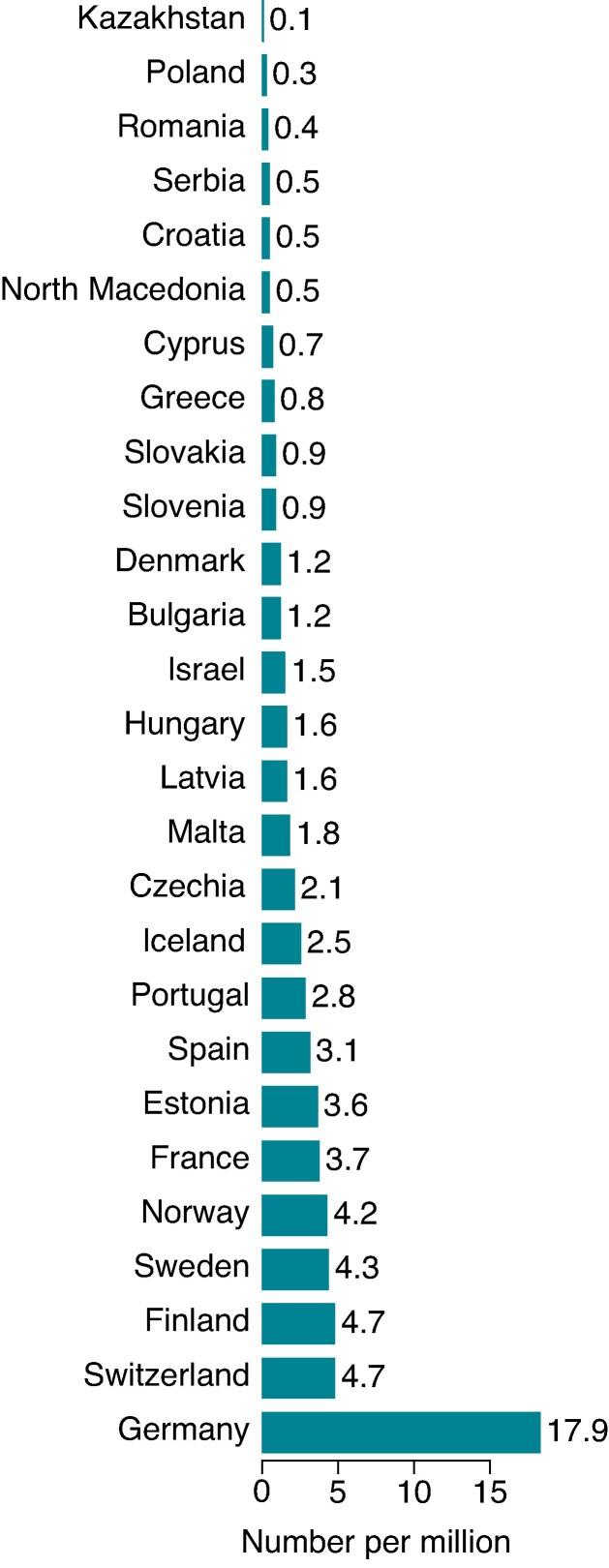
The ESC-EHRA Atlas on Heart Rhythm Disorders was developed to comprehensively map arrhythmia care across the European Society of Cardiology (ESC) member countries. A survey of National Cardiac Societies, Working Groups, and other EHRA partners in ESC member countries was conducted to gather data from 2023 or the most recently available year on arrhythmia care organization and delivery. In total, 51 ESC member countries actively participated in the study, with a survey completeness rate of 91%. The median number of hospitals performing EP or CIED procedures was 3.3 per million people. The annual median numbers of ablation procedures for heart rhythm disorders, atrial fibrillation, and supraventricular tachycardia per million people were 432, 151, and 136, respectively. The annual median numbers of pacemakers, implantable cardioverter-defibrillators (ICD), and cardiac resynchronization therapy cardioverter-defibrillator (CRT-D) implantations per million people were 739, 195, and 54, respectively. The median number of hospitals performing remote monitoring of CIEDs per million people was 0.5, though this service was unavailable in 15 countries. Two main universal issues emerged among the obstacles to guideline implementation: a lack of heart rhythm allied professionals and general dissatisfaction with the country's reimbursement system. The first edition of the ESC-EHRA Atlas presents up-to-date information on arrhythmia care organization and delivery among ESC member countries and highlights significant discrepancies in patients' access to ESC-guideline-recommended therapies.
《欧洲心脏病学会-欧洲心律协会心律失常疾病图谱》旨在全面描绘欧洲心脏病学会(ESC)成员国心律失常护理的情况。对ESC成员国的国家心脏协会、工作组及其他EHRA合作伙伴进行了一项调查,以收集2023年或最近可得年份有关心律失常护理组织与实施的数据。共有51个ESC成员国积极参与了该研究,调查完成率为91%。进行电生理(EP)或心脏植入电子设备(CIED)手术的医院中位数为每百万人3.3家。每百万人中心律失常、心房颤动和室上性心动过速消融手术的年度中位数分别为432例、151例和136例。每百万人中起搏器、植入式心律转复除颤器(ICD)和心脏再同步治疗心律转复除颤器(CRT-D)植入的年度中位数分别为739例、195例和54例。每百万人中进行CIED远程监测的医院中位数为0.5家,不过在15个国家无法提供这项服务。在指南实施的障碍中出现了两个主要的普遍问题:缺乏心律失常相关专业人员以及对本国报销系统普遍不满。《欧洲心脏病学会-欧洲心律协会图谱》第一版展示了ESC成员国中心律失常护理组织与实施的最新信息,并突出了患者在获得ESC指南推荐治疗方面的显著差异。

 Zotero 插件