
用于癌症免疫治疗的免疫类器官
Immune organoid for cancer immunotherapy.
作者信息
Wang Xiao-He, Wang Wu-Yin, Sun Zhi-Jun
机构信息
State Key Laboratory of Oral & Maxillofacial Reconstruction and Regeneration, Key Laboratory of Oral Biomedicine Ministry of Education, Hubei Key Laboratory of Stomatology, School & Hospital of Stomatology, Frontier Science Centre for Immunology and Metabolism, Taikang Centre for Life and Medical Sciences, Wuhan University, Wuhan 430079, China.
出版信息
Acta Pharm Sin B. 2025 Jul;15(7):3419-3435. doi: 10.1016/j.apsb.2025.04.031. Epub 2025 May 17.
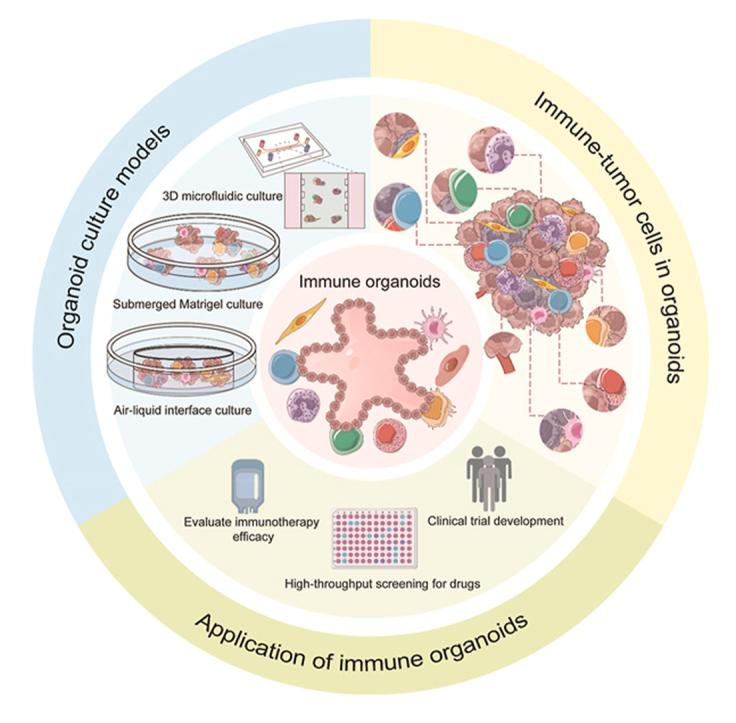
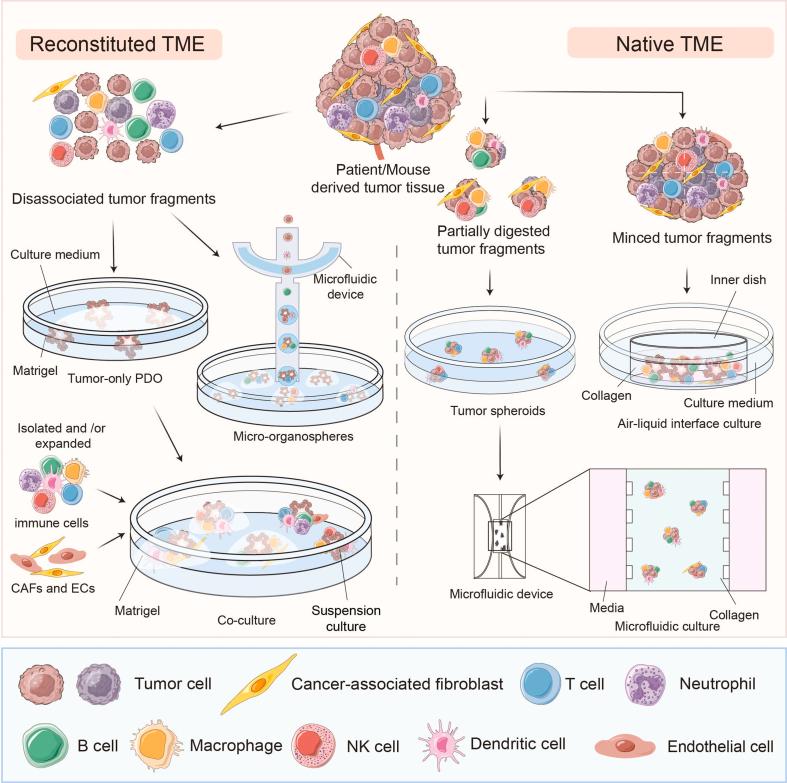
Cancer immunotherapy, which harnesses the patient's own immune system to target malignant cells, has shown remarkable promise in reducing tumor burden and extending survival. However, the complex tumor microenvironment (TME) limits therapeutic benefits to a subset of patients, making it challenging to develop accurate models for drug response prediction, drug discovery, and personalized medicine. Organoids, three-dimensional (3D) "mini-organs" derived from individual patients that faithfully recapitulate the structural, molecular, and gene expression profiles of primary tumors along with their complex TME , have emerged as powerful tools for patient-specific drug screening and therapeutic strategy development. Their versatility has led to widespread adoption across both clinical and basic cancer research. However, a key limitation of traditional organoid models is their lack of immune system components. Recent years have seen significant efforts to address this challenge through the integration of immune cells with organoids, aiming to create more physiologically relevant models. This review describes 3D culture methods for immunocompetent organoids, explores organoid-immune cell interactions, and discusses their applications in cancer immunotherapy and drug screening, along with recent advances in related clinical studies.
癌症免疫疗法利用患者自身的免疫系统来靶向恶性细胞,在减轻肿瘤负担和延长生存期方面已显示出显著前景。然而,复杂的肿瘤微环境(TME)将治疗益处局限于一部分患者,这使得开发用于药物反应预测、药物发现和个性化医疗的精确模型具有挑战性。类器官是源自个体患者的三维(3D)“微型器官”,能忠实地重现原发性肿瘤及其复杂TME的结构、分子和基因表达谱,已成为用于患者特异性药物筛选和治疗策略开发的强大工具。其多功能性已导致在临床和基础癌症研究中广泛应用。然而,传统类器官模型的一个关键局限性是缺乏免疫系统成分。近年来,人们通过将免疫细胞与类器官整合来应对这一挑战,旨在创建更具生理相关性的模型。本综述描述了具有免疫活性类器官的3D培养方法,探讨了类器官与免疫细胞的相互作用,并讨论了它们在癌症免疫疗法和药物筛选中的应用,以及相关临床研究的最新进展。




 Zotero 插件