
多发性硬化症巨噬细胞中训练免疫的线索。
Cues of Trained Immunity in Multiple Sclerosis Macrophages.
作者信息
Popa Elisa, Cheval Hélène, Zujovic Violetta
机构信息
Institut du Cerveau-Paris Brain Institute-ICM, Inserm, CNRS, APHP, Hôpital Pitié Salpêtrière University Hospital, Sorbonne Université, DMU Neuroscience 6, Paris, France.
出版信息
Cells. 2025 Jul 10;14(14):1054. doi: 10.3390/cells14141054.
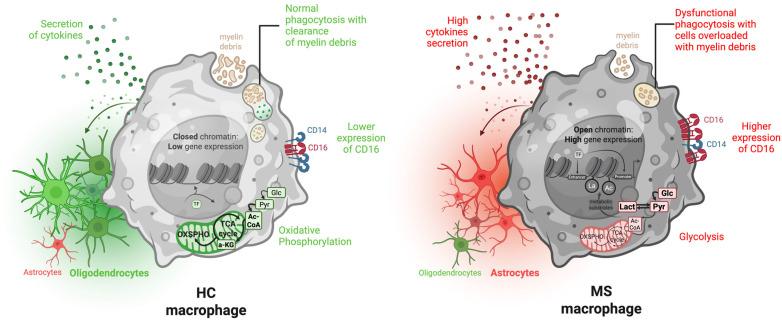
Multiple sclerosis (MS) is a complex autoimmune disease with both genetic and environmental influences, yet its underlying mechanisms remain only partially understood. In this review, we compile evidence suggesting that trained immunity-a form of innate immune memory-may play a crucial role in the autoimmune component of MS. By examining key findings from immunology, neuroinflammation, and MS pathophysiology, we explore how innate immune cells, particularly monocytes and macrophages, could contribute to disease onset and progression through persistent pro-inflammatory responses. Understanding the impact of trained immunity in MS could open new avenues for therapeutic strategies targeting the innate immune system.
多发性硬化症(MS)是一种受遗传和环境因素影响的复杂自身免疫性疾病,但其潜在机制仍仅被部分理解。在本综述中,我们收集了证据表明,训练有素的免疫——一种先天性免疫记忆形式——可能在MS的自身免疫成分中起关键作用。通过研究免疫学、神经炎症和MS病理生理学的关键发现,我们探讨了先天性免疫细胞,特别是单核细胞和巨噬细胞,如何通过持续的促炎反应导致疾病的发生和进展。了解训练有素的免疫在MS中的影响可能为针对先天性免疫系统的治疗策略开辟新途径。
 Zotero 插件