
一种使用靶向纳米孔测序进行疟原虫基因监测的扩展方法。
An expanded method for malaria parasite genetic surveillance using targeted nanopore sequencing.
作者信息
Harrott Alexandria J R, Morang'a Collins M, Pearson Richard D, Sakyi Mona-Liza, Osumanu Ahmed, Amoako Enock K, Bara Fagdéba David, Hosmillo Myra, Rowe Kess, Aniweh Yaw, Awandare Gordon A, Zeukeng Francis, Goodfellow Ian, Ariani Cristina V, Amenga-Etego Lucas N, Hamilton William L
机构信息
Wellcome Sanger Institute, Hinxton, England, CB10 1RQ, UK.
University of Bath Department of Life Sciences, Bath, England, BA2 7AZ, UK.
出版信息
Gates Open Res. 2025 Jul 24;9:49. doi: 10.12688/gatesopenres.16355.1. eCollection 2025.
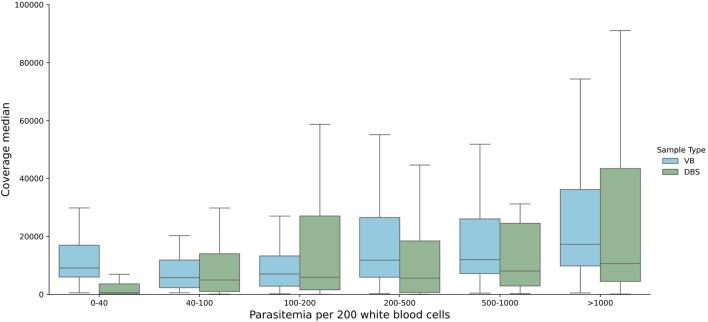
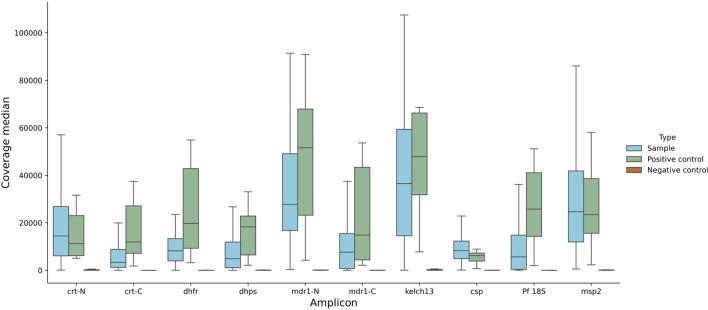
Malaria causes around 250 million cases and over 600,000 deaths annually, with the heaviest burden falling on young children living in sub-Saharan Africa. Molecular surveillance of parasites and mosquito vectors are key components of effective malaria control decision-making. Previously, we have designed and implemented a nanopore-based workflow for targeted molecular surveillance in Ghana, which we call DRAG1 (drug resistance + antigen multiplex PCR). Here, we describe an updated and expanded multiplex assay ('DRAG2') with additional amplicon targets that incorporate more antimalarial drug resistance markers, the polymorphic surface antigen ( ), and the 18S ribosomal RNA (rRNA) gene for species detection. We describe the performance of the DRAG2 assay over a range of parasitaemias and sample types (venous blood and dried blood spots), with suggested systems of quality control including the use of synthetic plasmids for positive controls and recommended coverage thresholds. The plasmids are highly economical, and engineered to include both 'test' single nucleotide polymorphisms (SNPs), such as known drug resistance markers, and 'control' SNPs, which are not found in nature and thus signal contamination if detected in clinical samples. We provide standard operating procedures (SOPs) for use by teams aiming to implement the assay in their laboratory. In summary, we describe an updated nanopore-based method for malaria molecular surveillance, including detailed consideration of quality control processes and SOPs. These are important steps in the transition from research tool to diagnostic assay, which will require further testing in endemic settings and regulatory processes and approvals.
疟疾每年导致约2.5亿例病例和超过60万人死亡,负担最重的是撒哈拉以南非洲的幼儿。对疟原虫和蚊媒进行分子监测是有效控制疟疾决策的关键组成部分。此前,我们设计并实施了一种基于纳米孔的工作流程,用于在加纳进行靶向分子监测,我们称之为DRAG1(耐药性+抗原多重PCR)。在此,我们描述了一种更新和扩展的多重检测方法(“DRAG2”),其具有更多扩增子靶点,纳入了更多抗疟药物耐药性标记、多态性表面抗原()以及用于疟原虫物种检测的18S核糖体RNA(rRNA)基因。我们描述了DRAG2检测方法在一系列疟原虫血症水平和样本类型(静脉血和干血斑)中的性能,并提出了质量控制体系,包括使用合成质粒作为阳性对照以及推荐的覆盖阈值。这些质粒成本极低,经过设计包含“检测”单核苷酸多态性(SNP),如已知的耐药性标记,以及“对照”SNP,后者在自然界中不存在,因此如果在临床样本中检测到则表明存在污染。我们提供了标准操作程序(SOP),供旨在在其实验室中实施该检测方法的团队使用。总之,我们描述了一种更新的基于纳米孔的疟疾分子监测方法,包括对质量控制流程和SOP的详细考虑。这些是从研究工具向诊断检测方法转变的重要步骤,这将需要在流行地区进行进一步测试以及经过监管流程和批准。


 Zotero 插件