
胰腺癌的癌症疫苗接种及基于免疫的治疗方法
Cancer Vaccination and Immune-Based Approaches in Pancreatic Cancer.
作者信息
Bloom Matthew, Shaikh Ali Raza, Sun Zhengyang, Bashir Babar, Snook Adam E
机构信息
Department of Medical Oncology, Thomas Jefferson University, Philadelphia, PA 19107, USA.
Department of Pharmacology, Physiology, & Cancer Biology, Thomas Jefferson University, Philadelphia, PA 19107, USA.
出版信息
Cancers (Basel). 2025 Jul 15;17(14):2356. doi: 10.3390/cancers17142356.
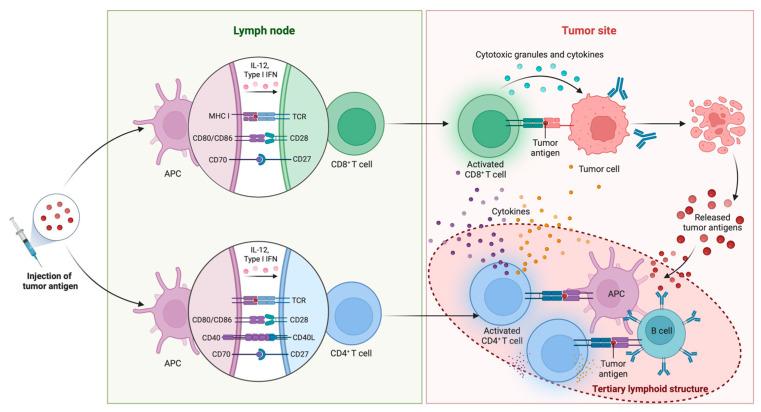
Pancreatic ductal adenocarcinoma (PDAC) is an aggressive malignancy with high recurrence rates even after curative resection and adjuvant chemotherapy. Although immunotherapeutic approaches, such as immune checkpoint blockade (ICB), have revolutionized the treatment of some solid tumor malignancies, this has not been the case for PDAC. Several characteristics of PDAC, including its distinctive desmoplastic tumor microenvironment (TME), intratumor heterogeneity, and poor antigenicity and immune cell infiltration, contribute to its dismal immunotherapeutic landscape. Cancer vaccines offer one approach to overcoming these barriers, particularly in the resectable or borderline resectable settings, where tumor burden is low and immunosuppression is less pronounced. Various vaccination platforms have been tested in the clinical setting, from off-the-shelf peptide-based vaccines (e.g., AMPLFIFY-201 study, where over 80% of participants exhibited T-cell and biomarker responses) to personalized neoantigen mRNA vaccine approaches (e.g., autogene cevumeran, with significant responders experiencing longer median recurrence-free survival (RFS)). The key considerations for enhancing the efficacy of vaccination include combinations with chemotherapy, radiotherapy, and/or ICBs, as well as selecting appropriate immunomodulators or adjuvants. Recent results suggest that with continued mechanistic advancement and novel therapeutic development, cancer vaccines may finally be poised for clinical success in PDAC.
胰腺导管腺癌(PDAC)是一种侵袭性恶性肿瘤,即使在根治性切除和辅助化疗后仍具有高复发率。尽管免疫治疗方法,如免疫检查点阻断(ICB),已经彻底改变了一些实体瘤恶性肿瘤的治疗方式,但PDAC并非如此。PDAC的几个特征,包括其独特的促结缔组织增生性肿瘤微环境(TME)、肿瘤内异质性、较差的抗原性和免疫细胞浸润,导致了其惨淡的免疫治疗前景。癌症疫苗提供了一种克服这些障碍的方法,特别是在可切除或边缘可切除的情况下,那里肿瘤负荷低且免疫抑制不太明显。各种疫苗接种平台已在临床环境中进行了测试,从现成的基于肽的疫苗(例如AMPLFIFY - 201研究,超过80%的参与者表现出T细胞和生物标志物反应)到个性化新抗原mRNA疫苗方法(例如autogene cevumeran,有显著反应者经历了更长的无复发生存期(RFS)中位数)。提高疫苗接种疗效的关键考虑因素包括与化疗、放疗和/或ICB联合使用,以及选择合适的免疫调节剂或佐剂。最近的结果表明,随着机制的不断进步和新型治疗方法的发展,癌症疫苗最终可能在PDAC的临床治疗中取得成功。

 Zotero 插件