
基于PROTAC的呼吸道病毒抗病毒药物:靶向治疗和疫苗开发的新方法
PROTAC-Based Antivirals for Respiratory Viruses: A Novel Approach for Targeted Therapy and Vaccine Development.
作者信息
Anugu Amith, Singh Pankaj, Kashyap Dharambir, Joseph Jillwin, Naik Sheetal, Sarkar Subhabrata, Zaman Kamran, Dhaliwal Manpreet, Nagar Shubham, Gupta Tanishq, Honnavar Prasanna
机构信息
Basic Medical Science, American University of Antigua College of Medicine, St. Johns 1543, Antigua and Barbuda.
ICMR-National Institute for One Health, Nagpur, Maharashtra 440006, India.
出版信息
Microorganisms. 2025 Jul 2;13(7):1557. doi: 10.3390/microorganisms13071557.
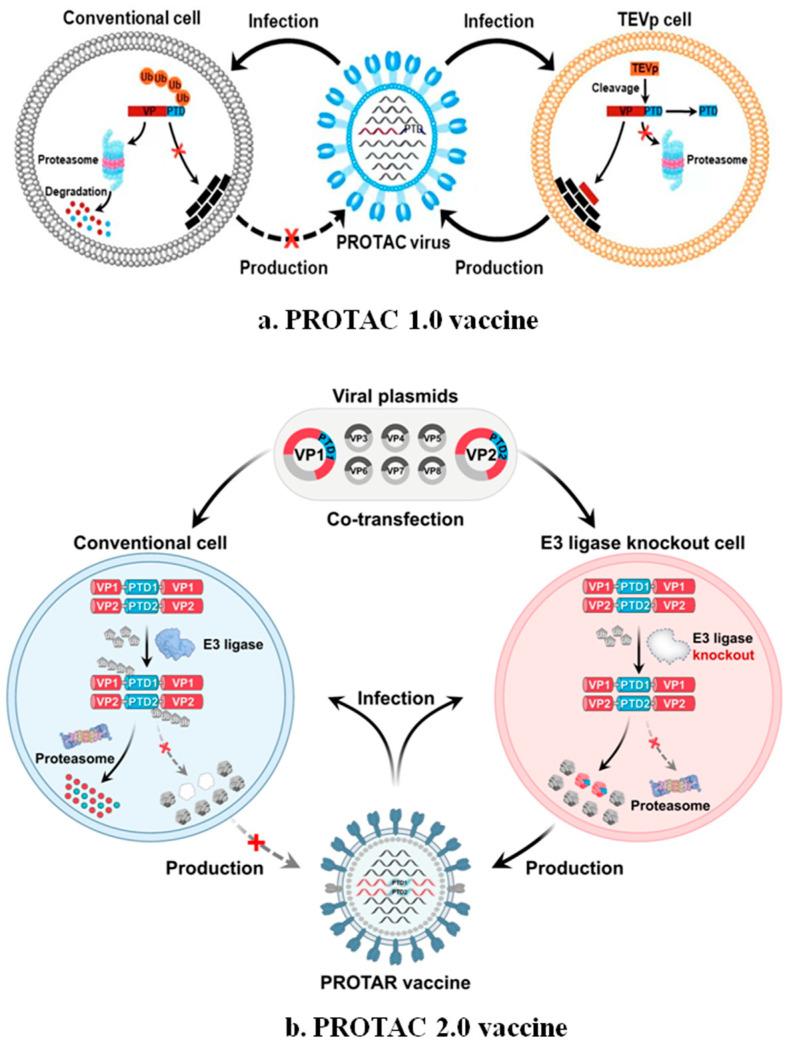
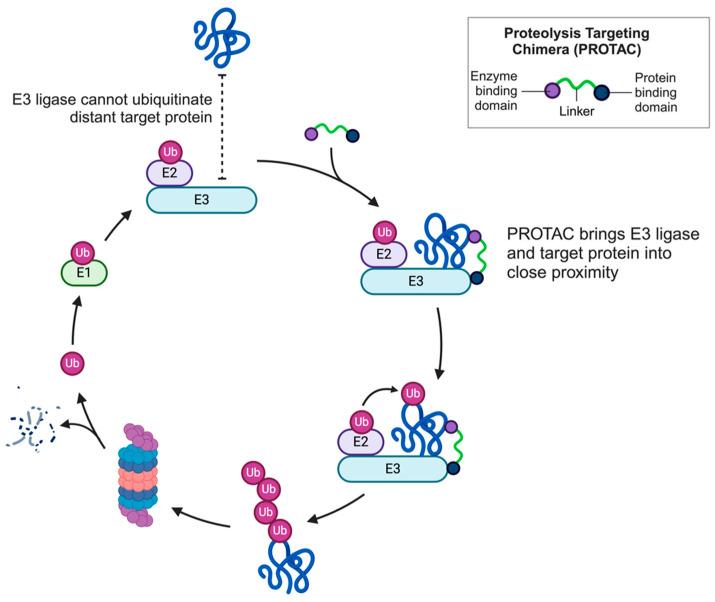
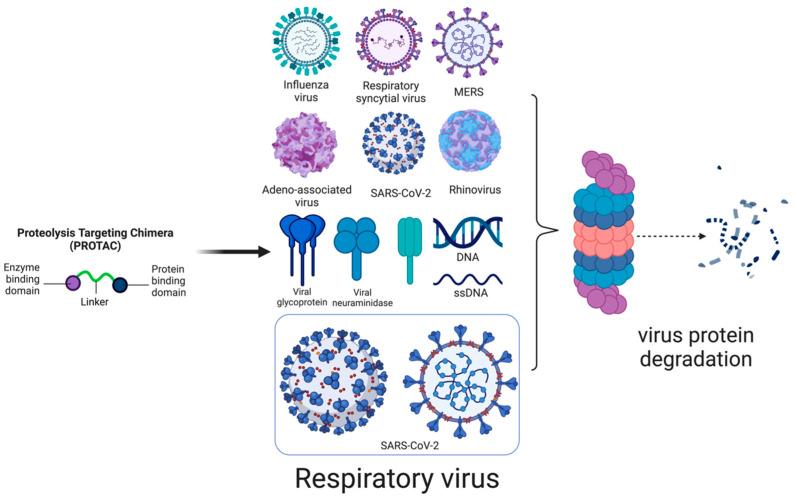
The global burden of respiratory viral infections is notable, which is attributed to their higher transmissibility compared to other viral diseases. Respiratory viruses are seen to have evolved resistance to available treatment options. Although vaccines and antiviral drugs control some respiratory viruses, this control is limited due to unexpected events, such as mutations and the development of antiviral resistance. The technology of proteolysis-targeting chimeras (PROTACs) has been emerging as a novel technology in viral therapeutics. These are small molecules that can selectively degrade target proteins via the ubiquitin-proteasome pathway. PROTACs as a therapy were initially developed against cancer, but they have recently shown promising results in their antiviral mechanisms by targeting viral and/or host proteins involved in the pathogenesis of viral infections. In this review, we elaborate on the antiviral potential of PROTACs as therapeutic agents and their potential as vaccine components against important respiratory viral pathogens, including influenza viruses, coronaviruses (SARS-CoV-2), and respiratory syncytial virus. Advanced applications of PROTAC antiviral strategies, such as hemagglutinin and neuraminidase degraders for influenza and spike proteins of SARS-CoV-2, are detailed in this review. Additionally, the role of PROTACs in targeting cellular mechanisms within the host, thereby preventing viral pathogenesis and eliciting an antiviral effect, is discussed. The potential of PROTACs as vaccines, utilizing proteasome-based virus attenuation to achieve a robust protective immune response, while ensuring safety and enhancing efficient production, is also presented. With the promises exhibited by PROTACs, this technology faces significant challenges, including the emergence of novel viral strains, tissue-specific expression of E3 ligases, and pharmacokinetic constraints. With advanced computational design in molecular platforms, PROTAC-based antiviral development offers an alternative, transformative path in tackling respiratory viruses.
呼吸道病毒感染的全球负担显著,这归因于它们相较于其他病毒性疾病具有更高的传播性。呼吸道病毒已出现对现有治疗方案的耐药性。尽管疫苗和抗病毒药物可控制部分呼吸道病毒,但由于突变和抗病毒耐药性的产生等意外事件,这种控制作用有限。靶向蛋白水解嵌合体(PROTACs)技术已成为病毒治疗领域的一项新技术。这些小分子能够通过泛素-蛋白酶体途径选择性降解靶蛋白。PROTACs最初是作为抗癌疗法开发的,但最近通过靶向参与病毒感染发病机制的病毒和/或宿主蛋白,在其抗病毒机制方面显示出了有前景的结果。在本综述中,我们阐述了PROTACs作为治疗剂的抗病毒潜力及其作为针对重要呼吸道病毒病原体(包括流感病毒、冠状病毒(SARS-CoV-2)和呼吸道合胞病毒)的疫苗成分的潜力。本综述详细介绍了PROTAC抗病毒策略的先进应用,如针对流感的血凝素和神经氨酸酶降解剂以及SARS-CoV-2的刺突蛋白。此外,还讨论了PROTACs在靶向宿主细胞机制以预防病毒发病并引发抗病毒效应方面的作用。还介绍了PROTACs作为疫苗的潜力,即利用基于蛋白酶体的病毒减毒来实现强大的保护性免疫反应,同时确保安全性并提高生产效率。尽管PROTACs展现出了前景,但该技术面临重大挑战,包括新型病毒株的出现、E3连接酶的组织特异性表达以及药代动力学限制。通过分子平台的先进计算设计,基于PROTAC的抗病毒开发为应对呼吸道病毒提供了一条替代性的、变革性的途径。






 Zotero 插件