
在GAIA合成仪上对FAP - 2286假肽进行高效自动化镓放射性标记的特定反应条件。
Specific reaction conditions for efficient automated Ga-radiolabeling of the FAP-2286 pseudopeptide on a GAIA synthesizer.
作者信息
Ammour Maissa, Torchio Jade, Renaud Stéphane C, Rubira Léa, Fersing Cyril
机构信息
Department of Nuclear Medicine, Institut régional du Cancer de Montpellier (ICM), University of Montpellier, Montpellier, France.
IBMM, Univ Montpellier, CNRS, ENSCM, Montpellier, France.
出版信息
Front Med (Lausanne). 2025 Jul 22;12:1628158. doi: 10.3389/fmed.2025.1628158. eCollection 2025.
INTRODUCTION
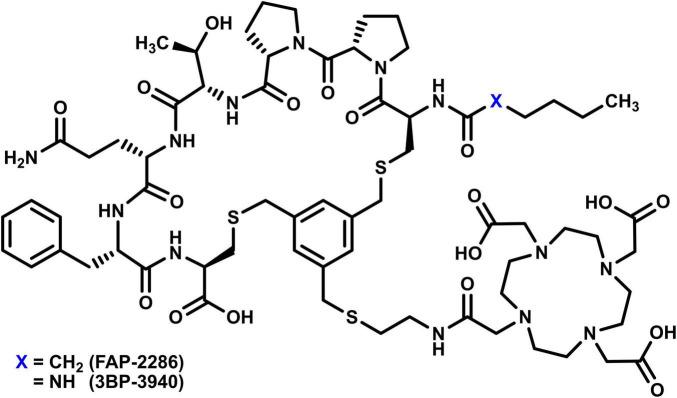
Automated radiolabeling of gallium-68-labeled experimental radiopharmaceuticals is crucial for ensuring high reproducibility and regulatory compliance in clinical settings. FAP-2286, a promising DOTA-pseudopeptide targeting the tumor microenvironment, has demonstrated superior tumor retention compared to quinoline-based analogs, making it an attractive theranostic agent. This study aimed to optimize and automate the preparation of [Ga]Ga-FAP-2286 on the GAIA synthesizer, ensuring high radiochemical purity (RCP) and radiochemical yield (RCY).
METHODS
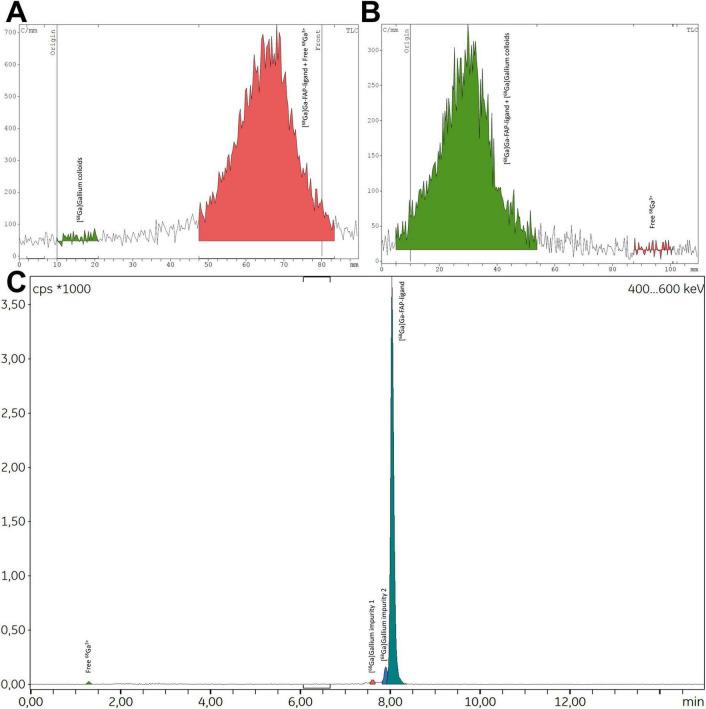
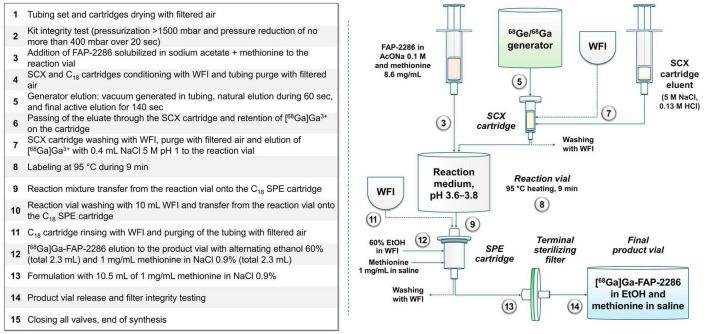
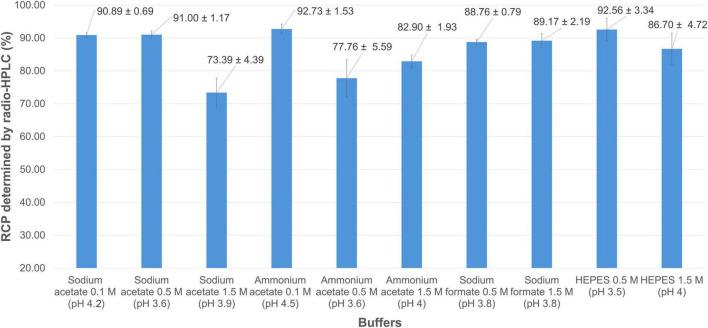
Manual radiolabeling assays were initially performed to identify optimal reaction conditions, varying buffer, antioxidant, vector amount, heating time, and purification methods. The selected conditions were then adapted to an automated protocol using a GAIA module. A strong cation exchange (SCX) cartridge for Ga pre-concentration and a solid-phase extraction (SPE) step for final purification were included in the process. RCY, RCP, and stability over 4 h were assessed using radio-HPLC and radio-TLC. Additionally, the applicability of the optimized automated method was evaluated for 3BP-3940, a structurally related pseudopeptide.
RESULTS
Initial optimization studies identified sodium acetate buffer 0.1 M with methionine as an antioxidant, 25 μg of FAP-2286, and a 4-min heating time as the best manual radiolabeling conditions, achieving a RCP > 98%. In the automated synthesis, adjustments were made, including doubling the vector amount and extending heating to 9 min, resulting over three test-batches in a moderate RCY of 59.85 ± 3.73% and a RCP just over 94% up to 4 h after the end of synthesis. Importantly, the method was successfully transposed to [Ga]Ga-3BP-3940, yielding better RCY (75.62 ± 11.76%), RCP and stability profiles (> 95.95% over 4 h).
CONCLUSION
This study established a robust, automated protocol for the synthesis of [Ga]Ga-FAP-2286, ensuring high purity, reproducibility, and compatibility with clinical applications. The method's successful adaptation to 3BP-3940 highlights its versatility for such radiopharmaceuticals, supporting the broader implementation of automated theranostic agent production in nuclear medicine.
引言
镓 - 68标记的实验性放射性药物的自动化放射性标记对于确保临床环境中的高重现性和法规遵从性至关重要。FAP - 2286是一种靶向肿瘤微环境的有前景的DOTA - 假肽,与喹啉类类似物相比,它表现出卓越的肿瘤滞留能力,使其成为一种有吸引力的诊疗试剂。本研究旨在优化并自动化在GAIA合成仪上制备[Ga]Ga - FAP - 2286的过程,确保高放射化学纯度(RCP)和放射化学产率(RCY)。
方法
最初进行手动放射性标记实验以确定最佳反应条件,改变缓冲液、抗氧化剂、载体量、加热时间和纯化方法。然后将选定的条件应用于使用GAIA模块的自动化方案。该过程包括用于镓预浓缩的强阳离子交换(SCX)柱和用于最终纯化的固相萃取(SPE)步骤。使用放射性高效液相色谱法(radio - HPLC)和放射性薄层色谱法(radio - TLC)评估RCY、RCP以及4小时内的稳定性。此外,还评估了优化后的自动化方法对结构相关假肽3BP - 3940的适用性。
结果
初步优化研究确定以0.1 M乙酸钠缓冲液与甲硫氨酸作为抗氧化剂、25 μg FAP - 228以及4分钟加热时间为最佳手动放射性标记条件,放射化学纯度>98%。在自动化合成中进行了调整,包括将载体量加倍并将加热时间延长至9分钟,在三个测试批次中,合成结束后4小时内的放射化学产率为59.85±3.73%,放射化学纯度略高于94%。重要的是,该方法成功应用于[Ga]Ga - 3BP - 3940,获得了更好的放射化学产率(75.62±11.76%)、放射化学纯度和稳定性(4小时内>95.95%)。
结论
本研究建立了一种稳健的、自动化方案用于合成[Ga]Ga - FAP - 2286,确保了高纯度、重现性以及与临床应用的兼容性。该方法成功应用于3BP - 3940突出了其对此类放射性药物的通用性,支持了核医学中自动化诊疗试剂生产的更广泛实施。



 Zotero 插件