
叙利亚境内流离失所的黎巴嫩妇女的乳腺癌和宫颈癌防治差距
Breast and Cervical Cancer Gaps in Displaced Lebanese Women in Syria.
作者信息
Al-Bitar Ahmad, Kouli Ayla, Janoud Omran, Harb Ali, Fawaz Hassan, Saifo Maher
机构信息
Faculty of Medicine, Damascus University, Damascus, Syrian Arab Republic.
Department of Oncology, Albairouni University Hospital, Faculty of Medicine, Damascus University, Damascus, Syrian Arab Republic.
出版信息
JAMA Netw Open. 2025 Aug 1;8(8):e2525652. doi: 10.1001/jamanetworkopen.2025.25652.
IMPORTANCE
Breast and cervical cancers are leading causes of cancer mortality in low-resource countries, yet awareness remains critically understudied among displaced populations in humanitarian crises. Lebanese women displaced to Syria represent a group navigating compounded vulnerabilities associated with conflict, displacement, and a collapsed health care system and may experience important gaps in cancer knowledge and access.
OBJECTIVE
To evaluate knowledge of breast and cervical cancer risk factors and symptoms and screening for early cancer detection among displaced Lebanese women in Syria.
DESIGN, SETTING, AND PARTICIPANTS: This cross-sectional study measured breast cancer, cervical cancer, and human papillomavirus (HPV) knowledge using a survey containing validated, Arabic-translated scales administered via structured interviews from November to December 2024. Lebanese women (aged ≥18 years) displaced to Syria and visiting outpatient health care facilities in Damascus were included. Women who were not Lebanese and with acute or severe physical or mental health conditions were excluded.
EXPOSURE
Breast cancer and cervical cancer knowledge.
MAIN OUTCOMES AND MEASURES
The primary outcome was knowledge of cancer symptoms, risk factors, and screening practices. Analyses included Fisher exact test, Kruskal-Wallis test, Mann-Whitney U test, and Spearman rank correlation.
RESULTS
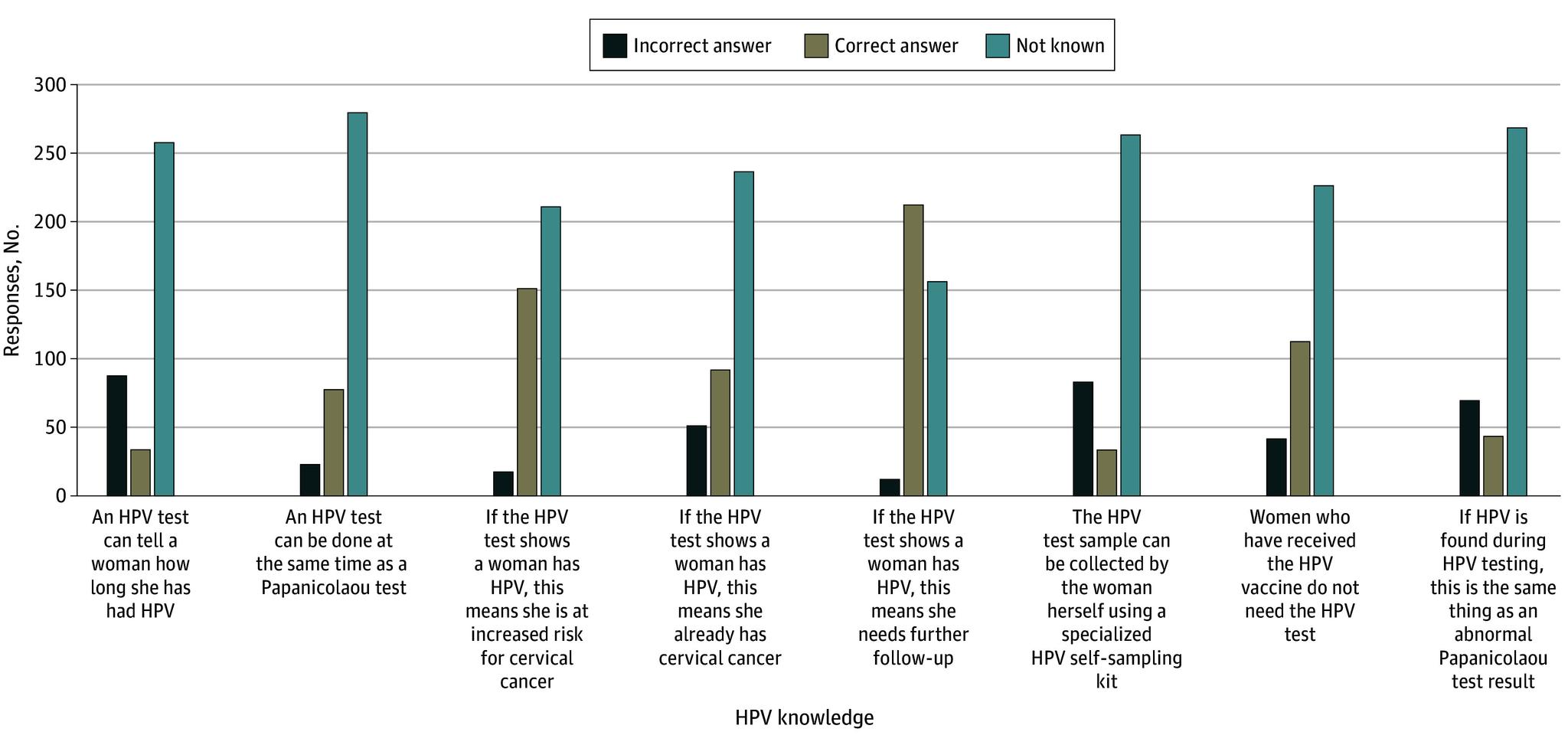
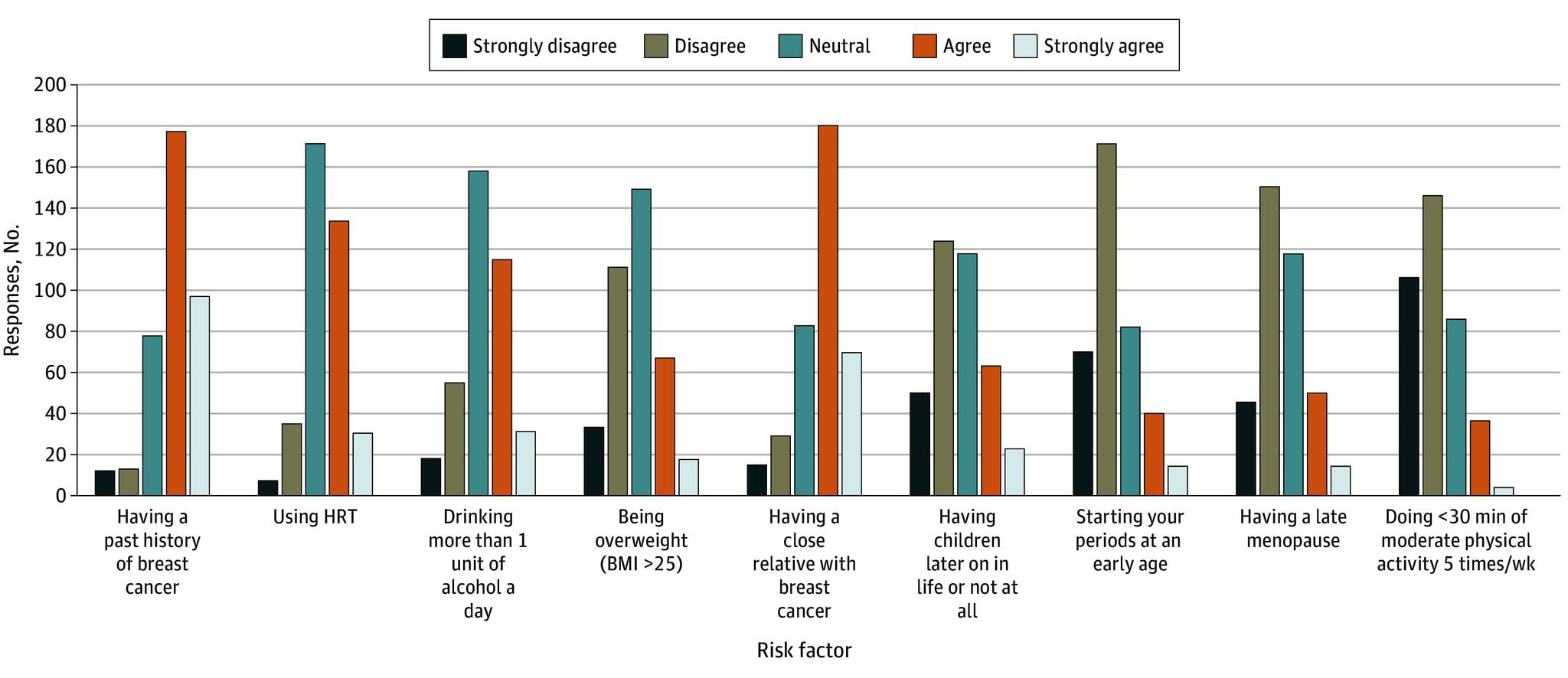
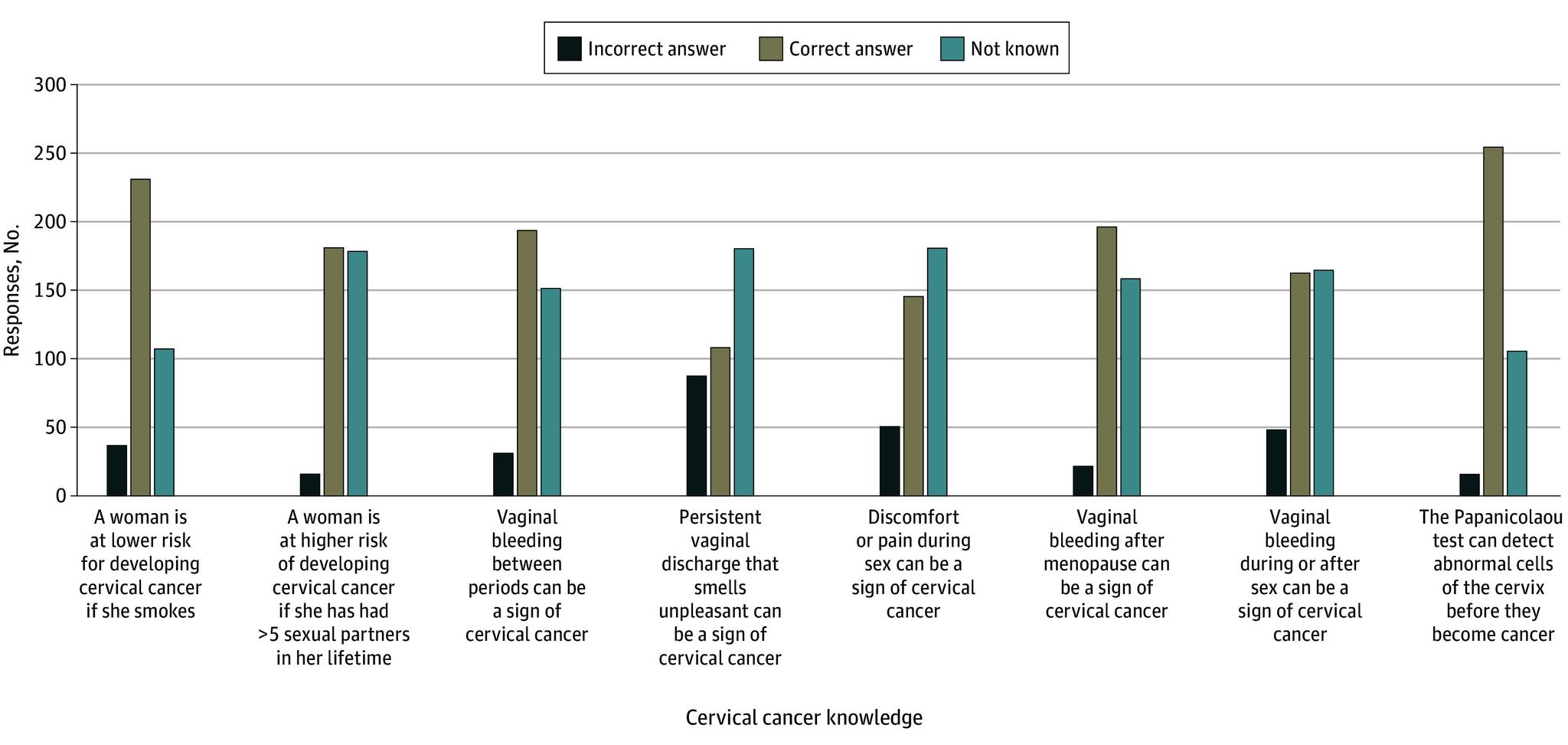
Among 378 displaced Lebanese women in Syria (median [IQR] age, 30 [23-39] years), 196 (51.9%) were married, 187 (49.5%) held a university degree, and 222 (58.7%) were unemployed. Only 85 participants (22.5%) had ever undergone breast imaging, 64 (16.9%) had undergone a Papanicolaou test, 274 (72.5%) rarely or never examined their breasts, and 135 (35.7%) ignored observed breast changes. Knowledge gaps were prominent, with 348 (92.1%) having a low awareness of HPV and only 4 (1.1%) correctly identifying age as an important risk factor for breast cancer. Higher educational attainment was significantly associated with improved screening rates and knowledge of breast and cervical cancer (χ23 = 11.661; P = .009), whereas financial status showed no association.
CONCLUSIONS AND RELEVANCE
These findings suggest that displaced women during humanitarian crises may face substantial breast and cervical cancer screening barriers, underscoring the need for crisis-responsive health care.
重要性
乳腺癌和宫颈癌是资源匮乏国家癌症死亡的主要原因,但在人道主义危机中的流离失所人群中,对其认知程度的研究仍极为不足。流离至叙利亚的黎巴嫩妇女面临着与冲突、流离失所和崩溃的医疗系统相关的多重脆弱性,在癌症知识和医疗服务获取方面可能存在重大差距。
目的
评估叙利亚境内流离失所的黎巴嫩妇女对乳腺癌和宫颈癌风险因素、症状的认知以及早期癌症检测筛查情况。
设计、地点和参与者:这项横断面研究于2024年11月至12月通过结构化访谈,使用包含经验证的阿拉伯语翻译量表的调查问卷,测量乳腺癌、宫颈癌和人乳头瘤病毒(HPV)知识。纳入对象为流离至叙利亚且前往大马士革门诊医疗设施就诊的黎巴嫩妇女(年龄≥18岁)。排除非黎巴嫩妇女以及患有急性或严重身心健康问题的妇女。
暴露因素
乳腺癌和宫颈癌知识。
主要结局和测量指标
主要结局是对癌症症状、风险因素和筛查做法的了解。分析包括Fisher精确检验、Kruskal-Wallis检验、Mann-Whitney U检验和Spearman等级相关性分析。
结果
在叙利亚的378名流离失所的黎巴嫩妇女中(年龄中位数[四分位间距]为30[23 - 39]岁),196名(51.9%)已婚,187名(49.5%)拥有大学学位,222名(58.7%)失业。只有85名参与者(22.5%)曾接受过乳房成像检查,64名(16.9%)接受过巴氏试验,274名(72.5%)很少或从未自行检查过乳房,135名(35.7%)对观察到的乳房变化不予理会。知识差距显著,348名(92.1%)对HPV的知晓率较低,只有4名(1.1%)正确将年龄识别为乳腺癌的重要风险因素。较高的教育程度与更高的筛查率以及乳腺癌和宫颈癌知识显著相关(χ23 = 11.661;P = 0.009),而财务状况则无关联。
结论及意义
这些发现表明,人道主义危机期间的流离失所妇女可能面临重大的乳腺癌和宫颈癌筛查障碍,凸显了提供应对危机的医疗服务的必要性。
 Zotero 插件