
一项基于美国食品药品监督管理局不良事件报告系统数据的伏硫西汀药物警戒研究。
A pharmacovigilance study of vortioxetine based on data from the FDA adverse event reporting system.
作者信息
Liu Miao, Xia Yang, Long Wenwen, Han Xiaowen, Xiong Yu
机构信息
Department of clinical laboratory, Mianyang Central Hospital, School of Medicine of University of Electronic Science and Technology of China, Mianyang, 621000, China.
Mianyang Central Hospital, School of Medicine of University of Electronic Science and Technology of China, Mianyang, 621000, China.
出版信息
Sci Rep. 2025 Aug 7;15(1):28886. doi: 10.1038/s41598-025-13786-7.
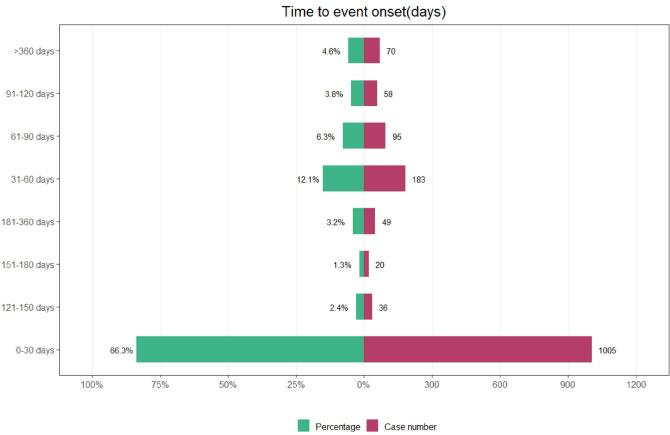
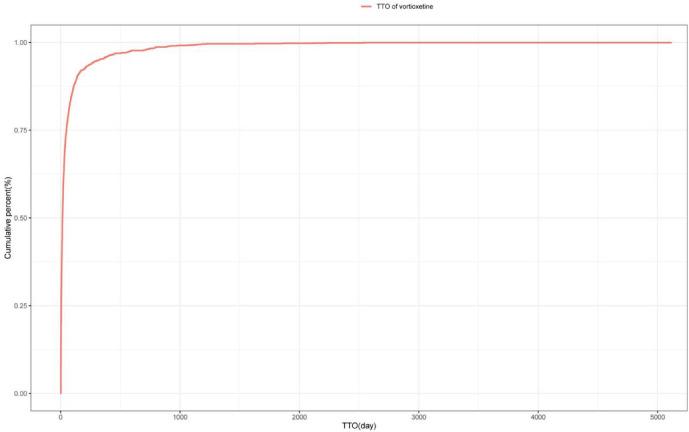
Vortioxetine is an antidepressant approved for the treatment of major depressive disorder (MDD). Given its widespread post-marketing clinical use, it is essential to explore its real-world safety. Reports were extracted from the FDA Adverse Event Reporting System (FAERS) from the third quarter of 2013 to the first quarter of 2025. Four disproportionality analysis methods, commonly used in pharmacovigilance to evaluate the relative reporting frequency of adverse events (AEs), were employed to identify AE signals associated with vortioxetine. These included the Reporting Odds Ratio (ROR), Proportional Reporting Ratio (PRR), Multi-item Gamma Poisson Shrink (MGPS), and Bayesian Confidence Propagation Neural Network (BCPNN). The median was used to describe the time to onset (TTO) of AEs, and Weibull distribution was employed to assess the trend of AE occurrence over time. In addition, sensitivity analyses were conducted to ensure the robustness of the findings. A total of 13,613 individual case safety reports (ICSRs) involving 34,156 AEs were analyzed. Females accounted for 60.9% of the reports, while males represented 26.5%. The median age of patients was 42 years (interquartile range: 26-59 years), with most cases (34.1%) in the 18-65 age group. The United States contributed the highest proportion of reports (77.4%). Common AEs included nausea (n = 2042, ROR = 5.11, PRR = 4.86, EBGM = 4.85, IC = 2.28), anxiety (n = 781, ROR = 5.3, PRR = 5.2, EBGM = 5.18, IC = 2.37 ), vomiting (n = 773, ROR = 3.23, PRR = 3.17, EBGM = 3.17, IC = 1.66), headache (n = 670, ROR = 1.96, PRR = 1.94, EBGM = 1.94, IC = 0.96), and somnolence (n = 212, ROR = 2, PRR = 1.99, EBGM = 1.99, IC = 0.99). Notably, several AEs not listed on the drug label, such as tinnitus (n = 79, ROR = 3.24, PRR = 3.24, EBGM = 3.23, IC = 1.69), urinary retention (n = 62, ROR = 3.57, PRR = 3.57, EBGM = 3.56, IC = 1.83), prolonged QT interval (n = 62, ROR = 3.14, PRR = 3.13, EBGM = 3.13, IC = 1.64), and restless legs syndrome (n = 48, ROR = 5.08, PRR = 5.08, EBGM = 5.06, IC = 2.34) were also identified. Most AEs occurred within the first month of treatment, with a median onset time of 15 days. Sensitivity analyses confirmed the consistency of these findings. This study provides new insights into the safety of vortioxetine and offers preliminary safety evidence. In addition, the findings may inform updates to prescribing information and guide post-marketing safety surveillance. However, the spontaneous nature of the FAERS database precludes establishing a causal relationship between vortioxetine and the reported AEs. Further prospective studies are needed to validate our findings.
伏硫西汀是一种被批准用于治疗重度抑郁症(MDD)的抗抑郁药。鉴于其在上市后临床中的广泛使用,探索其实际安全性至关重要。报告提取自2013年第三季度至2025年第一季度的美国食品药品监督管理局不良事件报告系统(FAERS)。采用了四种在药物警戒中常用的不均衡性分析方法来评估不良事件(AE)的相对报告频率,以识别与伏硫西汀相关的AE信号。这些方法包括报告比值比(ROR)、比例报告比值比(PRR)、多项伽马泊松收缩法(MGPS)和贝叶斯置信传播神经网络(BCPNN)。中位数用于描述AE的发病时间(TTO),并采用威布尔分布来评估AE随时间的发生趋势。此外,还进行了敏感性分析以确保研究结果的稳健性。共分析了13613份涉及34156例AE的个体病例安全报告(ICSR)。报告中女性占60.9%,男性占26.5%。患者的中位年龄为42岁(四分位间距:26 - 59岁),大多数病例(34.1%)在18 - 65岁年龄组。美国贡献的报告比例最高(77.4%)。常见的AE包括恶心(n = 2042,ROR = 5.
11,PRR = 4.86,EBGM = 4.85,IC = 2.28)、焦虑(n = 781,ROR = 5.3,PRR = 5.2,EBGM = 5.18,IC = 2.37)、呕吐(n = 773,ROR = 3.23,PRR = 3.17,EBGM = 3.17,IC = 1.66)、头痛(n = 670,ROR = 1.96,PRR = 1.94,EBGM = 1.94,IC = 0.96)和嗜睡(n = 212,ROR = 2,PRR = 1.99,EBGM = 1.99,IC = 0.99)。值得注意的是,还识别出了一些未在药物标签上列出的AE,如耳鸣(n = 79,ROR = 3.24,PRR = 3.24,EBGM = 3.23,IC = 1.69)、尿潴留(n = 62,ROR = 3.57,PRR = 3.57,EBGM = 3.56,IC = 1.83)、QT间期延长(n = 62,ROR = 3.14,PRR = 3.13,EBGM = 3.13,IC = 1.64)和不安腿综合征(n = 48,ROR = 5.08,PRR = 5.08,EBGM = 5.06,IC = 2.34)。大多数AE发生在治疗的第一个月内,中位发病时间为15天。敏感性分析证实了这些结果的一致性。本研究为伏硫西汀的安全性提供了新的见解,并提供了初步的安全证据。此外,研究结果可能为处方信息的更新提供参考,并指导上市后安全监测。然而,FAERS数据库的自发性使得无法确定伏硫西汀与报告的AE之间的因果关系。需要进一步的前瞻性研究来验证我们的发现。


 Zotero 插件