
Klotho与自身免疫性疾病之间的关联:一项孟德尔随机化研究和横断面研究。
Association between Klotho and autoimmune diseases: A Mendelian randomization study and cross-sectional study.
作者信息
Ye Jiayuan, Wang Fengming, Xu Yaojiang, Xu Feihong, Shao Feiqin, Wang Danni
机构信息
Department of Infectious Diseases, Shangyu People's Hospital of Shaoxing, Shaoxing University, Shaoxing, Zhejiang Province, China.
Department of Hematopathology, Shangyu People's Hospital of Shaoxing, Shaoxing University, Shaoxing, Zhejiang, China.
出版信息
Medicine (Baltimore). 2025 Aug 8;104(32):e43788. doi: 10.1097/MD.0000000000043788.
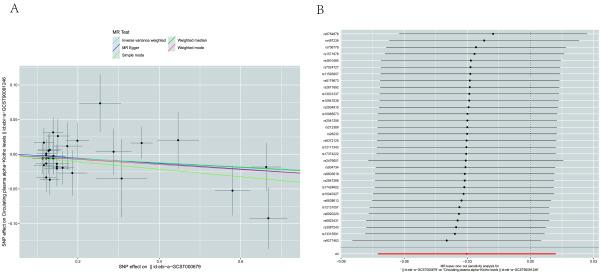
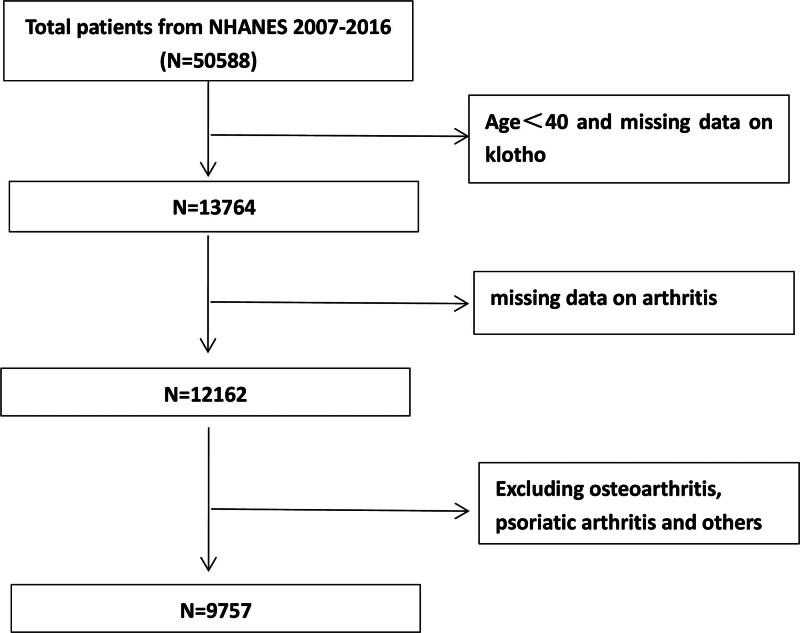
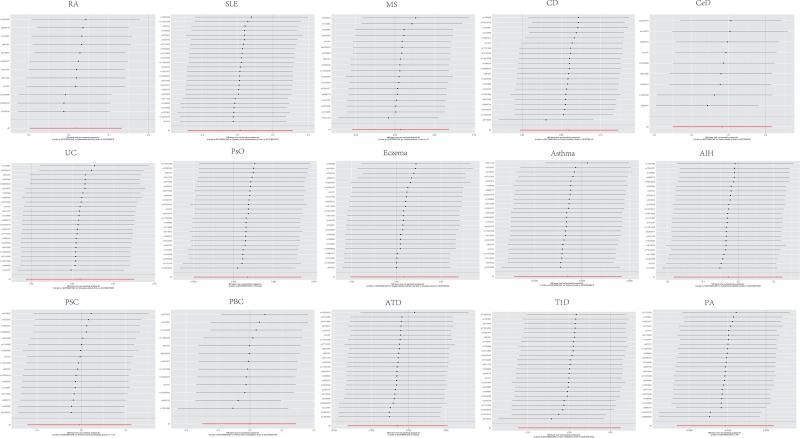
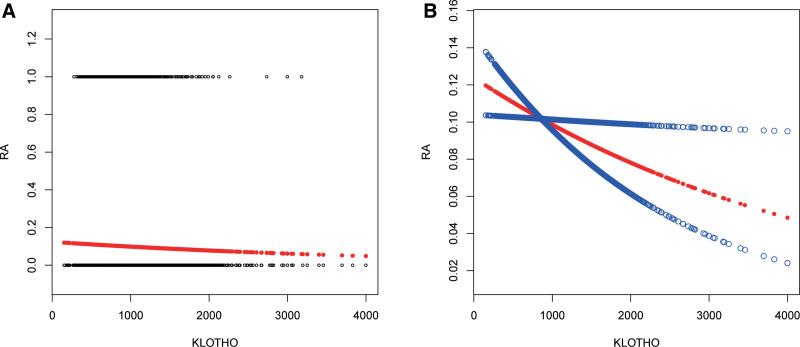
Klotho is posited to exert a pivotal influence on autoimmune diseases (AIDs). This study endeavors to comprehensively scrutinize the causal relationship between Klotho and 15 AIDs. We employed a two-sample Mendelian randomization (MR) analysis to scrutinize the causal links between Klotho and 15 AIDs. After a rigorous evaluation, potential candidate single-nucleotide polymorphisms (SNPs) for GC and 15 AIDs were extracted from the genome-wide association study dataset. These diseases include rheumatoid arthritis (RA) (2,228,946 SNPs), systemic lupus erythematosus (24,198,877 SNPs), multiple sclerosis (6,304,359 SNPs), Crohn disease (9,457,998 SNPs), celiac disease (518,292 SNPs), ulcerative colitis (24,187,301 SNPs), psoriasis (9,419,702 SNPs), eczema (8,133,670 SNPs), asthma (24,162,338 SNPs), autoimmune hepatitis (24,198,482 SNPs), primary sclerosing cholangitis (7,891,603 SNPs), primary biliary cirrhosis (5,004,018 SNPs), autoimmune thyroid disease (9,419,702 SNPs), type 1 diabetes (59,999,551 SNPs), and pernicious anemia (9419,702 SNPs). Cochran Q value measured heterogeneity, and MR-Egger regression, along with leave-one-out analysis, assessed horizontal pleiotropy. Positive MR outcomes underwent reverse Mendelian analysis and received further validation through cross-sectional studies based on National Health and Nutrition Examination Survey. The MR analysis revealed a significant association: decreased Klotho levels elevate the risk of RA (inverse variance weighting: OR = 0.834, 95% CI = 0.744-0.935, P = .0019). However, no such association was found with the risk of the other 14 AIDs. When RA was explored as the exposure, bidirectional associations revealed no genetically predicted links, indicating no causal effects of RA on Klotho (inverse variance weighting: β = -0.030, 95% CI = -0.073 to 0.012, P = .161). The cross-sectional findings demonstrated a notable negative correlation between Klotho and RA, aligning with the Mendelian analysis conclusions. Our study revealed a genetically determined association between low Klotho levels and an increased risk of RA, while no causal relationship was observed with the other 14 AIDs. Our cross-sectional study findings aligned with this conclusion. The findings suggest that Klotho levels may serve as a potential predictive indicator for RA, providing a theoretical foundation for utilizing Klotho as a safe and effective means of treating RA.
据推测,klotho对自身免疫性疾病(AIDs)具有关键影响。本研究旨在全面审视klotho与15种自身免疫性疾病之间的因果关系。我们采用两样本孟德尔随机化(MR)分析来研究klotho与15种自身免疫性疾病之间的因果联系。经过严格评估,从全基因组关联研究数据集中提取了与肾小球滤过率(GC)和15种自身免疫性疾病相关的潜在候选单核苷酸多态性(SNP)。这些疾病包括类风湿性关节炎(RA)(2,228,946个SNP)、系统性红斑狼疮(24,198,877个SNP)、多发性硬化症(6,304,359个SNP)、克罗恩病(9,457,998个SNP)、乳糜泻(518,292个SNP)、溃疡性结肠炎(24,187,301个SNP)、银屑病(9,419,702个SNP)、湿疹(8,133,670个SNP)、哮喘(24,162,338个SNP)、自身免疫性肝炎(24,198,482个SNP)、原发性硬化性胆管炎(7,891,603个SNP)、原发性胆汁性肝硬化(5,004,018个SNP)、自身免疫性甲状腺疾病(9,419,702个SNP)、1型糖尿病(59,999,551个SNP)和恶性贫血(9419,702个SNP)。 Cochr an Q值用于衡量异质性,MR-Egger回归以及留一法分析用于评估水平多效性。阳性MR结果进行反向孟德尔分析,并通过基于国家健康与营养检查调查的横断面研究进行进一步验证。MR分析显示出显著关联:klotho水平降低会增加类风湿性关节炎的风险(逆方差加权:OR = 0.834,95% CI = 0.744 - 0.935,P = 0.0019)。然而,未发现与其他14种自身免疫性疾病的风险存在此类关联。当将类风湿性关节炎作为暴露因素进行研究时,双向关联显示无基因预测联系,表明类风湿性关节炎对klotho无因果效应(逆方差加权:β = -0.030,95% CI = -0.073至0.012,P = 0.161)。横断面研究结果表明klotho与类风湿性关节炎之间存在显著负相关,与孟德尔分析结论一致。我们的研究揭示了低klotho水平与类风湿性关节炎风险增加之间的基因决定关联,而未观察到与其他14种自身免疫性疾病的因果关系。我们的横断面研究结果与此结论相符。这些发现表明,klotho水平可能作为类风湿性关节炎的潜在预测指标,为将klotho用作治疗类风湿性关节炎的安全有效手段提供了理论基础。



 Zotero 插件