
多囊肾病发病机制的机制性见解
Mechanistic Insights into the Pathogenesis of Polycystic Kidney Disease.
作者信息
Al-Orjani Qasim, Alshriem Lubna A, Gallagher Gillian, Buqaileh Raghad, Azizi Neela, AbouAlaiwi Wissam
机构信息
Department of Pharmacology and Experimental Therapeutics, University of Toledo, Toledo, OH 43614, USA.
Department of Clinical Pharmacy, Faculty of Pharmacy, Jordan University of Science and Technology, P.O. Box 3030, Irbid 22110, Jordan.
出版信息
Cells. 2025 Aug 5;14(15):1203. doi: 10.3390/cells14151203.
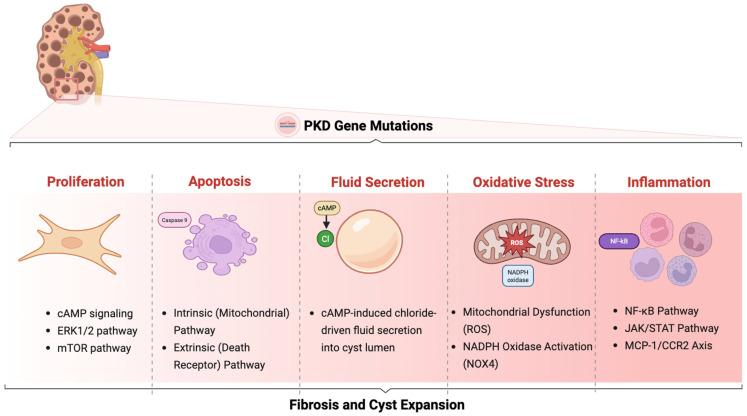
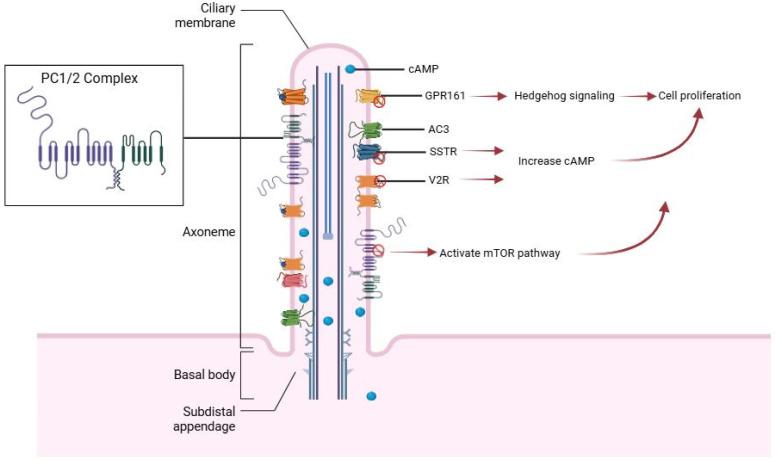
Autosomal Dominant Polycystic Kidney Disease (ADPKD) is a systemic ciliopathy resulting from loss-of-function mutations in the PKD1 and PKD2 genes, which encode polycystin-1 (PC1) and polycystin-2 (PC2), respectively. PC1 and PC2 regulate mechanosensation, calcium signaling, and key pathways controlling tubular epithelial structure and function. Loss of PC1/PC2 disrupts calcium homeostasis, elevates cAMP, and activates proliferative cascades such as PKA-B-Raf-MEK-ERK, mTOR, and Wnt, driving cystogenesis via epithelial proliferation, impaired apoptosis, fluid secretion, and fibrosis. Recent evidence also implicates novel signaling axes in ADPKD progression including, the Hippo pathway, where dysregulated YAP/TAZ activity enhances c-Myc-mediated proliferation; the stimulator of interferon genes (STING) pathway, which is activated by mitochondrial DNA release and linked to NF-κB-driven inflammation and fibrosis; and the TWEAK/Fn14 pathway, which mediates pro-inflammatory and pro-apoptotic responses via ERK and NF-κB activation in tubular cells. Mitochondrial dysfunction, oxidative stress, and maladaptive extracellular matrix remodeling further exacerbate disease progression. A refined understanding of ADPKD's complex signaling networks provides a foundation for precision medicine and next-generation therapeutics. This review gathers recent molecular insights and highlights both established and emerging targets to guide targeted treatment strategies in ADPKD.
常染色体显性多囊肾病(ADPKD)是一种全身性纤毛病,由PKD1和PKD2基因的功能丧失性突变引起,这两个基因分别编码多囊蛋白-1(PC1)和多囊蛋白-2(PC2)。PC1和PC2调节机械感觉、钙信号传导以及控制肾小管上皮结构和功能的关键途径。PC1/PC2的缺失会破坏钙稳态,升高环磷酸腺苷(cAMP),并激活增殖级联反应,如蛋白激酶A(PKA)-B-raf-丝裂原活化蛋白激酶/细胞外信号调节激酶(MEK)-细胞外信号调节激酶(ERK)、哺乳动物雷帕霉素靶蛋白(mTOR)和Wnt信号通路,通过上皮细胞增殖、凋亡受损、液体分泌和纤维化驱动囊肿形成。最近的证据还表明,新的信号轴参与了ADPKD的进展,包括Hippo信号通路,其中失调的Yes相关蛋白(YAP)/具有PDZ结合基序的转录共激活因子(TAZ)活性增强c-Myc介导的增殖;干扰素基因刺激物(STING)信号通路,该通路由线粒体DNA释放激活,并与核因子κB(NF-κB)驱动的炎症和纤维化有关;以及肿瘤坏死因子样弱凋亡诱导因子(TWEAK)/成纤维细胞生长因子诱导14(Fn14)信号通路,该通路通过肾小管细胞中的ERK和NF-κB激活介导促炎和促凋亡反应。线粒体功能障碍、氧化应激和适应性不良的细胞外基质重塑进一步加剧疾病进展。对ADPKD复杂信号网络的深入理解为精准医学和下一代治疗提供了基础。本综述收集了最近的分子见解,并强调了既定和新出现的靶点,以指导ADPKD的靶向治疗策略。


 Zotero 插件