
靶向巨噬细胞移动抑制因子作为结直肠癌的一种潜在治疗策略。
Targeting macrophage migration inhibitory factor as a potential therapeutic strategy in colorectal cancer.
作者信息
Schneider Kim Lucia, Claus Luisa, Bucala Richard, Schulz-Heddergott Ramona
机构信息
Department of Molecular Oncology, University Medical Center Göttingen, Göttingen, Germany.
Departments of Medicine, Pathology, and Epidemiology & Public Health, Yale School of Medicine and Yale Cancer Center, New Haven, CT, USA.
出版信息
Oncogenesis. 2025 Aug 20;14(1):30. doi: 10.1038/s41389-025-00572-3.
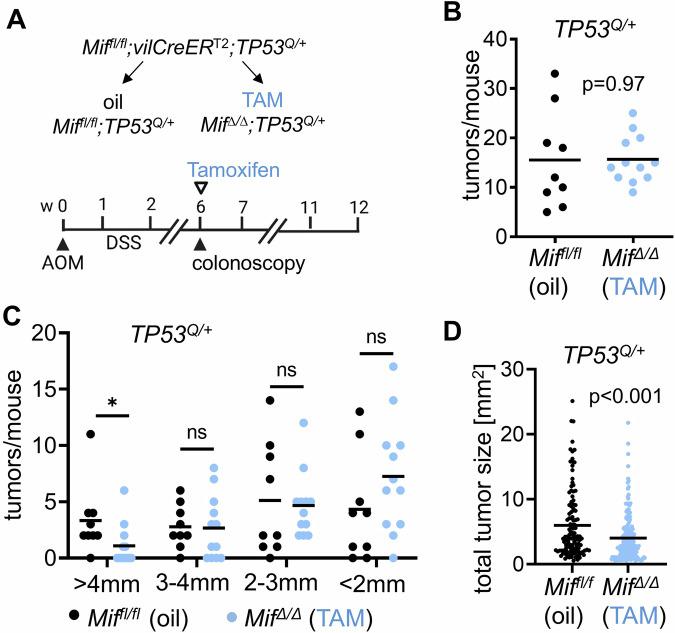
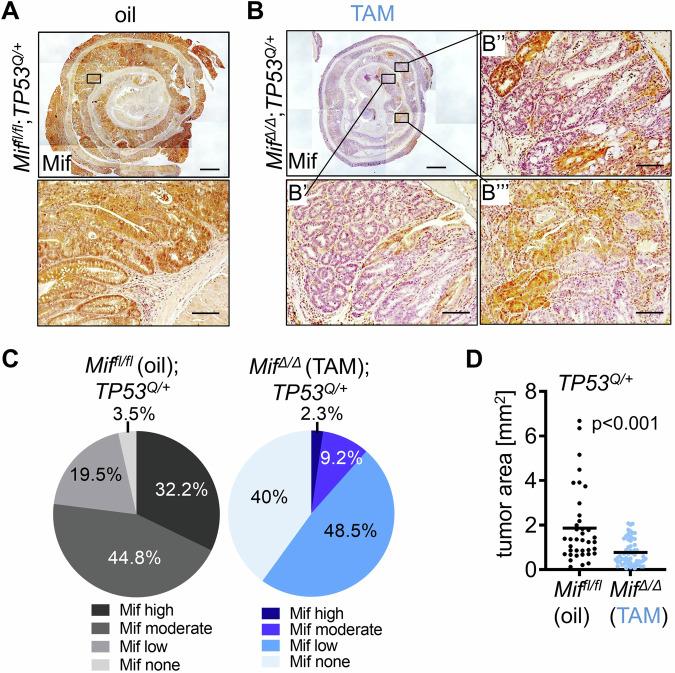
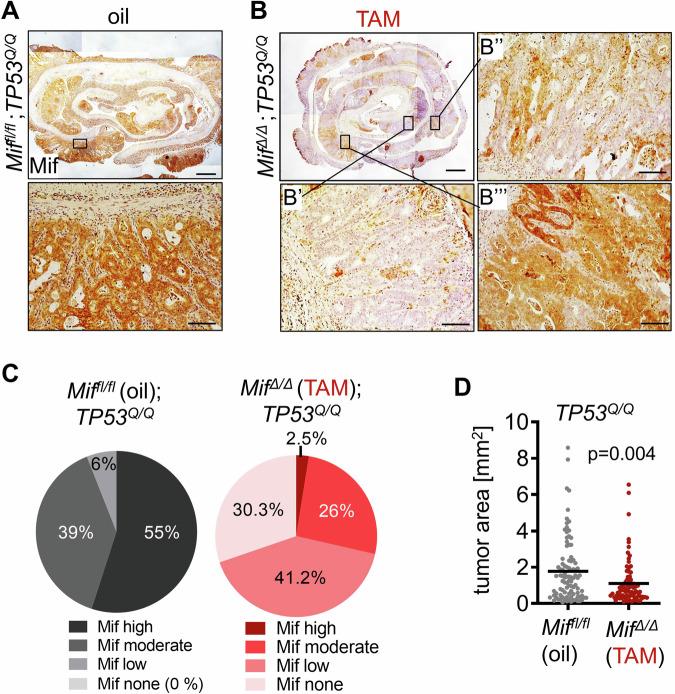
Survival rates for patients with late-stage colorectal cancer (CRC) remain low due to limited efficacy of current therapeutic regimens. To overcome these challenges, novel drug targets are urgently needed. Macrophage migration inhibitory factor (MIF), an upstream immunoregulatory cytokine, has emerged as a potential target due to its multifaceted role in cancer pathogenesis. During tumorigenesis, MIF protein levels are often elevated in tumor cells through chaperone-mediated stabilization. Although several in vivo studies have implicated MIF in tumor initiation and progression, its role in sustaining established tumors, particularly when derived from epithelial tumor cells, remained unclear. Using a constitutive Mif knockout mouse model, we previously demonstrated that MIF is required for CRC development. Now, we expanded our experimental CRC model towards a more therapeutic rationale. We hypothesized that epithelial-derived MIF is essential for tumor maintenance and might serve as a possible cancer drug target. Therefore, we depleted epithelial MIF during late-stage CRC tumorigenesis in two genetically-engineered and chemically-induced murine CRC models. Our proof-of-principle study reveals that Mif depletion in epithelial tumor cells attenuates cancer maintenance in both CRC models, coinciding with reduced macrophage recruitment and angiogenesis. Our data highlight the potential utility of targeting MIF in CRC patients for therapeutic benefit.
由于当前治疗方案的疗效有限,晚期结直肠癌(CRC)患者的生存率仍然很低。为了克服这些挑战,迫切需要新的药物靶点。巨噬细胞迁移抑制因子(MIF)是一种上游免疫调节细胞因子,由于其在癌症发病机制中的多方面作用,已成为一个潜在的靶点。在肿瘤发生过程中,MIF蛋白水平通常通过伴侣介导的稳定作用在肿瘤细胞中升高。尽管多项体内研究表明MIF与肿瘤的起始和进展有关,但其在维持已建立的肿瘤中的作用,特别是当肿瘤来源于上皮肿瘤细胞时,仍不清楚。我们之前使用组成型Mif基因敲除小鼠模型证明,MIF是CRC发生发展所必需的。现在,我们将实验性CRC模型扩展到更具治疗意义的方向。我们假设上皮来源的MIF对肿瘤维持至关重要,可能是一种潜在的癌症药物靶点。因此,我们在两种基因工程和化学诱导的小鼠CRC模型的晚期CRC肿瘤发生过程中耗尽上皮MIF。我们的原理验证研究表明,上皮肿瘤细胞中Mif的缺失会减弱两种CRC模型中的癌症维持,同时巨噬细胞募集和血管生成减少。我们的数据突出了靶向MIF对CRC患者治疗获益的潜在效用。


 Zotero 插件