
基于液相色谱-质谱联用的传统代谢组学与机器学习模型相结合,以识别用于1型糖尿病诊断的代谢标志物。
LC-MS-based conventional metabolomics combined with machine learning models to identify metabolic markers for the diagnosis of type I diabetes.
作者信息
Tuerxunyiming Muhadasi, Zhao Qing, Hu Qiaosheng, Zhu Ping, Zhu Shiting
机构信息
Zhejiang University School of Medicine, Hangzhou, China.
School of Medicine, Hangzhou City University, Hangzhou, China.
出版信息
Front Endocrinol (Lausanne). 2025 Aug 7;16:1588718. doi: 10.3389/fendo.2025.1588718. eCollection 2025.
BACKGROUND
Changes in certain metabolites are linked to an increased risk of type I diabetes (T1D), making metabolite analysis a valuable tool for T1D diagnosis and treatment. This study aimed to identify a metabolic signature linked with T1D.
METHODS
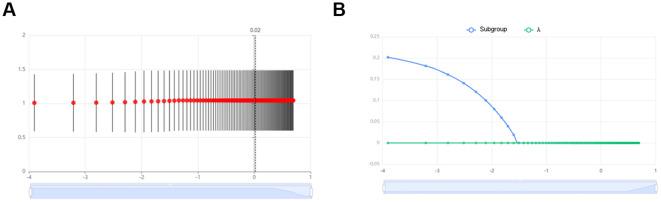
Untargeted metabolomic profiling was performed using liquid chromatography-mass spectrometry (LC-MS) on peripheral blood samples from T1D patients (n = 45) and healthy controls (n = 40). Data preprocessing and quality control were conducted using MetaboAnalyst 4.0. Differential metabolites (DMs) were identified via Wilcoxon rank-sum test (P< 0.05), and key diagnostic markers were selected using least absolute shrinkage and selection operator (LASSO) regression. A streptozotocin (STZ)-induced diabetic rat model was used for validation.
RESULTS
A total of 157 annotated metabolites were detected (58 in ESI- and 99 in ESI+ mode). Twenty-six DMs were identified, including 25 upregulated and 1 downregulated in the T1D group, mainly involving Acylcarnitines and xanthine metabolites. LASSO regression selected Hydroxyhexadecanoyl carnitine, Propionylcarnitine, and Valerylcarnitine as candidate markers. In the rat model, Hydroxyhexadecanoyl carnitine and Valerylcarnitine demonstrated strong diagnostic performance, with AUCs of 0.9383 (95% CI: 0.8786-0.9980) and 0.8395 (95% CI: 0.7451-0.9338), respectively (P< 0.01).
CONCLUSION
Hydroxyhexadecanoyl carnitine and Valerylcarnitine are closely linked to altered lipid oxidation in T1D and show strong potential as diagnostic biomarkers. These findings provide new insights into the metabolic basis of T1D and offer promising targets for early detection.
背景
某些代谢物的变化与I型糖尿病(T1D)风险增加有关,这使得代谢物分析成为T1D诊断和治疗的重要工具。本研究旨在识别与T1D相关的代谢特征。
方法
采用液相色谱-质谱联用(LC-MS)技术对45例T1D患者和40例健康对照者的外周血样本进行非靶向代谢组学分析。使用MetaboAnalyst 4.0进行数据预处理和质量控制。通过Wilcoxon秩和检验(P<0.05)鉴定差异代谢物(DMs),并使用最小绝对收缩和选择算子(LASSO)回归选择关键诊断标志物。采用链脲佐菌素(STZ)诱导的糖尿病大鼠模型进行验证。
结果
共检测到157种注释代谢物(电喷雾负离子模式下58种,电喷雾正离子模式下99种)。鉴定出26种DMs,其中T1D组上调25种,下调1种,主要涉及酰基肉碱和黄嘌呤代谢物。LASSO回归选择羟基十六烷酰肉碱、丙酰肉碱和戊酰肉碱作为候选标志物。在大鼠模型中,羟基十六烷酰肉碱和戊酰肉碱表现出较强的诊断性能,曲线下面积(AUC)分别为0.9383(95%置信区间:0.8786-0.9980)和0.8395(95%置信区间:0.7451-0.9338)(P<0.01)。
结论
羟基十六烷酰肉碱和戊酰肉碱与T1D中脂质氧化改变密切相关,具有作为诊断生物标志物的强大潜力。这些发现为T1D的代谢基础提供了新的见解,并为早期检测提供了有前景的靶点。



 Zotero 插件