
一个以免疫为重点的补充比对流程能够捕捉到主导单细胞RNA测序分析中遗漏的信息,包括等位基因特异性MHC-I调控。
An immune-focused supplemental alignment pipeline captures information missed from dominant single-cell RNA-seq analyses, including allele-specific MHC-I regulation.
作者信息
Benjamin Sebastian, McElfresh G W, Kaza Maanasa, Boggy Gregory J, Varco-Merth Benjamin, Ojha Sohita, Feltham Shana, Goodwin William, Nkoy Candice, Duell Derick, Selseth Andrea, Bennett Tyler, Barber-Axthelm Aaron, Haese Nicole N, Wu Helen, Waytashek Courtney, Boyle Carla, Smedley Jeremy V, Labriola Caralyn S, Axthelm Michael K, Reeves R Keith, Streblow Daniel N, Sacha Jonah B, Okoye Afam A, Hansen Scott G, Picker Louis J, Bimber Benjamin N
机构信息
Oregon National Primate Research Center, Oregon Health and Science University, Beaverton, OR, United States.
Vaccine and Gene Therapy Institute, Oregon Health and Science University, Beaverton, OR, United States.
出版信息
Front Immunol. 2025 Aug 8;16:1596760. doi: 10.3389/fimmu.2025.1596760. eCollection 2025.
INTRODUCTION
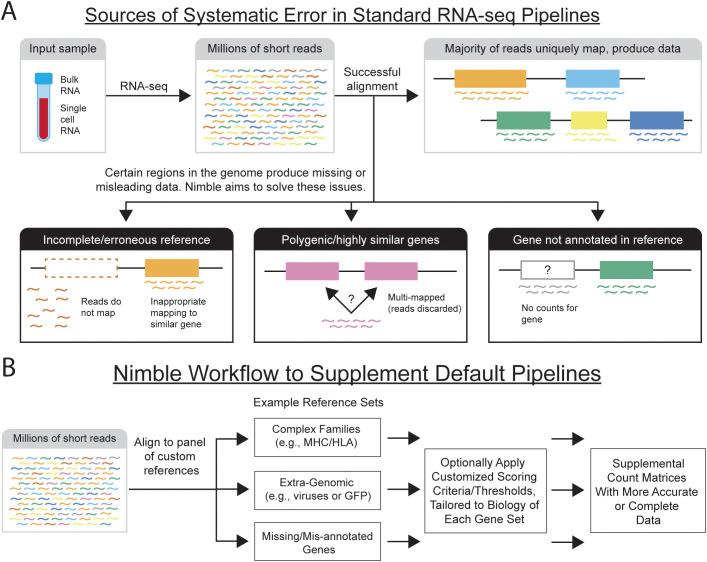
RNA sequencing (RNA-seq) can measure whole transcriptome gene expression from tissues or even individual cells, providing a powerful tool to study the immune response. Analysis of RNA-seq data involves mapping relatively short sequence reads to a reference genome, and quantifying genes based on the position of alignments relative to annotated genes. While this is usually robust, genetic polymorphism or genome/annotation inaccuracies result in genes with systematically missing or inaccurate data. These issues are frequently hidden or ignored, yet are highly relevant to immunologic data, where balancing selection has generated many polygenic gene families not accurately represented in a 'one-size-fits-all' reference genome.
METHODS
Here we present nimble, a tool to supplement standard RNA-seq pipelines. Nimble uses a previously developed pseudoaligner to process either bulk- or single-cell RNA-seq data using custom gene spaces. Importantly, nimble can apply customizable scoring criteria to each gene set, tailored to the biology of those genes.
RESULTS
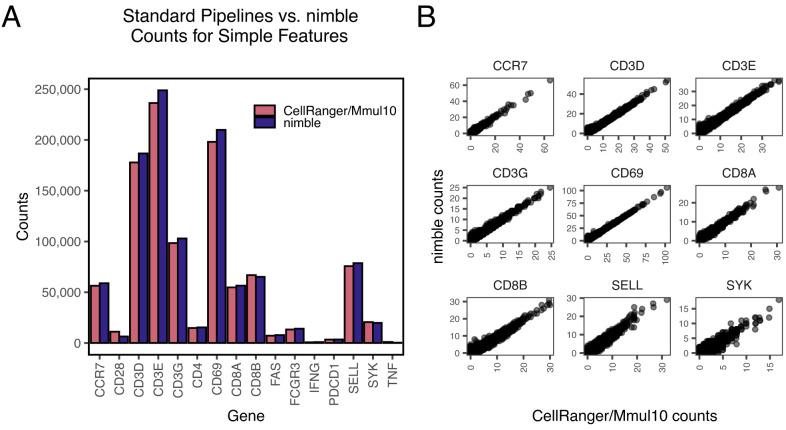
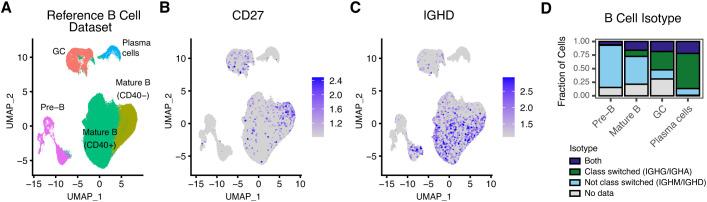
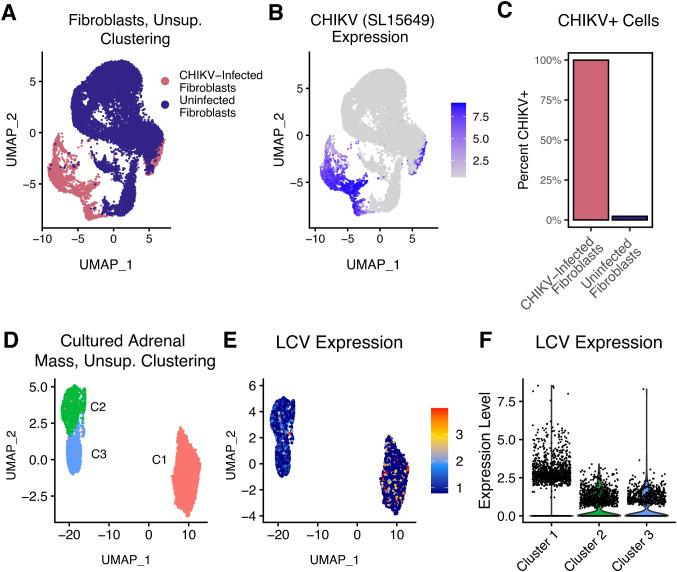
We demonstrate that nimble recovers data in diverse contexts, ranging from simple cases (e.g., incorrect gene annotation or viral RNA), to complex immune genotyping (e.g., major histocompatibility or killer-immunoglobulin-like receptors). We use this enhanced capability to identify killer-immunoglobulin-like receptor expression specific to tissue-resident memory T cells and demonstrate allele-specific regulation of MHC alleles after stimulation.
DISCUSSION
Combining nimble data with standard pipelines enhances the fidelity and accuracy of experiments, maximizing the value of expensive datasets, and identifying cellular subsets not possible with standard tools alone.
引言
RNA测序(RNA-seq)能够测量组织甚至单个细胞的全转录组基因表达,为研究免疫反应提供了一个强大的工具。RNA-seq数据分析包括将相对较短的序列读数映射到参考基因组,并根据比对相对于注释基因的位置对基因进行定量。虽然这通常很可靠,但基因多态性或基因组/注释不准确会导致基因数据系统缺失或不准确。这些问题常常被隐藏或忽视,但与免疫数据高度相关,因为平衡选择产生了许多在“一刀切”的参考基因组中无法准确表示的多基因家族。
方法
在此,我们展示了nimble,一种用于补充标准RNA-seq流程的工具。nimble使用先前开发的伪比对器,利用定制的基因空间处理批量或单细胞RNA-seq数据。重要的是,nimble可以对每个基因集应用可定制的评分标准,根据这些基因的生物学特性进行定制。
结果
我们证明,nimble在各种情况下都能恢复数据,范围从简单的情况(如错误的基因注释或病毒RNA)到复杂的免疫基因分型(如主要组织相容性或杀伤免疫球蛋白样受体)。我们利用这种增强的能力来识别组织驻留记忆T细胞特有的杀伤免疫球蛋白样受体表达,并证明刺激后MHC等位基因的等位基因特异性调控。
讨论
将nimble数据与标准流程相结合可提高实验的保真度和准确性,最大限度地提高昂贵数据集的价值,并识别仅用标准工具无法识别的细胞亚群。



 Zotero 插件