
影响新冠病毒清除的因素:对疫苗接种和抗病毒治疗的启示
Factors Influencing COVID-19 Viral Clearance: Implications for Vaccination and Antiviral Therapy.
作者信息
Zeng Jia, Xu Heping, Luo Shuai, Zhou Xiaotian, Li Xishi, Zeng Yuwen, Wang Yihan, Jiang Haotian, Lin Changfeng, Zheng Chengfang, Ruan Jianwen, Yu Weiling, Yao Jinjian, Zhao Jiannong
机构信息
Emergency Department of Hainan General Hospital, Hainan Affiliated Hospital of Hainan Medical University, Haikou, Hainan, 570311, People's Republic of China.
Emergency Trauma College, Hainan Medical University, Haikou, Hainan, 571199, People's Republic of China.
出版信息
Infect Drug Resist. 2025 Aug 21;18:4227-4240. doi: 10.2147/IDR.S515224. eCollection 2025.
BACKGROUND
Understanding the factors influencing viral clearance in hospitalized COVID-19 patients, including vaccination status and antiviral therapy, is critical for optimizing clinical management.
METHODS
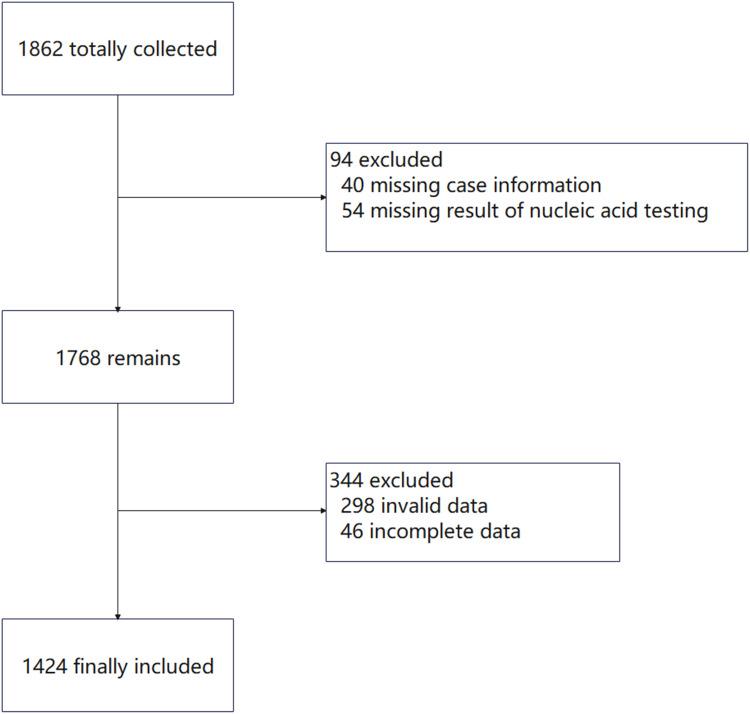
1,424 hospitalized COVID-19 patients retrospectively included from four tertiary hospitals in Hainan Province between March and December 2022. Viral clearance was defined as the interval from hospital admission to the first of two consecutive RT-PCR tests with Ct values ≥35. Clinical data, vaccination history, and antiviral treatment were collected. A generalized linear mixed model and Robust regression were used to assess viral clearance dynamics and their predictors.
RESULTS
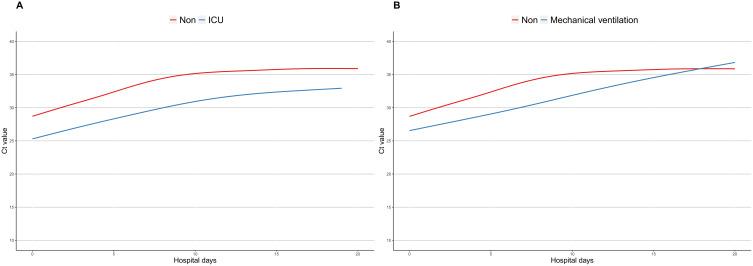
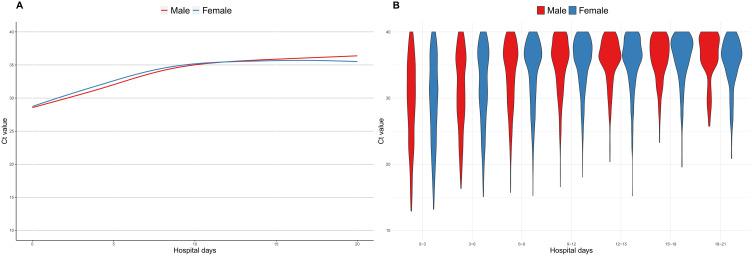
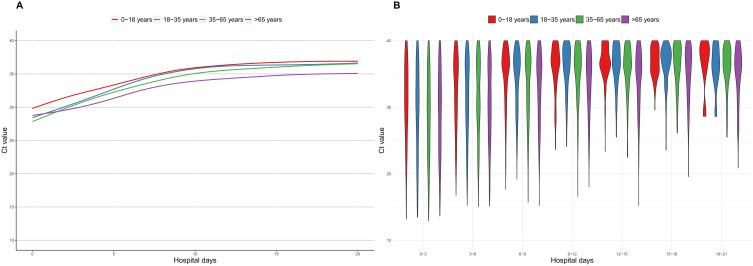
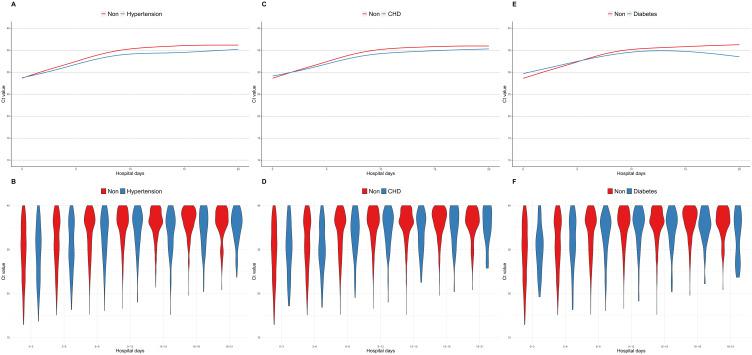
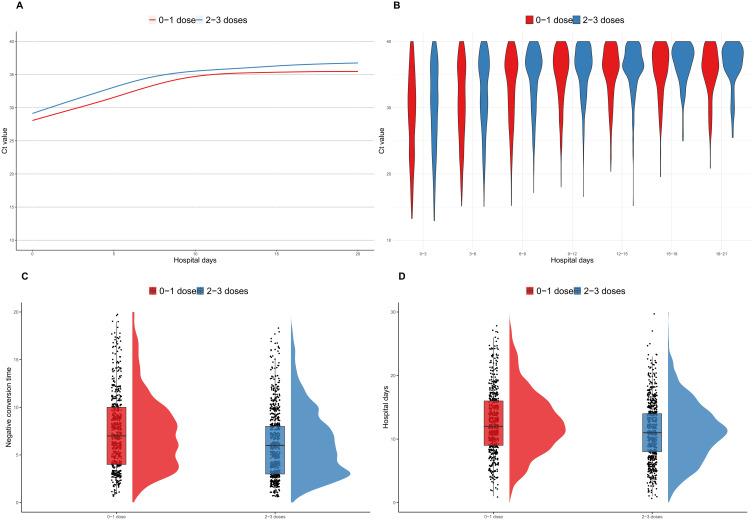
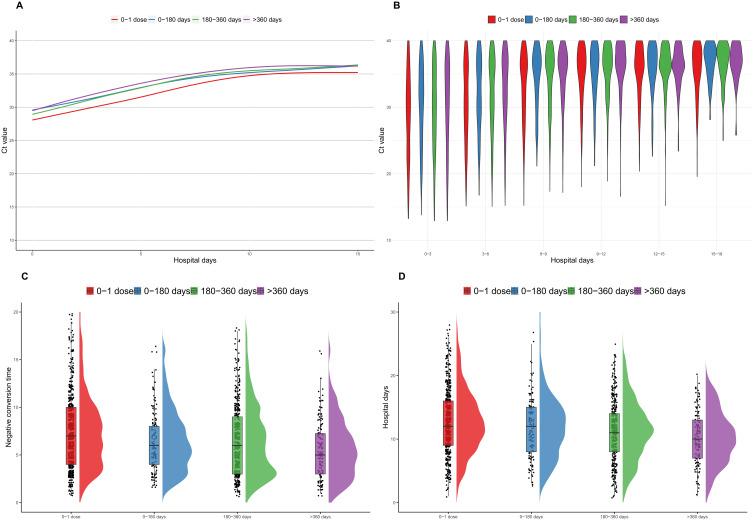
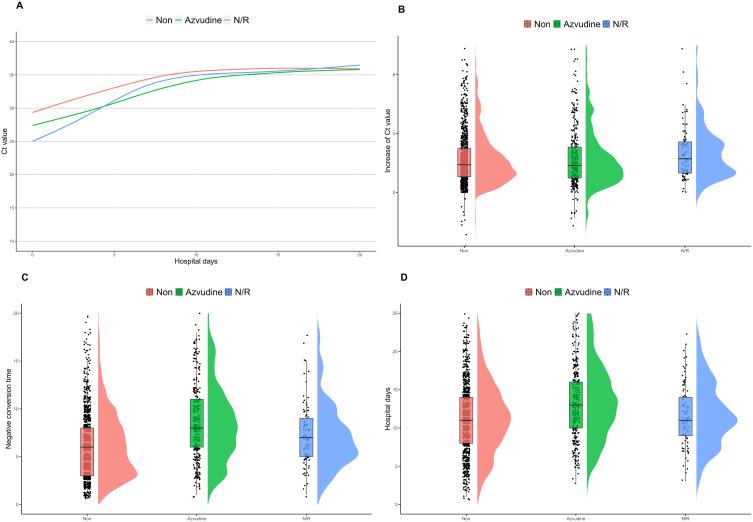
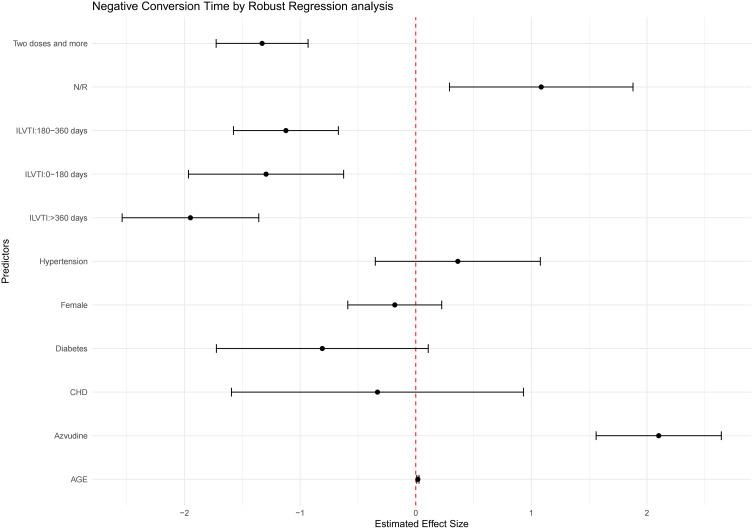
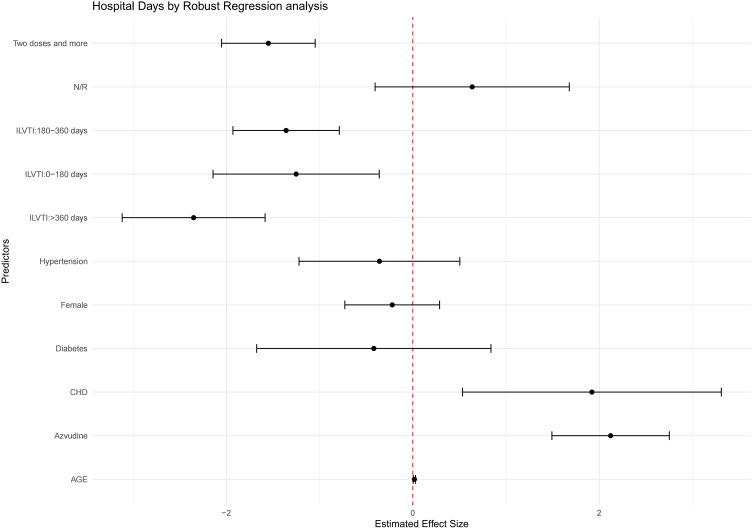
Delayed viral clearance was independently associated with advanced age ( < 0.001), male sex ( = 0.006), hypertension ( < 0.001), coronary heart disease ( = 0.004), ICU admission ( < 0.001), and mechanical ventilation ( < 0.001).Patients receiving ≥2 inactivated vaccine doses had significantly higher baseline Ct values (median 29.75 vs 28.75, = 0.014), shorter time to viral negativity (6.3 vs 7.4 days, p < 0.001), and reduced hospital stay (11.2 vs 12.7 days, < 0.001). Among these, patients vaccinated ≥360 days prior had shortest negative conversion time (5.6 days) and shortest hospitalization (10.3 days).Antiviral therapy with Nirmatrelvir-ritonavir (N/R) accelerated viral clearance more effectively than Azvudine (2.29 vs 1.82 Ct/day, = 0.045) and no antiviral treatment (1.88 Ct/day, = 0.041), Although NAT-treated patients achieved viral negativity more rapidly (6.2 days, p = 0.013), N/R demonstrated superior clearance rate. Hospital stays were shorter with N/R than Azvudine (12.1 vs 13.5 days, = 0.015).
CONCLUSION
Viral clearance dynamics in hospitalized COVID-19 patients are influenced by age, comorbidities, vaccination, and antiviral treatment. Administration of ≥2 inactivated vaccine doses-especially ≥360 days apart-and early N/R therapy may accelerate viral clearance and reduce hospital stay.
背景
了解影响住院COVID-19患者病毒清除的因素,包括疫苗接种状况和抗病毒治疗,对于优化临床管理至关重要。
方法
回顾性纳入2022年3月至12月间海南省四家三级医院的1424例住院COVID-19患者。病毒清除定义为从入院到连续两次RT-PCR检测中首次出现Ct值≥35的间隔时间。收集临床数据、疫苗接种史和抗病毒治疗情况。采用广义线性混合模型和稳健回归评估病毒清除动态及其预测因素。
结果
病毒清除延迟与高龄(<0.001)、男性(=0.006)、高血压(<0.001)、冠心病(=0.004)、入住重症监护病房(<0.001)和机械通气(<0.001)独立相关。接受≥2剂灭活疫苗的患者基线Ct值显著更高(中位数29.75对28.75,=0.014),病毒转阴时间更短(6.3天对7.4天,p<0.001),住院时间缩短(11.2天对12.7天,<0.001)。其中,接种疫苗≥360天前的患者转阴时间最短(5.6天),住院时间最短(10.3天)。与阿兹夫定(2.29对1.82 Ct/天,=0.045)和未进行抗病毒治疗(1.88 Ct/天,=0.041)相比,使用奈玛特韦-利托那韦(N/R)进行抗病毒治疗能更有效地加速病毒清除。虽然接受NAT治疗的患者病毒转阴更快(6.2天,p=0.013),但N/R的清除率更高。使用N/R治疗的患者住院时间比阿兹夫定短(12.1天对13.5天,=0.015)。
结论
住院COVID-19患者的病毒清除动态受年龄、合并症、疫苗接种和抗病毒治疗影响。接种≥2剂灭活疫苗(尤其是间隔≥360天)并早期使用N/R治疗可能加速病毒清除并缩短住院时间。
 Zotero 插件