
重金属与精子质量的叙述性综述:与抗氧化失衡和活性氧的相互作用
A Narrative Review of Heavy Metals and Sperm Quality: The Interplay with Antioxidant Imbalance and Reactive Oxygen Species.
作者信息
Azil Soukaina, Errafii Khaoula, Benkhalifa Moncef, Louanjli Noureddine, Ghazi Bouchra, Hamdi Salsabil
机构信息
Immunopathology-Immunotherapy-Immunomonitoring Laboratory, Faculty of Medicine, Mohammed VI University of Sciences and Health, Casablanca 82403, Morocco.
Environmental Health Laboratory, Institut Pasteur du Maroc, Casablanca 20360, Morocco.
出版信息
Curr Issues Mol Biol. 2025 Aug 13;47(8):650. doi: 10.3390/cimb47080650.
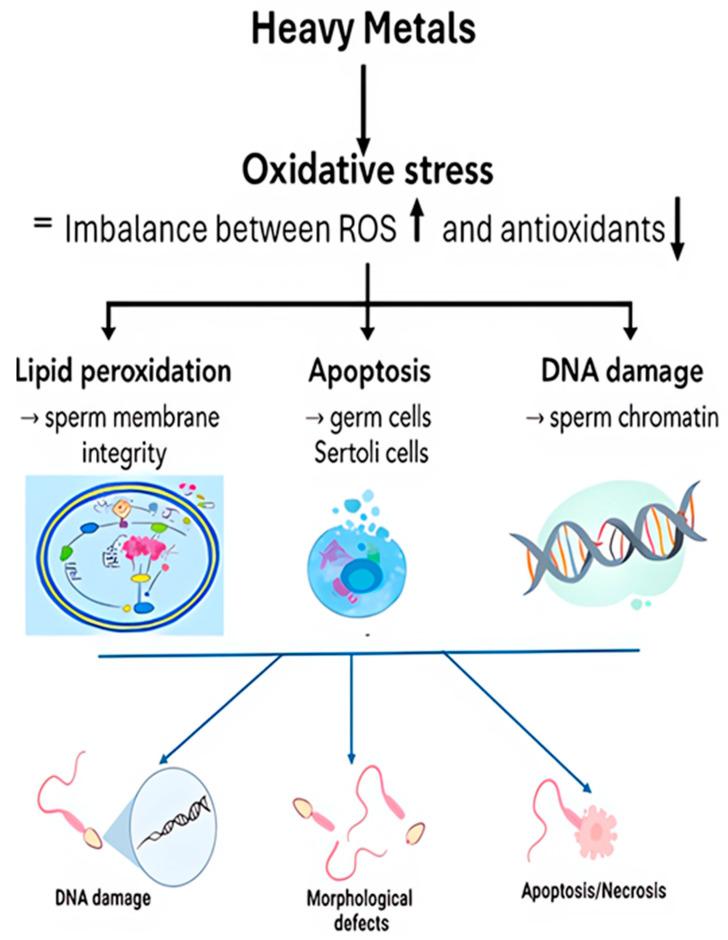
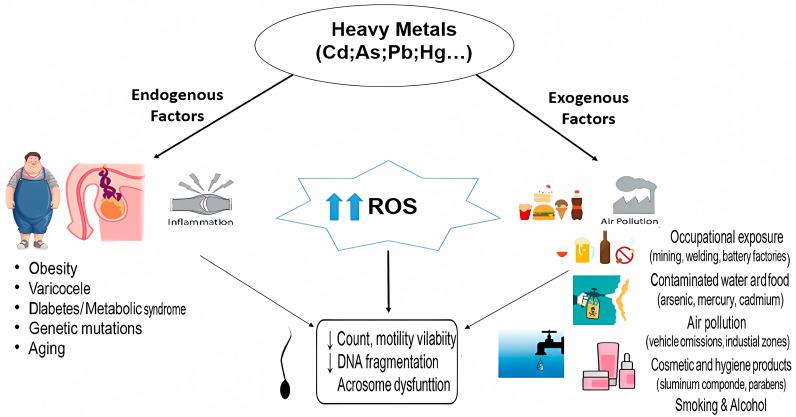
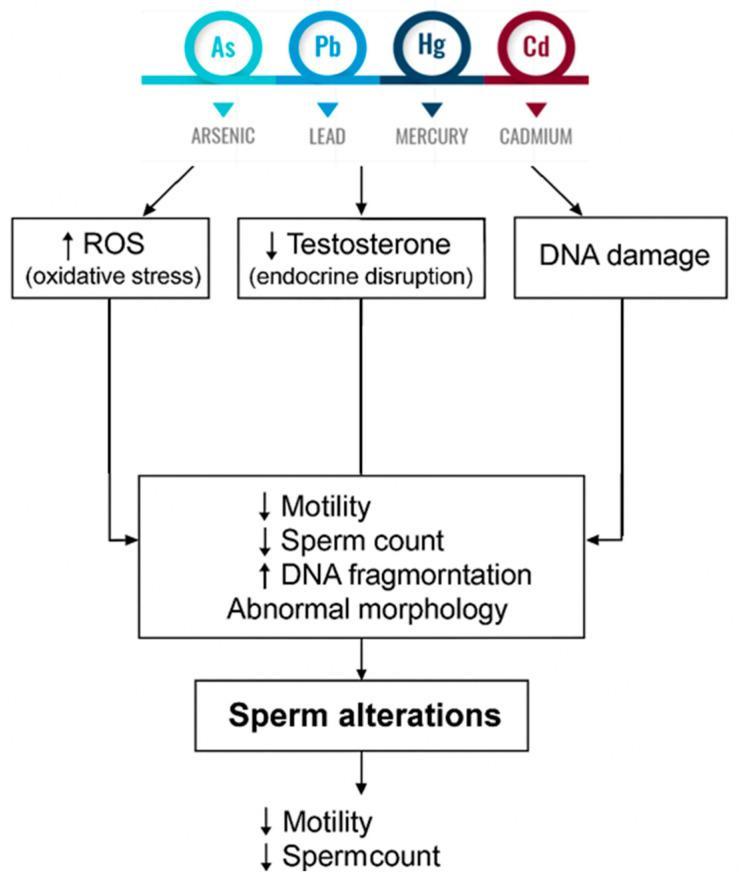
Reproductive infertility is characterized by the inability to achieve pregnancy after a year or more of unprotected sexual intercourse. This review highlights the significant impact of exposure to both types of heavy metals (essential and non-essential) on the reproductive performance of various species, particularly humans. Heavy metals present a high atomic density and weight, including lead, mercury, cadmium, nickel, chromium, and arsenic, and are delivered into the environment through natural and human activities, posing a threat to ecological systems and human reproductive health. These heavy metals have the potential for bioaccumulation and can adversely affect male fertility and sperm quality due to their role in disrupting endocrine functions, altering hormone levels responsible for sperm production, and inducing oxidative stress. The elevated production of reactive oxygen species (ROS) exceeds the capability of antioxidants and can lead to the alteration of sperm quality. Seminal fluid contains antioxidants like vitamin C, vitamin E, zinc, and selenium to counteract the impacts of ROS and also to preserve the sperm function. This review aims also to explore the impact of heavy metals on sperm quality and their relationship with antioxidant imbalance and ROS. The exposure to heavy metals whether through occupational or environmental means increases the production of ROS and therefore leads to an imbalance of antioxidants production. All these factors have no doubt an impact on male reproductive health.
生殖性不孕的特征是在无保护性交一年或更长时间后仍无法受孕。本综述强调了接触两类重金属(必需金属和非必需金属)对各种物种,特别是人类生殖性能的重大影响。重金属具有高原子密度和重量,包括铅、汞、镉、镍、铬和砷,通过自然和人类活动进入环境,对生态系统和人类生殖健康构成威胁。这些重金属具有生物累积的可能性,并且由于它们在破坏内分泌功能、改变负责精子产生的激素水平以及诱导氧化应激方面的作用,会对男性生育能力和精子质量产生不利影响。活性氧(ROS)产生增加超过了抗氧化剂的能力,可导致精子质量改变。精液中含有维生素C、维生素E、锌和硒等抗氧化剂,以抵消ROS的影响并维持精子功能。本综述还旨在探讨重金属对精子质量的影响及其与抗氧化剂失衡和ROS的关系。无论是通过职业还是环境途径接触重金属,都会增加ROS的产生,从而导致抗氧化剂产生失衡。所有这些因素无疑都会对男性生殖健康产生影响。
 Zotero 插件