
大麻衍生物作为功能性食品成分以对抗新冠疫情。
Cannabis Derivatives as Ingredients of Functional Foods to Combat the COVID-19 Pandemic.
作者信息
Qin Xiaoli, Yang Xiai, Deng Yanchun, Guo Litao, Li Zhimin, Yang Xiushi, Hou Chunsheng
机构信息
Institute of Bast Fiber Crops, Chinese Academy of Agricultural Sciences, Changsha 410205, China.
Key Laboratory of Biological and Processing for Bast Fiber Crops, Ministry of Agriculture and Rural Affairs, Changsha 410205, China.
出版信息
Foods. 2025 Aug 15;14(16):2830. doi: 10.3390/foods14162830.
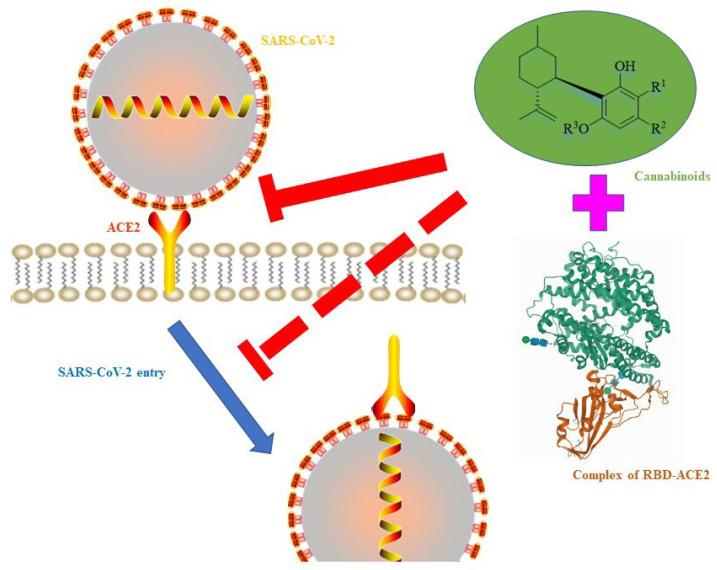
Lower respiratory infections predominantly affect children under five and the elderly, with influenza viruses and respiratory syncytial viruses (including SARS-CoV-2) being the most common pathogens. The COVID-19 pandemic has posed significant global public health challenges. While vaccination remains crucial, its efficacy is limited, highlighting the need for complementary approaches to mitigate immune hyperactivation in severe COVID-19 cases. Medicinal plants like show therapeutic potential, with over 85% of SARS-CoV-2-infected patients in China receiving traditional herbal treatments. This review explores the antiviral applications of cannabis and its bioactive compounds, particularly against SARS-CoV-2, while evaluating their pharmacological and food industry potential. Cannabis contains over 100 cannabinoids, terpenes, flavonoids, and fatty acids. Cannabinoids may block viral entry, modulate immune responses (e.g., suppressing pro-inflammatory cytokines via CB2/PPARγ activation), and alleviate COVID-19-related psychological stress. There are several challenges with pharmacological and food applications of cannabinoids, including clinical validation of cannabinoids for COVID-19 treatment and optimizing cannabinoid solubility/bioavailability for functional foods. However, rising demand for health-focused products presents market opportunities. Genetic engineering to enhance cannabinoid yields and integrated pharmacological studies are needed to unlock cannabis's full potential in drug discovery and nutraceuticals. Cannabis-derived compounds hold promise for antiviral therapies and functional ingredients, though further research is essential to ensure safety and efficacy.
下呼吸道感染主要影响五岁以下儿童和老年人,流感病毒和呼吸道合胞病毒(包括SARS-CoV-2)是最常见的病原体。新冠疫情给全球公共卫生带来了重大挑战。虽然疫苗接种仍然至关重要,但其效果有限,这凸显了在严重新冠病例中需要采取补充方法来减轻免疫过度激活的必要性。像[此处原文缺失具体植物名称]这样的药用植物显示出治疗潜力,在中国超过85%的新冠病毒感染患者接受了传统草药治疗。本综述探讨了大麻及其生物活性化合物的抗病毒应用,特别是针对SARS-CoV-2的应用,同时评估了它们的药理学和食品工业潜力。大麻含有100多种大麻素、萜类化合物、黄酮类化合物和脂肪酸。大麻素可能会阻止病毒进入,调节免疫反应(例如,通过激活CB2/PPARγ抑制促炎细胞因子),并减轻与新冠相关的心理压力。大麻素在药理学和食品应用方面存在几个挑战,包括大麻素用于新冠治疗的临床验证以及优化大麻素在功能性食品中的溶解度/生物利用度。然而,对健康产品需求的不断增长带来了市场机会。需要通过基因工程提高大麻素产量并开展综合药理学研究,以充分挖掘大麻在药物研发和营养保健品方面的潜力。大麻衍生化合物有望用于抗病毒治疗和功能性成分,不过进一步研究对于确保安全性和有效性至关重要。


 Zotero 插件