
用于增强抗菌活性的基于铜-聚左旋乳酸的生物聚合物皱纹结构
Copper-PLLA-Based Biopolymer Wrinkle Structures for Enhanced Antibacterial Activity.
作者信息
Slepička Petr, Labíková Iva, Frýdlová Bára, Pagáčová Aneta, Slepičková Kasálková Nikola, Sajdl Petr, Švorčík Václav
机构信息
Department of Solid State Engineering, University of Chemistry and Technology Prague, 166 28 Prague, Czech Republic.
Department of Biochemistry and Microbiology, University of Chemistry and Technology Prague, 166 28 Prague, Czech Republic.
出版信息
Polymers (Basel). 2025 Aug 8;17(16):2173. doi: 10.3390/polym17162173.
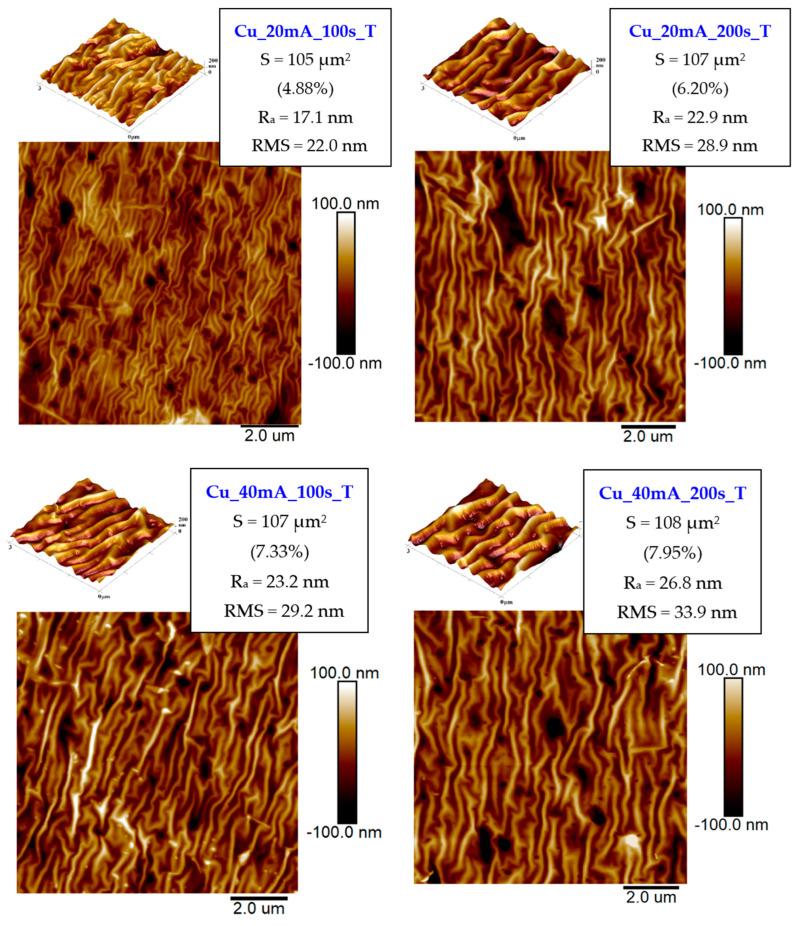
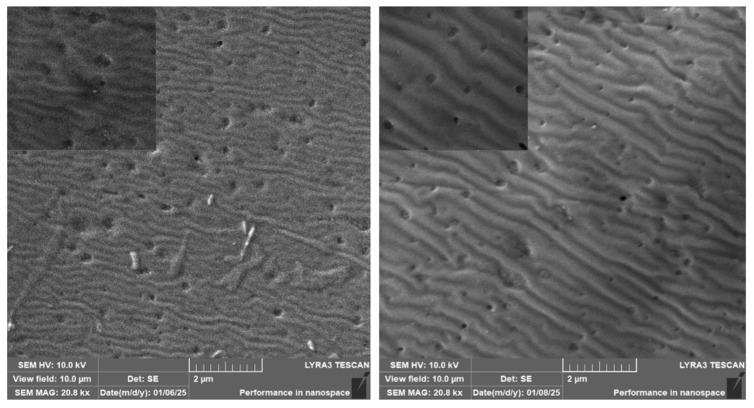
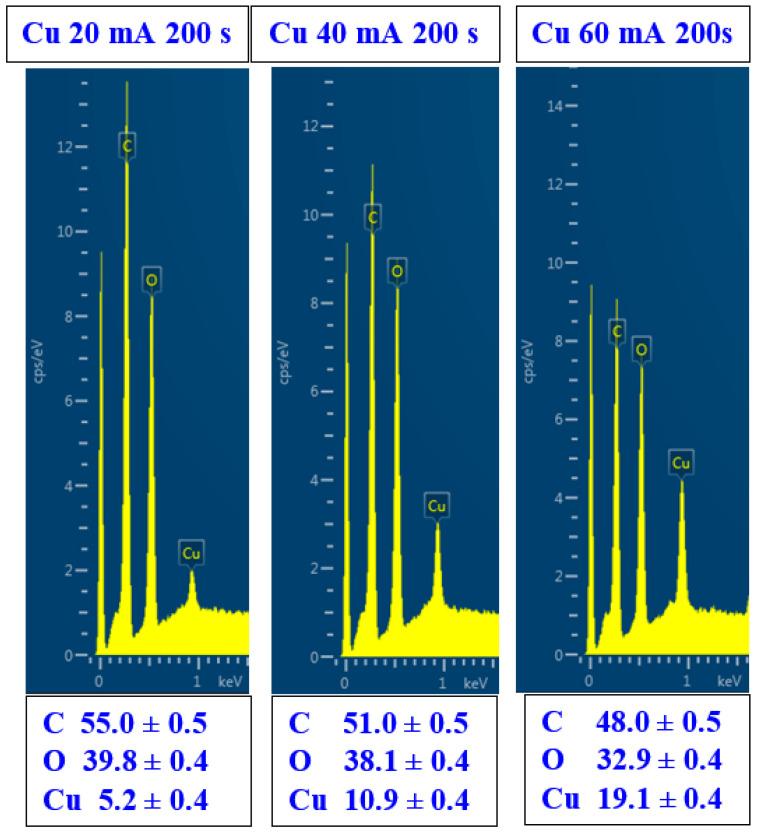
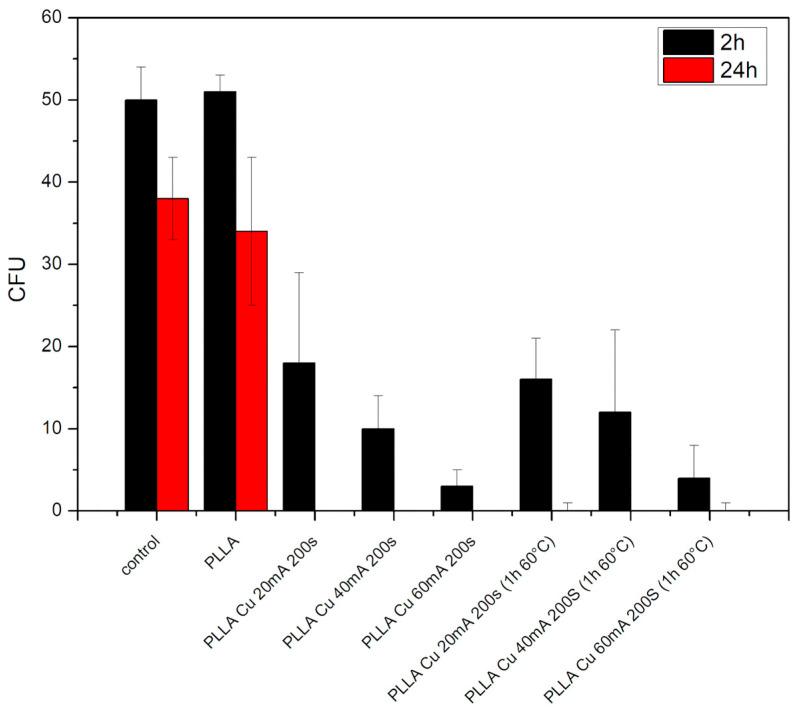
The increasing prevalence of antibiotic-resistant bacteria has intensified the need for innovative antibacterial surfaces, particularly in biomedical applications. Traditional approaches often rely on chemical agents alone, which may lead to diminishing efficacy over time. To address this, we investigated the development of a novel antibacterial surface by combining the inherent antimicrobial properties of copper with an engineered surface topography on a biopolymer matrix. A copper-poly-L-lactic acid (Cu-PLLA) composite system was fabricated using sputtering deposition followed by controlled thermal treatment to induce wrinkle-like micro- and nanostructures on the surface. The surface morphology was characterized using scanning electron microscopy (SEM) and atomic force microscopy (AFM), confirming the formation of hierarchical wrinkle patterns. The chemical composition and distribution of copper were analyzed via energy-dispersive X-ray spectroscopy (EDS). Antibacterial performance was assessed against both Gram-negative and Gram-positive using standard colony count reduction assays. The Cu-PLLA wrinkled surfaces demonstrated significantly enhanced bactericidal activity compared with flat PLLA and copper-free controls, a finding attributed to a synergistic effect of mechanical membrane disruption and copper-mediated chemical toxicity. These findings suggest that biopolymer-metal hybrid surfaces with engineered topography offer a promising strategy for developing next-generation antibacterial materials suitable for biomedical and clinical use.
抗生素耐药细菌的日益流行加剧了对创新抗菌表面的需求,尤其是在生物医学应用中。传统方法通常仅依赖化学试剂,随着时间的推移,其疗效可能会降低。为了解决这个问题,我们研究了一种新型抗菌表面的开发,该表面通过将铜的固有抗菌特性与生物聚合物基质上的工程表面形貌相结合。采用溅射沉积法制备了铜-聚-L-乳酸(Cu-PLLA)复合体系,随后进行可控热处理,以在表面诱导出皱纹状的微米和纳米结构。使用扫描电子显微镜(SEM)和原子力显微镜(AFM)对表面形貌进行了表征,证实了分层皱纹图案的形成。通过能量色散X射线光谱(EDS)分析了铜的化学成分和分布。使用标准菌落计数减少试验评估了对革兰氏阴性菌和革兰氏阳性菌的抗菌性能。与平坦的PLLA和无铜对照相比,Cu-PLLA皱纹表面表现出显著增强的杀菌活性,这一发现归因于机械膜破坏和铜介导的化学毒性的协同作用。这些发现表明,具有工程形貌的生物聚合物-金属混合表面为开发适用于生物医学和临床应用的下一代抗菌材料提供了一种有前景的策略。







 Zotero 插件