
用于病毒病原体的下一代基于核酸的诊断方法:从新冠疫情中吸取的教训
Next-Generation Nucleic Acid-Based Diagnostics for Viral Pathogens: Lessons Learned from the SARS-CoV-2 Pandemic.
作者信息
Papaneri Amy, Cui Guohong, Chen Shih-Heng
机构信息
In Vivo Neurobiology Group, National Institute of Environmental Health Sciences, National Institutes of Health, Research Triangle Park, Durham, NC 27709, USA.
Viral Vector Core Facility, National Institute of Environmental Health Sciences, National Institutes of Health, Research Triangle Park, Durham, NC 27709, USA.
出版信息
Microorganisms. 2025 Aug 15;13(8):1905. doi: 10.3390/microorganisms13081905.
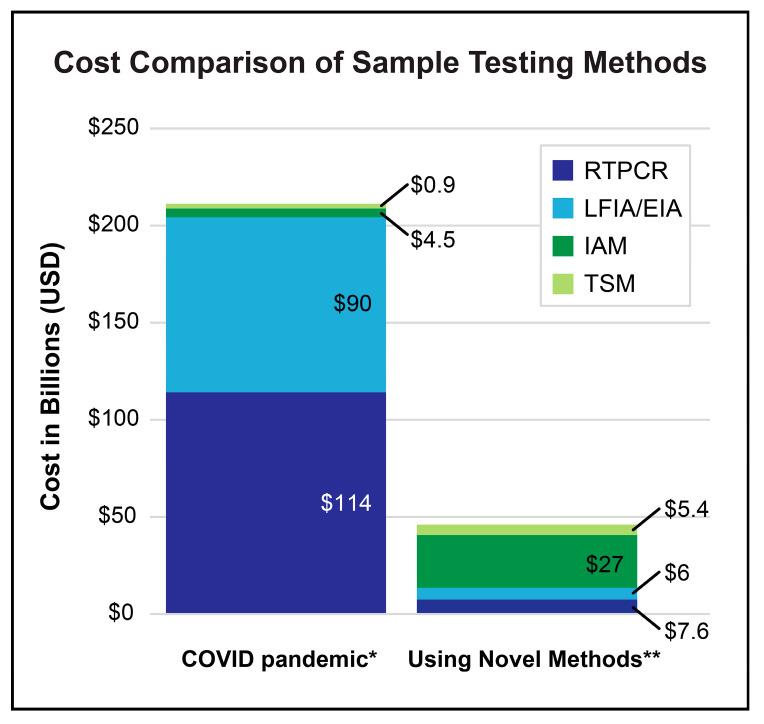
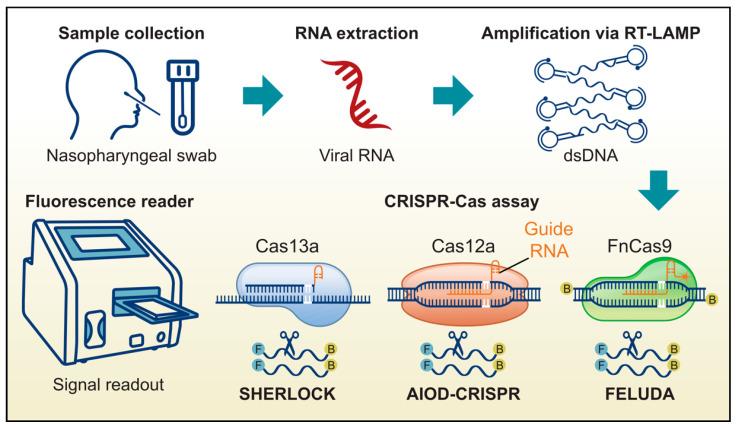
The COVID-19 pandemic, caused by Severe Acute Respiratory Syndrome Coronavirus 2 (SARS-CoV-2), catalyzed unprecedented innovation in molecular diagnostics to address critical gaps in rapid pathogen detection. Over the past five years, CRISPR-based systems, isothermal amplification techniques, and portable biosensors have emerged as transformative tools for nucleic acid detection, offering improvements in speed, sensitivity, and point-of-care applicability compared to conventional PCR. While numerous reviews have cataloged the technical specifications of these platforms, a critical gap remains in understanding the strategic and economic hurdles to their real-world implementation. This review provides a forward-looking analysis of the feasibility, scalability, and economic benefits of integrating these next-generation technologies into future pandemic-response pipelines. We synthesize advances in coronavirus-specific diagnostic platforms and attempt to highlight the need for their implementation as a cost-saving measure during surges in clinical demand. We evaluate the feasibility of translating these technologies-particularly CRISPR-Cas integration with recombinase polymerase amplification (RPA)-into robust first-line diagnostic pipelines for novel viral threats. By analyzing the evolution of diagnostic strategies during the COVID-19 era, we aim to provide strategic insights and new directions for developing and deploying effective detection platforms to better confront future viral pandemics.
由严重急性呼吸综合征冠状病毒2(SARS-CoV-2)引起的新冠疫情,催化了分子诊断领域前所未有的创新,以填补快速病原体检测方面的关键空白。在过去五年中,基于CRISPR的系统、等温扩增技术和便携式生物传感器已成为核酸检测的变革性工具,与传统聚合酶链式反应(PCR)相比,在速度、灵敏度和即时检测适用性方面都有所改进。虽然众多综述已列举了这些平台的技术规格,但在理解其实际应用中的战略和经济障碍方面仍存在关键差距。本综述对将这些下一代技术整合到未来疫情应对流程中的可行性、可扩展性和经济效益进行了前瞻性分析。我们综合了冠状病毒特异性诊断平台的进展,并试图强调在临床需求激增期间将其作为一种节省成本的措施加以应用的必要性。我们评估了将这些技术——特别是CRISPR-Cas与重组酶聚合酶扩增(RPA)整合——转化为针对新型病毒威胁的强大一线诊断流程的可行性。通过分析新冠疫情时代诊断策略的演变,我们旨在为开发和部署有效的检测平台提供战略见解和新方向,以便更好地应对未来的病毒大流行。


 Zotero 插件