
法国里昂2023 - 2024年流感、呼吸道合胞病毒和SARS-CoV-2的社区及医院实验室监测
Community and Hospital-Based Laboratory Surveillance for Influenza, Respiratory Syncytial Virus, and SARS-CoV-2 During the 2023-2024 Season, Lyon, France.
作者信息
Chauvel Cécile, Casalegno Jean-Sébastien, Visseaux Benoit, Vieillefond Vincent, Haim-Boukozba Stéphanie, Enouf Vincent, Chanard Emmanuel, Fabre Margaux, Rameix-Welti Marie-Anne, Oblette Antoine, Giannoli Jean-Marc, Paireau Juliette, Josset Laurence, Lina Bruno, Gaymard Alexandre, Cauchemez Simon, Morfin Florence, Nunes Marta C, Bal Antonin
机构信息
Center of Excellence in Respiratory Pathogens (CERP), Hospices Civils de Lyon (HCL), Lyon, France.
Centre International de Recherche en Infectiologie (CIRI), Équipe Santé Publique, Épidémiologie et Écologie Évolutive des Maladies Infectieuses (PHE3ID), INSERM U1111, CNRS UMR5308, ENS de Lyon, Université Claude Bernard Lyon 1 (UCBL), Lyon, France.
出版信息
J Med Virol. 2025 Sep;97(9):e70549. doi: 10.1002/jmv.70549.
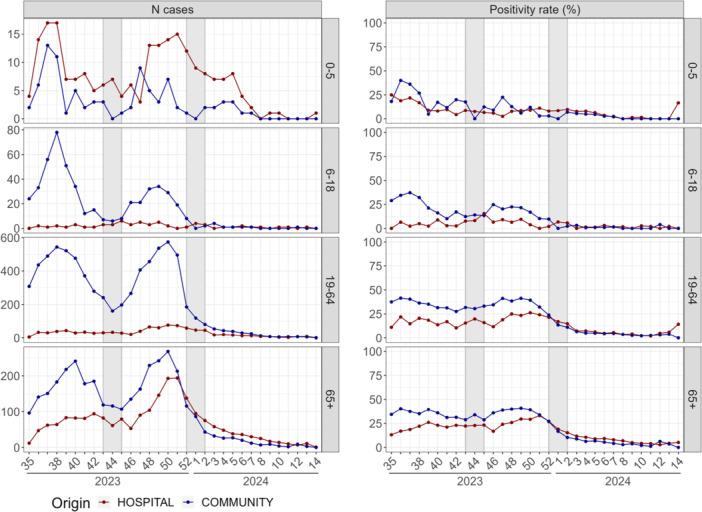
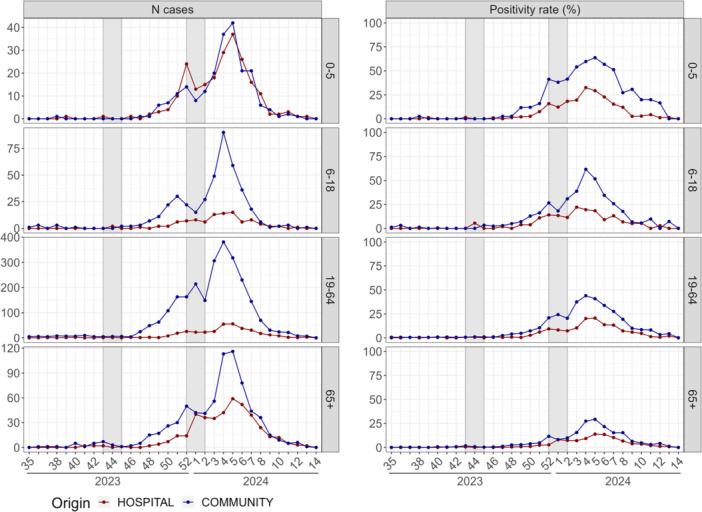
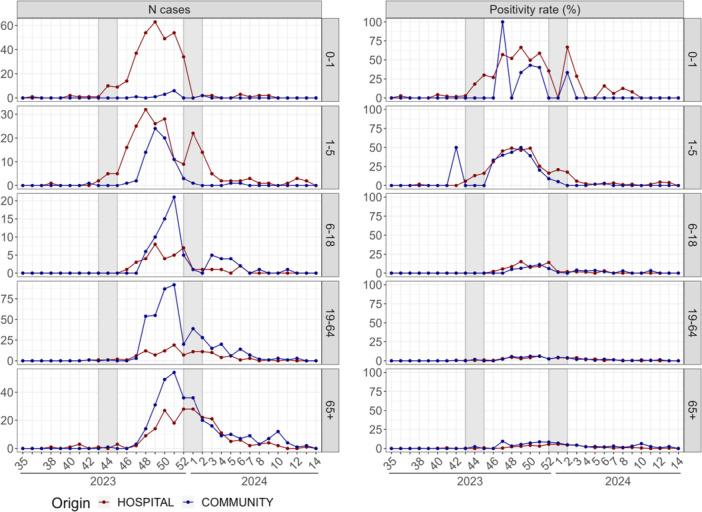
Influenza, respiratory syncytial virus (RSV) and SARS-CoV-2 are among the main respiratory viruses circulating in the population, with a significant burden on public health. While individuals at higher risk are more likely to develop severe symptoms leading to hospitalization, viral circulation in the community remains less extensively monitored. This study compared viral circulation between RELAB, a recently established community-based laboratory surveillance network (n = 22 843 tested patients) and hospital surveillance at the Hospices Civils de Lyon, France (n = 23 046 tested patients), for the season 2023-2024. For influenza and SARS-CoV-2, similar trends were observed in at-risk populations (children under 5 years and adults over 65 years) in both settings. Circulation of these two viruses was first detected in the community and insights from the young adult population (19-64 years) were only captured in the community network. Circulation of RSV was more intense in terms of number of cases and started in the pediatric population, and consequently was more represented in the hospital setting. In conclusion, this study highlighted the complementarity between community and hospital surveillance, as different populations and periods of viral circulation were observed.
流感、呼吸道合胞病毒(RSV)和严重急性呼吸综合征冠状病毒2(SARS-CoV-2)是人群中主要的呼吸道病毒,给公共卫生带来了沉重负担。虽然高危人群更有可能出现导致住院的严重症状,但社区内病毒传播情况的监测仍不够广泛。本研究比较了2023 - 2024年期间,法国里昂公民医院新建立的基于社区的实验室监测网络RELAB(n = 22843名受检患者)与医院监测之间的病毒传播情况。对于流感和SARS-CoV-2,在两种监测环境下的高危人群(5岁以下儿童和65岁以上成年人)中观察到了相似的趋势。这两种病毒的传播首先在社区中被检测到,而来自年轻成年人(19 - 64岁)人群的情况仅在社区网络中被捕获。就病例数而言,RSV的传播更为强烈,且始于儿科人群,因此在医院监测环境中的占比更高。总之,本研究强调了社区监测与医院监测之间的互补性,因为观察到了不同的人群和病毒传播时期。


 Zotero 插件