
一种手性二酰基甘油的全合成及生物活性研究
Total synthesis and bioactivity investigation of a chiral diacylglycerol.
作者信息
Liao Xuemei, Cheng Xin, Zhuang Ruirong, Zhou Beidou
机构信息
School of Pharmacy and Medical Technology, Putian University, Putian, 351100, China.
School of Pharmacy, Fujian Medical University, Fuzhou, 350108, China.
出版信息
Sci Rep. 2025 Aug 30;15(1):31987. doi: 10.1038/s41598-025-14482-2.
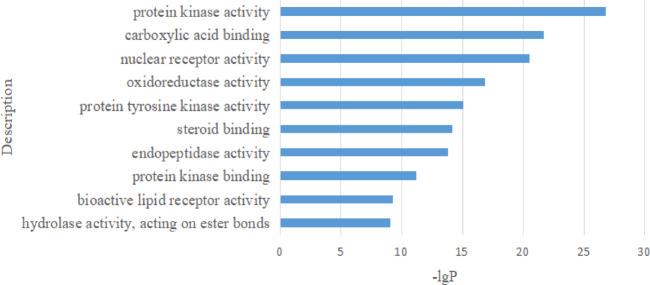
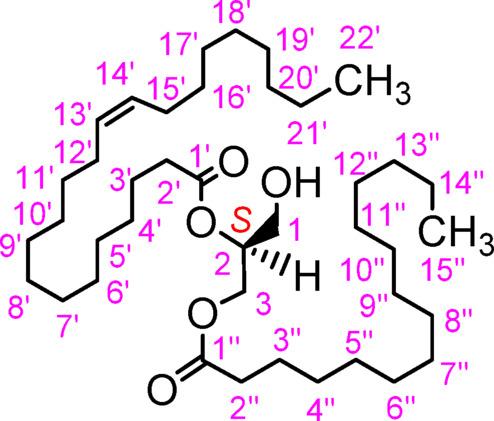
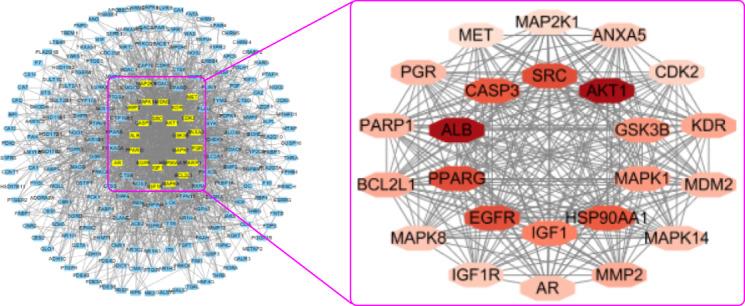
The total synthesis of compound 1, a chiral diglyceride metabolite present in both humans and fungi, was achieved via a seven-step route, affording the target molecule in 2.33% overall yield. The synthetic strategy involved: (1) selective protection of the terminal hydroxyl group of chiral ketal 2 with a sterically hindered benzyl group, followed by ketal deprotection to yield benzyl ether 4; (2) protection of the terminal hydroxyl group of benzyl ether 4 with a bulky silyl protecting group, and subsequent esterification of the remaining hydroxyl with erucic acid to generate ester 6; (3) removal of the silyl protecting group from ester 6, followed by esterification of the liberated hydroxyl group with pentadecanoic acid to afford ester 8; and (4) selective deprotection of the benzyl group of ester 8 to furnish compound 1. Network pharmacology and molecular docking studies identified 196 potential targets of compound 1, with AKT1, ALB, CASP3, EGFR, HSP90AA1, IGF1, and SRC highlighted as potential hub targets. In silico analysis suggested potential therapeutic applications in diabetes, neuro-systemic diseases, thyroid hormone disorders, lipid disorders, tumors, and gynaecological diseases. Furthermore, in silico screening using three databases identified 3-hydroxy-3-methylglutaryl-CoA reductase (HMGCR) as a potential biological target. However, in vitro HMGCR inhibition assays failed to demonstrate a significant reduction in cholesterol levels in human blood upon treatment with compound 1. These findings contribute to the understanding of the chemical synthesis and biological activity of chiral diglycerides and provide a basis for future research in this area.
化合物1是一种存在于人类和真菌中的手性甘油二酯代谢物,通过一条七步路线实现了其全合成,目标分子的总产率为2.33%。合成策略包括:(1) 用空间位阻较大的苄基对手性缩酮2的末端羟基进行选择性保护,随后进行缩酮脱保护以生成苄基醚4;(2) 用体积较大的硅烷基保护基团对苄基醚4的末端羟基进行保护,然后将剩余的羟基与芥酸进行酯化反应以生成酯6;(3) 从酯6中去除硅烷基保护基团,然后将游离的羟基与十五烷酸进行酯化反应以得到酯8;以及(4) 对酯8的苄基进行选择性脱保护以得到化合物1。网络药理学和分子对接研究确定了化合物1的196个潜在靶点,其中AKT1、ALB、CASP3、EGFR、HSP90AA1、IGF1和SRC被突出显示为潜在的核心靶点。计算机分析表明其在糖尿病、神经系统疾病、甲状腺激素紊乱、脂质紊乱、肿瘤和妇科疾病中具有潜在的治疗应用。此外,使用三个数据库进行的计算机筛选确定3-羟基-3-甲基戊二酰辅酶A还原酶(HMGCR)为潜在的生物学靶点。然而,体外HMGCR抑制试验未能证明用化合物1处理后人血中胆固醇水平有显著降低。这些发现有助于对手性甘油二酯的化学合成和生物活性的理解,并为该领域的未来研究提供了基础。

 Zotero 插件