
肠致病性大肠杆菌自转运黏附素(Eaa):一种在非典型肠致病性大肠杆菌中鉴定出的新型黏附素。
EPEC autotransporter adhesin (Eaa): a novel adhesin identified in atypical enteropathogenic .
作者信息
Orsi Henrique, de Lira Daiany R P, Castilho Ivana G, de Souza Guilherme F R, Onur Tugce, Chura-Chambi Rosa M, Abe Cecilia M, Carvalho Enéas, Dos Santos Luis F, Rasko David A, Schembri Mark A, Barbosa Angela S, Elias Waldir P, Hernandes Rodrigo T
机构信息
Universidade Estadual Paulista (UNESP), Instituto de Biociências, Botucatu, Brazil.
Laboratório de Bacteriologia, Instituto Butantan, São Paulo, Brazil.
出版信息
Front Cell Infect Microbiol. 2025 Aug 18;15:1617101. doi: 10.3389/fcimb.2025.1617101. eCollection 2025.
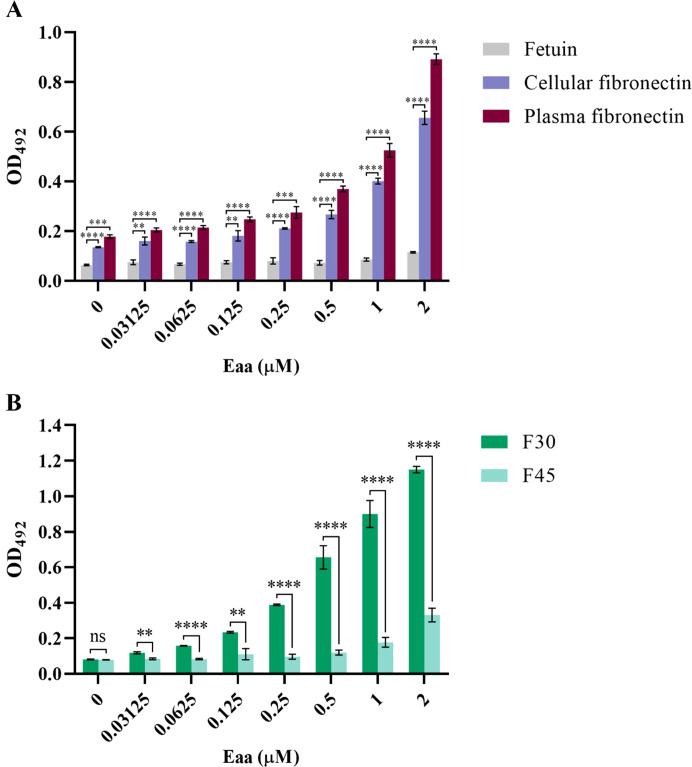
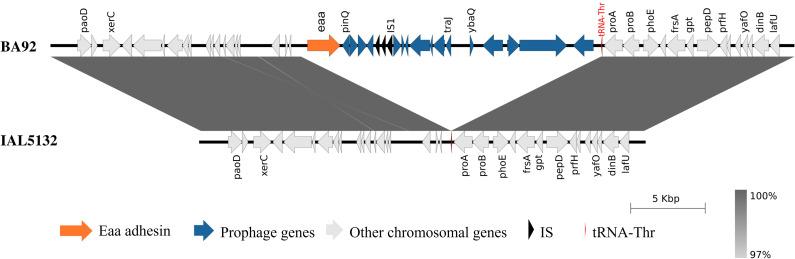
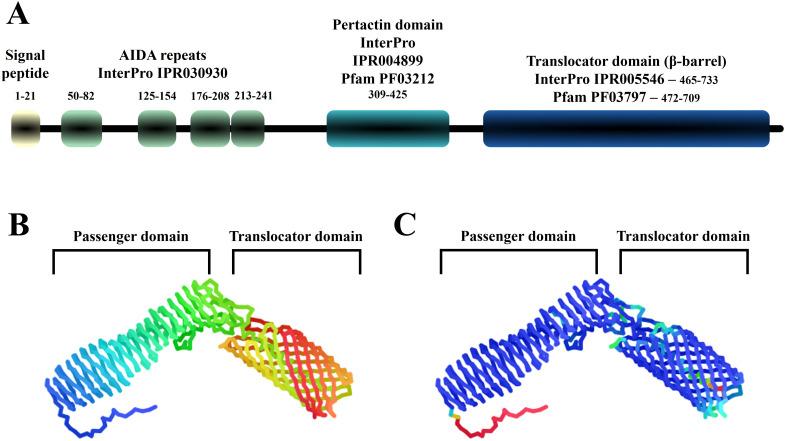
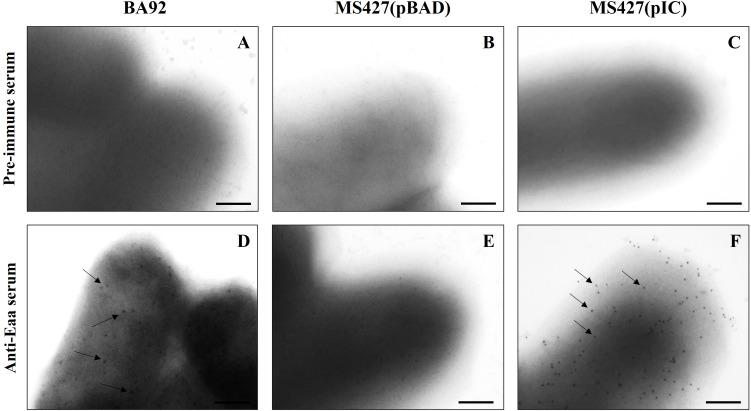
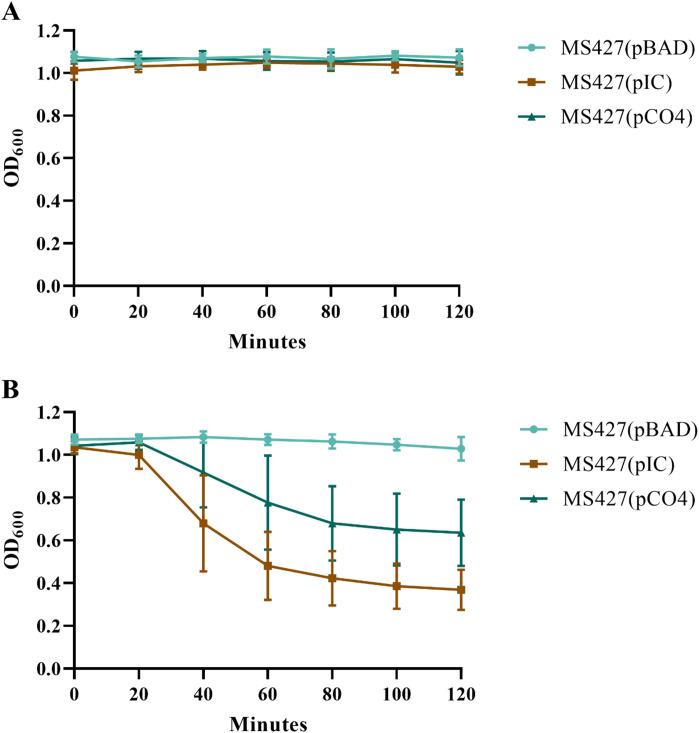
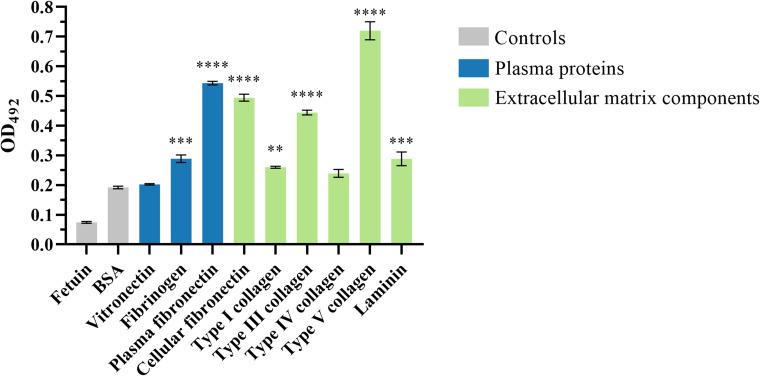
Enteropathogenic (EPEC) is a pathogen that causes diarrhea that can be subdivided into typical (tEPEC) and atypical (aEPEC), based on the production of an adhesin termed Bundle-Forming Pilus (BFP) in the former group. aEPEC is one of the main bacterial pathogens isolated from individuals with diarrhea, and some serotypes have been implicated in diarrheal outbreaks in Brazil, such as the O2:H16. A comparative genomic analysis of aEPEC of this serotype led to the identification of a gene encoding a previously uncharacterized autotransporter protein. In the present study, this novel autotransporter protein was characterized and named EPEC Autotransporter Adhesin (Eaa). The Eaa-encoding gene () is located in a chromosomal prophage region of 17,014 base pairs, organized in 20 open reading frames and inserted downstream to the threonine-tRNA. A recombinant plasmid termed pIC (pBAD/-His A harboring the gene from aEPEC BA92) was transformed in the MS427 host bacteria, and the MS427(pIC) was used in phenotypic assays. Immunogold-labelling transmission electron microscopy, using anti-Eaa antibodies, showed the presence of Eaa in the cell surface of the wild-type BA92 and MS427(pIC) strains. Subsequently, we demonstrated that Eaa mediates bacterial autoaggregation, biofilm formation and binding to several components of the extracellular matrix, including fibrinogen, plasma and cellular fibronectin, type I, III as well as V collagen and laminin. In summary, we demonstrated that Eaa harbors several adherence properties and may contribute to the pathogenicity of some aEPEC isolates by mediating the interaction of this pathogen with biotic and abiotic surfaces.
肠致病性大肠杆菌(EPEC)是一种可导致腹泻的病原体,根据前者是否产生一种名为束状菌毛(BFP)的粘附素,可将其细分为典型(tEPEC)和非典型(aEPEC)两类。aEPEC是从腹泻患者中分离出的主要细菌病原体之一,一些血清型与巴西的腹泻暴发有关,如O2:H16。对该血清型aEPEC进行的比较基因组分析导致鉴定出一个编码先前未表征的自转运蛋白的基因。在本研究中,对这种新型自转运蛋白进行了表征,并将其命名为EPEC自转运粘附素(Eaa)。编码Eaa的基因()位于一个17014个碱基对的染色体前噬菌体区域,由20个开放阅读框组成,并插入到苏氨酸-tRNA的下游。将一种名为pIC(携带来自aEPEC BA92的基因的pBAD/-His A)的重组质粒转化到MS427宿主细菌中,并将MS427(pIC)用于表型分析。使用抗Eaa抗体的免疫金标记透射电子显微镜显示,野生型BA92和MS427(pIC)菌株的细胞表面存在Eaa。随后,我们证明Eaa介导细菌自聚集、生物膜形成以及与细胞外基质的几种成分结合,包括纤维蛋白原、血浆和细胞纤连蛋白、I型、III型以及V型胶原蛋白和层粘连蛋白。总之,我们证明Eaa具有多种粘附特性,可能通过介导这种病原体与生物和非生物表面的相互作用,对一些aEPEC分离株的致病性有贡献。



 Zotero 插件