
金砖国家及其他新兴经济体食管癌的流行病学趋势与预测:基于全球疾病负担研究2021数据库
Epidemiological trends and projections of esophageal cancer in BRICS-plus: Based on the GBD 2021 database.
作者信息
Wang Zhenglong, Wei Hongwei, Qi Weifeng, Liu Xiaobo, Cui Hongxue
机构信息
School of Clinical Medicine, Shandong Second Medical University, Weifang, China.
Department of Cardiovascular Surgery, Affiliated Hospital of Shandong Second Medical University, Weifang, China.
出版信息
Front Oncol. 2025 Sep 1;15:1616702. doi: 10.3389/fonc.2025.1616702. eCollection 2025.
INTRODUCTION
Esophageal cancer represents a substantial global health challenge. Given their diverse socio-economic profiles and large populations, the BRICS countries are pivotal in elucidating the burden of this disease. Nonetheless, limited research has systematically examined the trends of esophageal cancer within these nations.
METHOD
This research utilized data from the GBD database, encompassing ASIR, ASPR, ASMR, ASDR, and 95% UI. The EAPC was employed to assess trends, while the BAPC model was used to project future trends. Four risk factors were examined, and health inequalities were evaluated using SII and CI.
RESULT
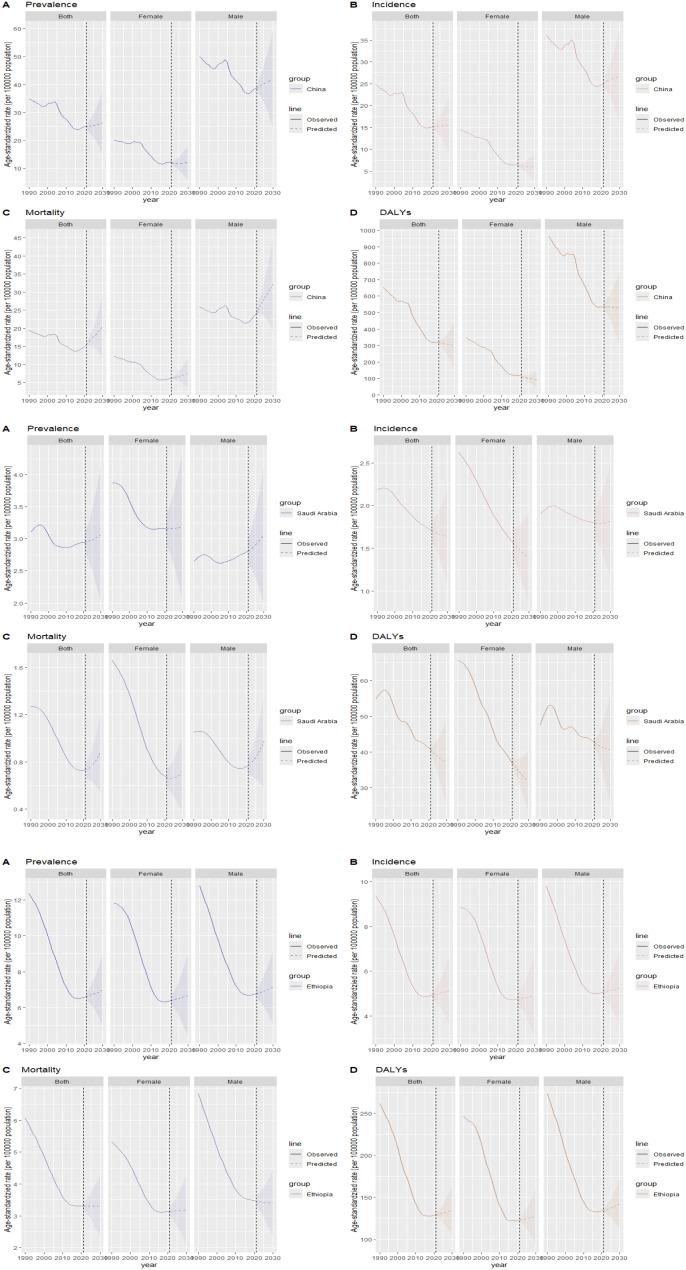
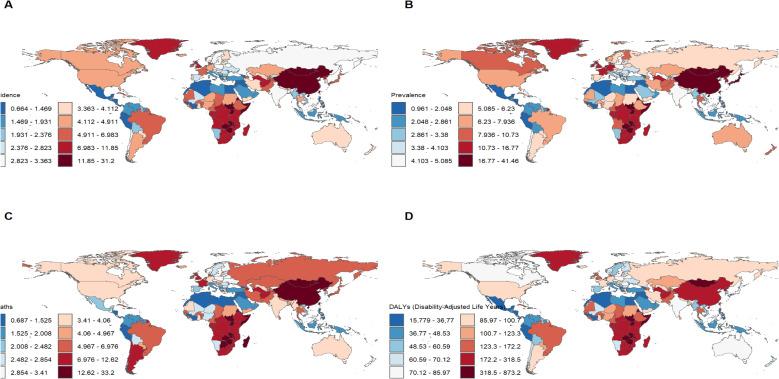
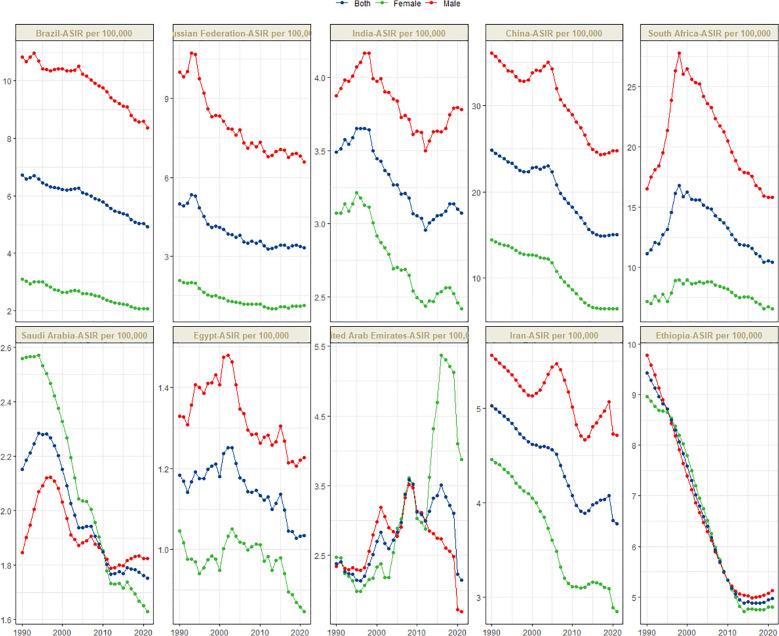
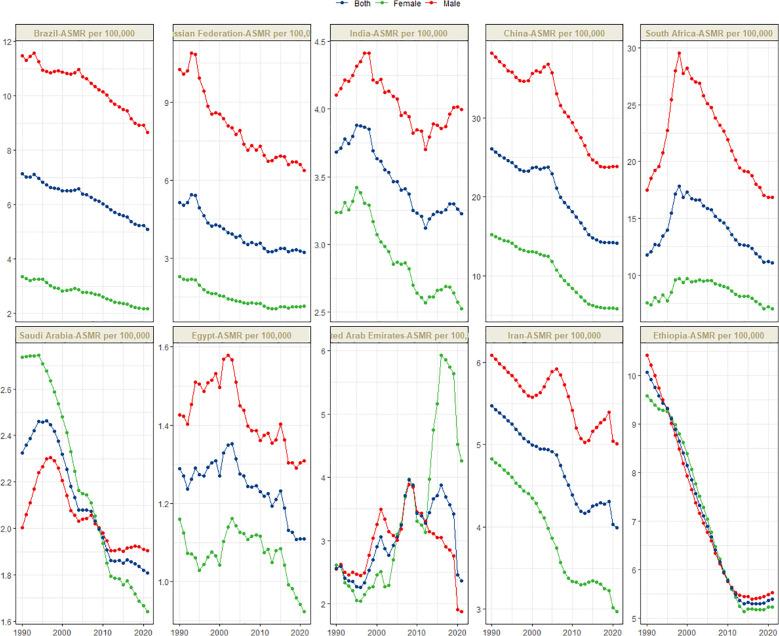
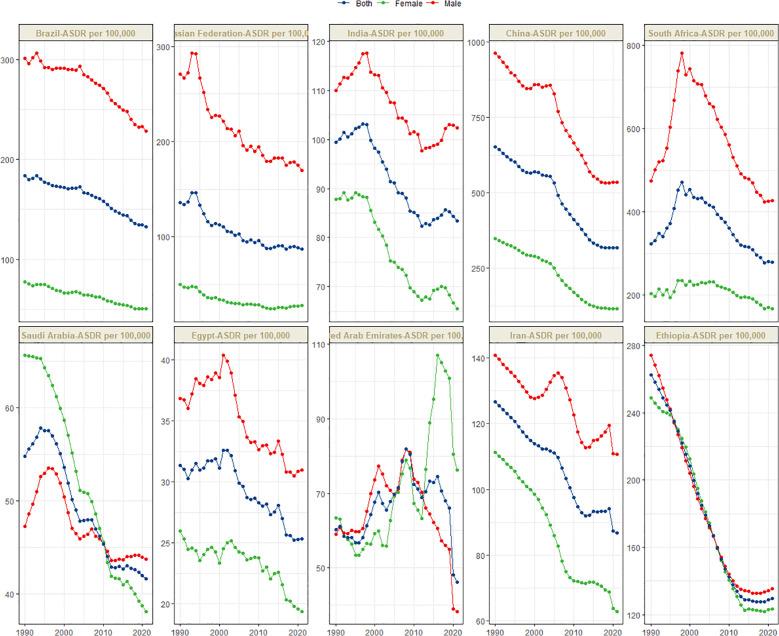
In 2021, China reported the highest rates across all metrics among BRICS countries, whereas Egypt exhibited the lowest rates in most cases. Smoking was identified as the predominant factor contributing to esophageal cancer mortality and DALYs in the majority of countries. Ethiopia demonstrated the highest proportion of cases attributable to a diet low in vegetables, India to tobacco chewing, and Russia to alcohol consumption. Health inequalities between countries were observed to be gradually narrowing. Projections indicate that from 2021 to 2030, Egypt, Iran, and South Africa will experience declines across all rates. Brazil, Russia, India, and the UAE are expected to see reductions in ASIR, ASPR, and ASDR but increases in ASMR. Conversely, China's ASIR, ASPR, and ASMR are projected to rise, except for ASDR. In Saudi Arabia, ASPR and ASMR are anticipated to increase, while ASIR and ASDR will decrease. Ethiopia is expected to witness increases in most rates.
CONCLUSION
This study examined the burden of esophageal cancer in BRICS countries. Recognizing the disparities across multiple dimensions can aid these nations in formulating more effective public health strategies and optimizing resource allocation, both of which are essential for the prevention and control of the disease.
引言
食管癌是一项重大的全球健康挑战。鉴于金砖国家不同的社会经济状况和庞大人口,它们在阐明这种疾病的负担方面至关重要。然而,有限的研究系统地考察了这些国家食管癌的发病趋势。
方法
本研究利用了全球疾病负担(GBD)数据库的数据,包括年龄标准化发病率(ASIR)、年龄标准化患病率(ASPR)、年龄标准化死亡率(ASMR)、年龄标准化伤残调整生命年率(ASDR)以及95%不确定区间(UI)。采用年龄-时期-队列模型(EAPC)评估趋势,同时使用贝叶斯年龄-时期-队列模型(BAPC)预测未来趋势。研究了四个风险因素,并使用不平等斜率指数(SII)和集中指数(CI)评估健康不平等情况。
结果
2021年,中国在金砖国家中所有指标的发病率均最高,而埃及在大多数情况下发病率最低。吸烟被确定为大多数国家食管癌死亡率和伤残调整生命年的主要促成因素。埃塞俄比亚因蔬菜摄入量低导致的病例比例最高,印度因嚼烟草,俄罗斯因饮酒。观察到国家间的健康不平等正在逐渐缩小。预测表明,从2021年到2030年,埃及、伊朗和南非的所有发病率都将下降。巴西、俄罗斯、印度和阿联酋的年龄标准化发病率、年龄标准化患病率和年龄标准化伤残调整生命年率预计将下降,但年龄标准化死亡率将上升。相反,预计中国的年龄标准化发病率、年龄标准化患病率和年龄标准化死亡率将上升,但年龄标准化伤残调整生命年率除外。在沙特阿拉伯,年龄标准化患病率和年龄标准化死亡率预计将上升,而年龄标准化发病率和年龄标准化伤残调整生命年率将下降。埃塞俄比亚预计大多数发病率将上升。
结论
本研究考察了金砖国家食管癌的负担。认识到多方面的差异有助于这些国家制定更有效的公共卫生策略并优化资源分配,这两者对于疾病的预防和控制都至关重要。



 Zotero 插件